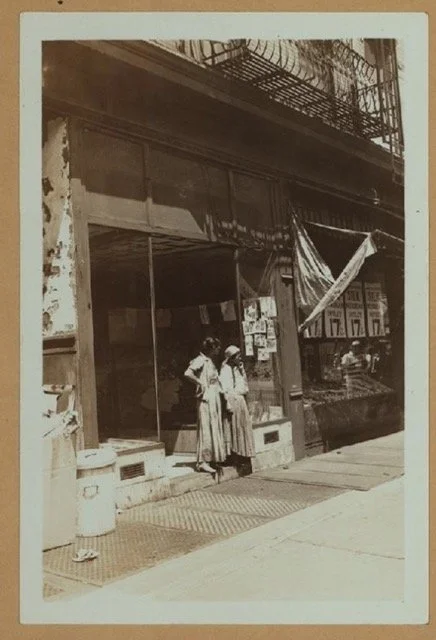
In fact, New Yorkers were convinced that the problem of the “Gypsy fortune teller” had become so bad that the New York Police Department (NYPD) was forced to develop a new strategy to deal with the them. The crackdown on telling the future would come to include the use of discretionary policing, enlisting women into law enforcement roles, and punitive measures doled out by magistrate courts. Ironically, through this campaign against predicting the future, the NYPD would itself become a modern police force.
Nick Yablon: From the Skyscraper to the Wildflower
Interviewed by Rob Snyder
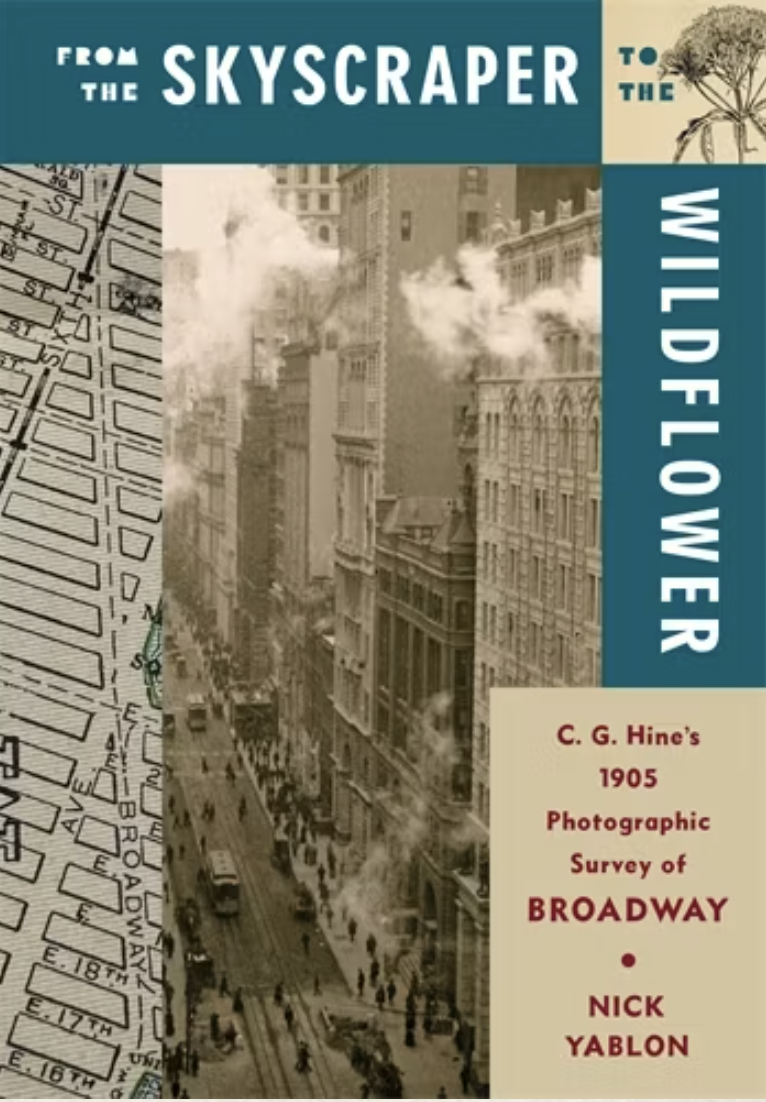
Combining Hines’ photographs with his own analysis, along with maps and other images, Yablon depicts Broadway, its peoples, its buildings, and the many neighborhoods that Broadway traverses, at a distinct moment in time.
Panic, Politics, and Policy: An Interview with Curator Stephen Petrus
Interviewed By Adam Kocurek
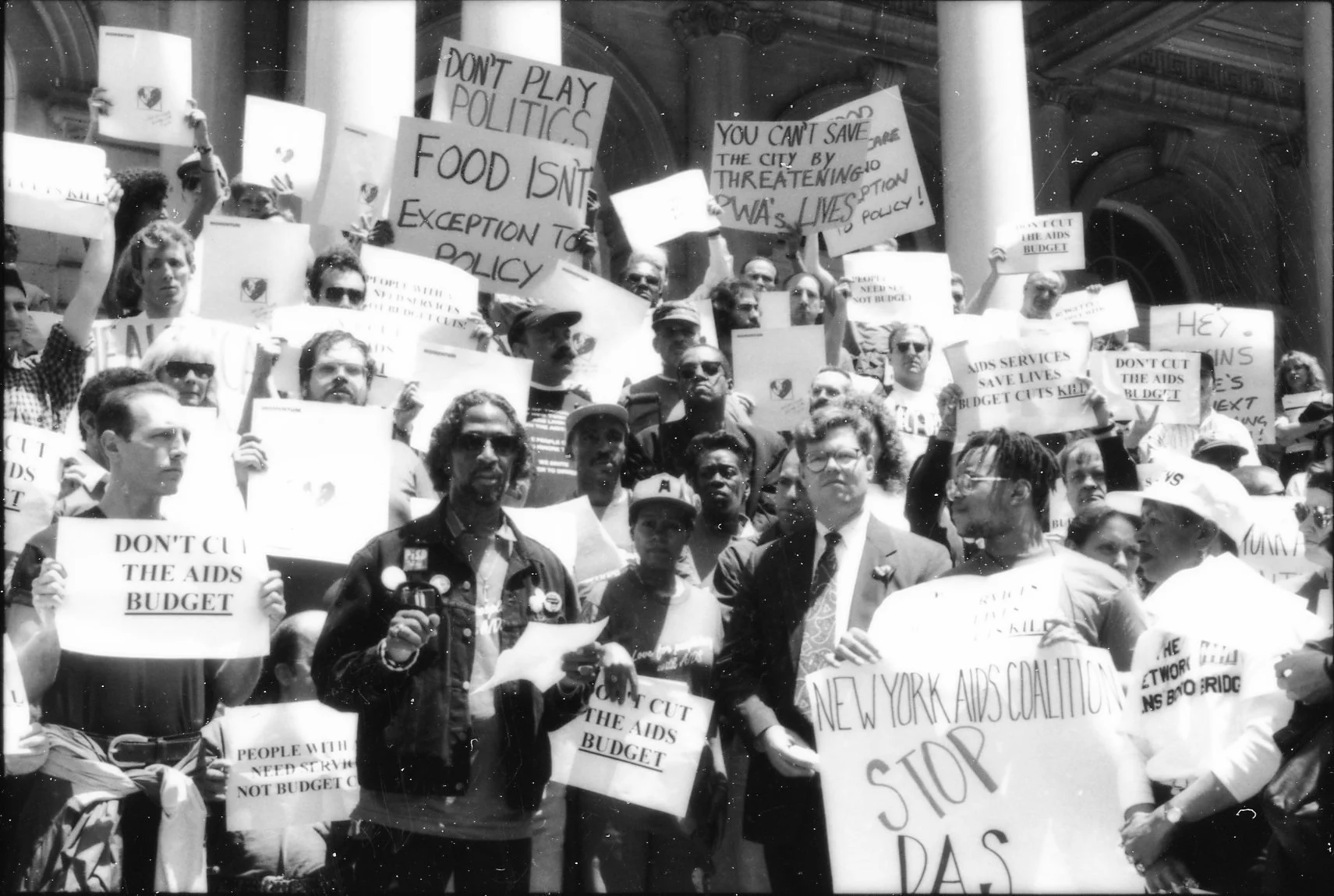
As with past projects, we approached the interviews with an open mind, conscious of confirmation bias. The history of AIDS in New York City is highly contentious. My students and I reviewed the oral histories and saw several themes emerging. For earlier exhibits, key figures came to be the main focus (Mayor Koch, for example, in the city’s gay rights bill struggle) but with this project, we observed themes overlapping, with no single individual coming to the forefront. We ultimately chose six themes, excerpted clips from each interview, and placed them in each theme within our digital gallery. The themes are more or less chronological, but to supplement this we provided a timeline on the right bar of the webpage, which was also new for us – it helped us to stabilize the history. We did not want to tell this complex story through any single person alone, regardless of how crucial individuals like Larry Kramer or Ed Koch were.
“Permit” for Men’s Clothes: Crossdressing, Disguise, and Law in Turn-of-the-Century New York
By Margot Lipin
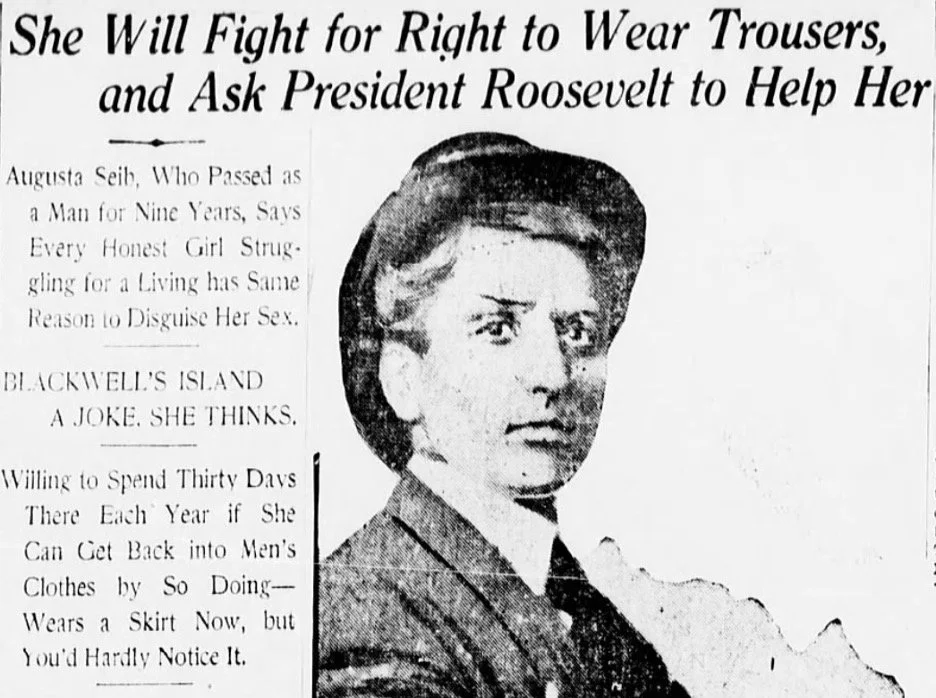
These fashion-forward, gender-crossing New Yorkers refused to stay put. Their stories reveal how people have long dressed contrary to their assigned sex at birth, and asserted that they had every right to do so. They experimented and innovated in fashion and scorned intervention by the state. We tend to take for granted the process by which we assign meaning to fashion, especially gender. When we undress this process, we see how people have always pushed boundaries through dress, despite legal repression. Without them, this city would not be the fashion capital that it is today.
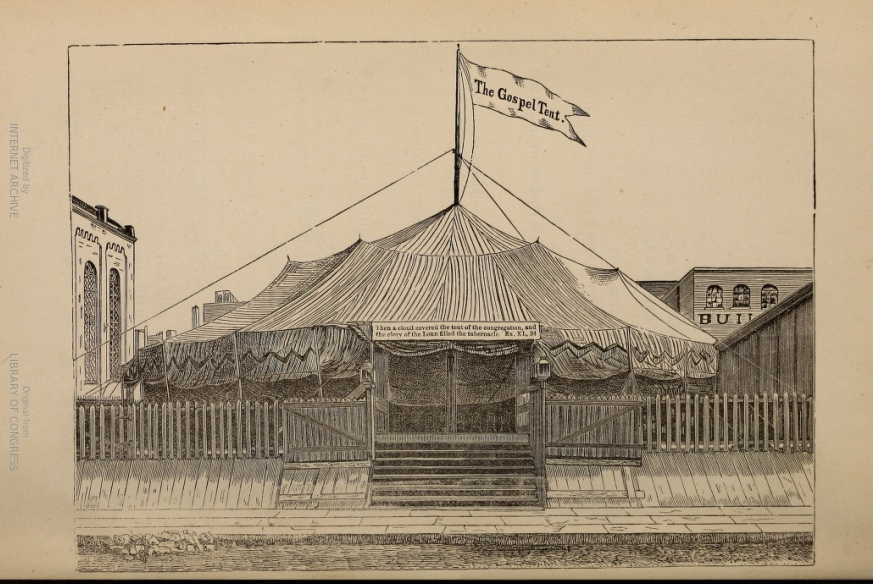
Reputation and Ruin in Young Dr. Tyng's New York, Part II: A Human Engine
By Helen Lane
Holy Trinity was never the same: outreach programs shrank, successive rectors moved the parish toward practices most contemporary Episcopalians would recognize as standard — processionals, a cross and candles on the altar, communion wafers instead of bread — and the central preaching pulpit was removed. Tyng impotently protested the changes from Paris by letter. In 1896, the land deemed more valuable than the building, the church on Madison and 42nd was demolished. That being said, the Social Gospel, for which he paved the way, took root. Bishop Henry Codman Potter at Grace Church was a case in point, as was Rainsford at St. George. Potter was, in fact, among the first to seriously examine inequitable distribution of wealth as a source of systemic poverty, in his pastoral letter of 1886.
Reputation and Ruin in Young Dr. Tyng's New York, Part I: The Body in the Basement
By Helen Lane
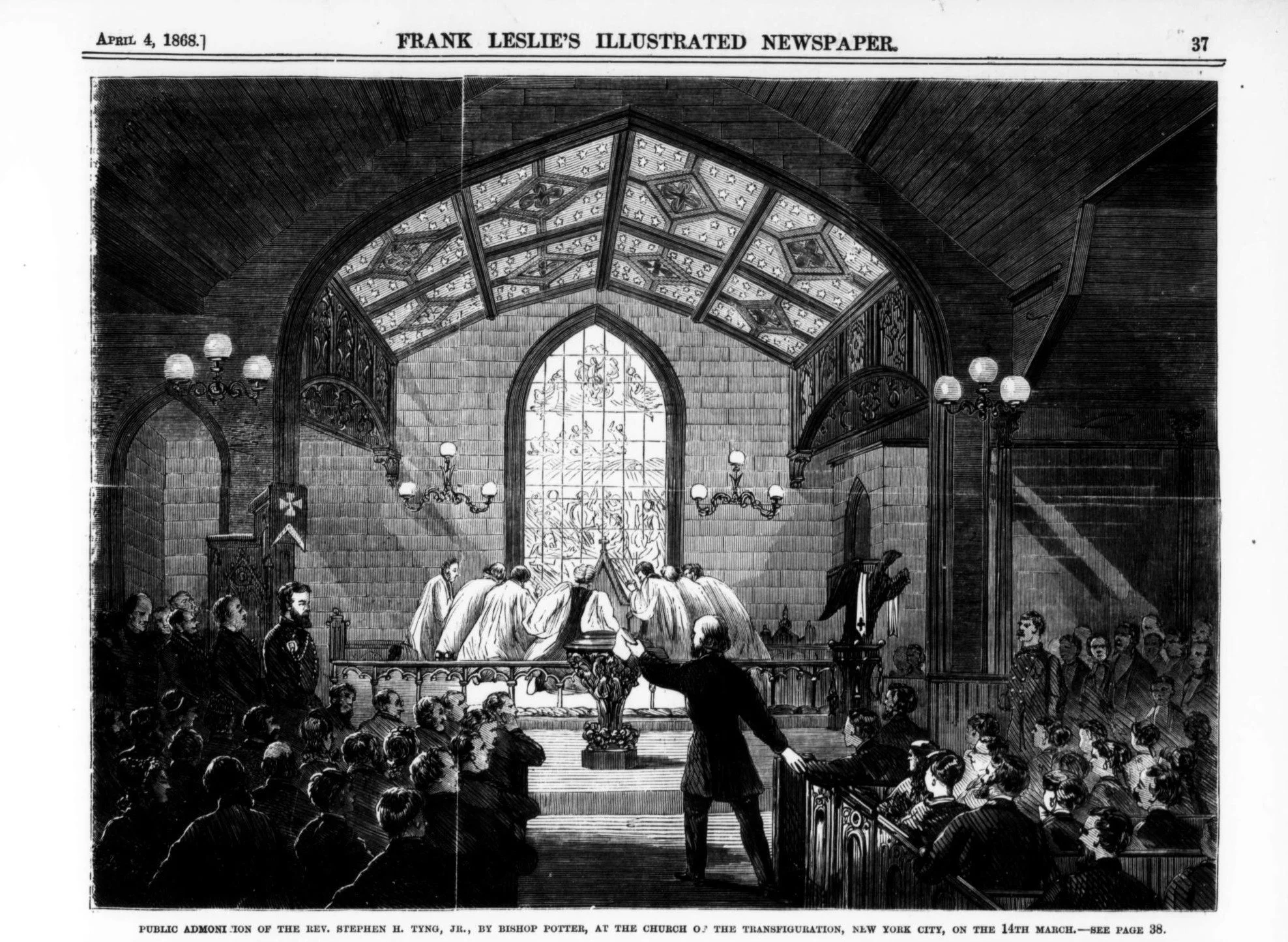
Stephen H. Tyng Jr. captured national attention in the media frenzy surrounding his ecclesiastical trial in early 1868. His crime? Breaking canon law by preaching in a Methodist church in New Brunswick, NJ without the express permission of the bishop and the local Episcopal rectors, Mr. Boggs and Mr. Stubbs. And doing so in the wrong clothing. Those actions in the summer of 1867 were purposefully provocative and came at a time when low-church Episcopalian ministers were pushing back against the Anglo-Catholic Oxford movement, and restrictive thinking that prevented ecumenical collaboration. A contemporary later recalled “his defiant air” toward the trial. [11] The ensuing confrontation was staged to expose the stifling nature of an Episcopal Church that was losing touch with its Protestant roots. It also made him a superstar.
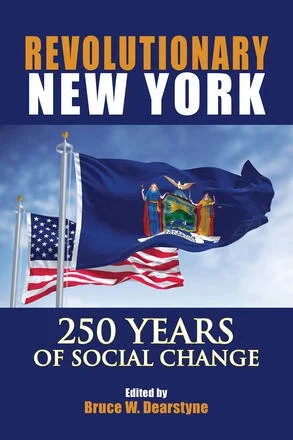
Revolutionary New York: 250 Years of Social Change, edited by Bruce Dearstyne and published by SUNY Press, examines what the volume calls the “unfinished revolutions” of the Empire State. In sixteen essays by a varied cast of authors, the book explores efforts to achieve what the editor describes as the full promise of the revolution.
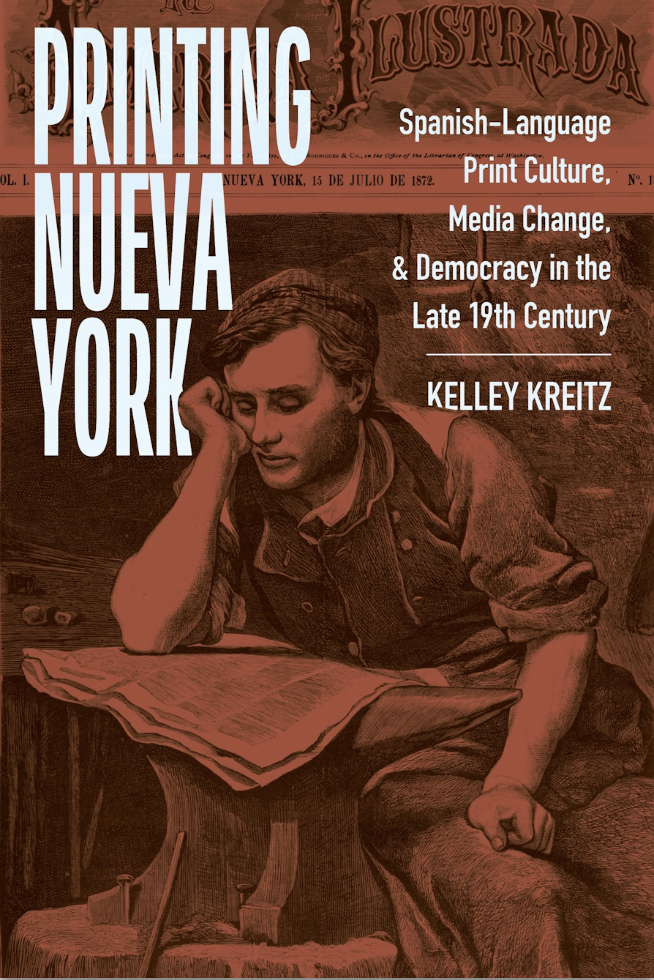
Printing Nueva York: Spanish-Language Print Culture, Media Change, and Democracy in the Late Nineteenth Century
Review By Cathy Cabrera-Figueroa
Kelley Kreitz's Printing Nueva York is a compelling yet nuanced contribution to the historiography of New York. By highlighting the cultural and material significance of print within New York City's Spanish-speaking communities, Kreitz explores the city as a center for transnational exchange. The book demonstrates that New York was not only a local urban center but also an important hub for the broader hemisphere, linking Latin America, the Caribbean, and the United States.
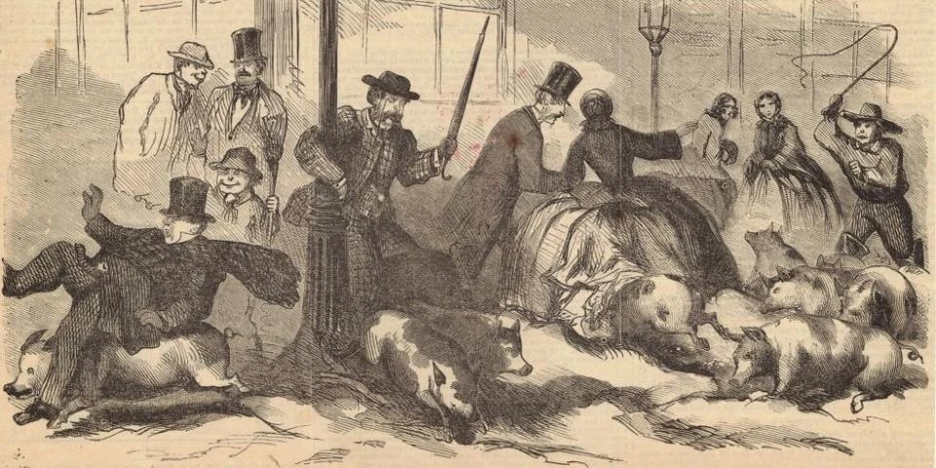
Unbeknownst to the Dutch colonists, their successors, the English occupiers, the politicians of Tammany Hall, and ultimately the Progressive Reformers, would all adopt variations of this warlike framing on pigs. The details of the various conflagrations with swine of interest, along with the broader impacts and effects of pig-control and pig-eradication policies, had significant and lasting consequences. Ultimately, pigs hold an important place in the history of domesticated animals in urban areas.
From the Skyscraper to the Wildflower: Charles G. Hine’s 1905 Photographic Survey of Broadway
By Nick Yablon
In recent years, historians have turned to photograph albums to show how Americans memorialized love and death, how they visually constructed or challenged racial regimes, or how they engaged an emerging celebrity culture. But albums can also serve as crucial documents of urban history. Reformers’ albums show how tenements, billboards, or street vendors were framed as problems requiring civic action; commemorative albums record how cities staged and remembered their civic anniversaries and public events; construction albums preserve the architectural histories of buildings and bridges; and vacation albums reveal tourist perceptions of urban sights.