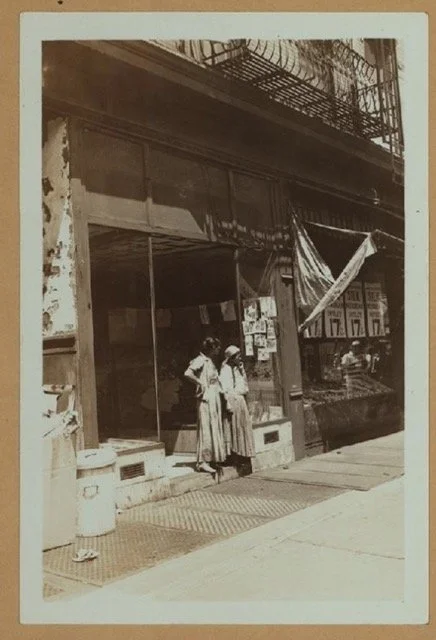
In fact, New Yorkers were convinced that the problem of the “Gypsy fortune teller” had become so bad that the New York Police Department (NYPD) was forced to develop a new strategy to deal with the them. The crackdown on telling the future would come to include the use of discretionary policing, enlisting women into law enforcement roles, and punitive measures doled out by magistrate courts. Ironically, through this campaign against predicting the future, the NYPD would itself become a modern police force.
Panic, Politics, and Policy: An Interview with Curator Stephen Petrus
Interviewed By Adam Kocurek
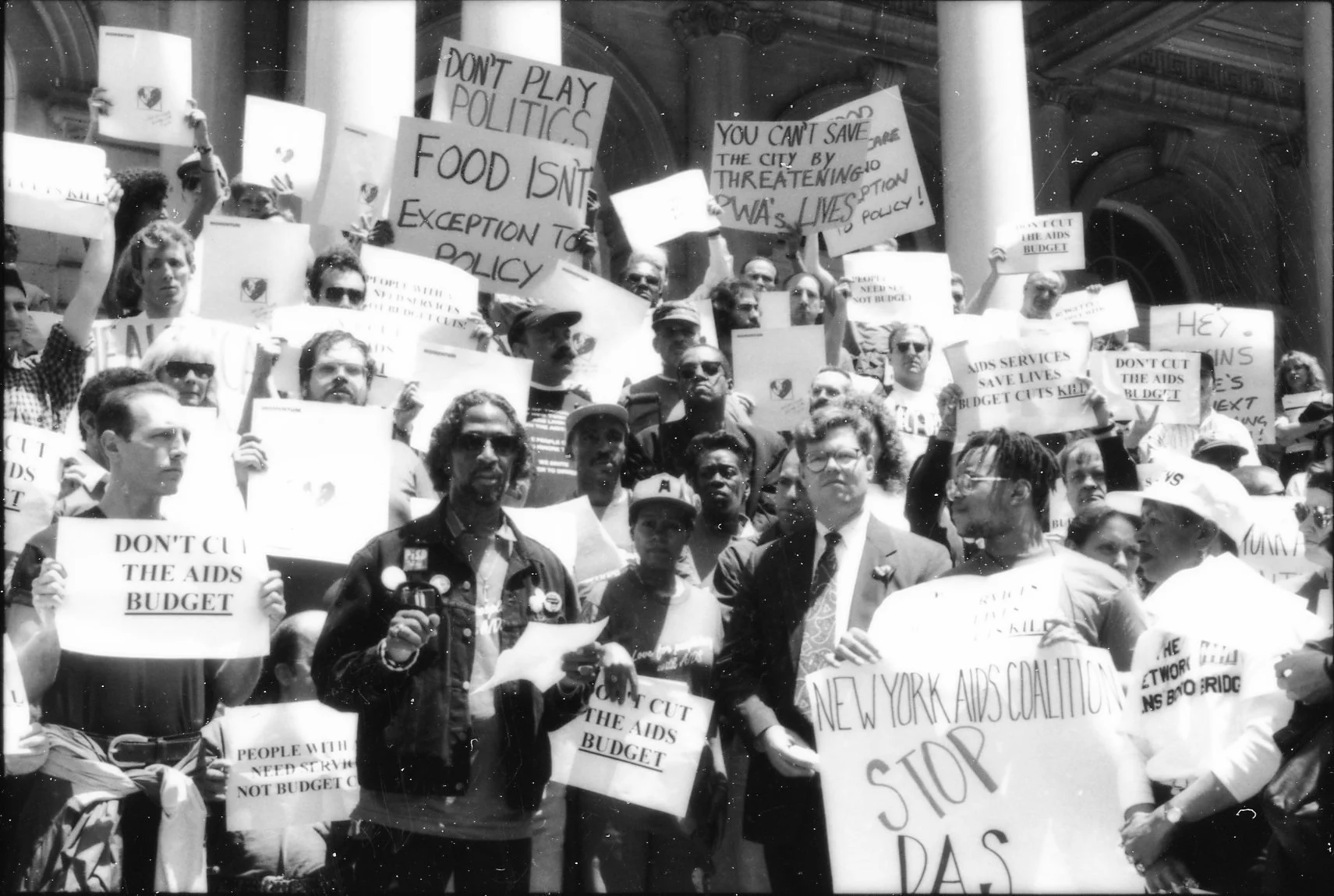
As with past projects, we approached the interviews with an open mind, conscious of confirmation bias. The history of AIDS in New York City is highly contentious. My students and I reviewed the oral histories and saw several themes emerging. For earlier exhibits, key figures came to be the main focus (Mayor Koch, for example, in the city’s gay rights bill struggle) but with this project, we observed themes overlapping, with no single individual coming to the forefront. We ultimately chose six themes, excerpted clips from each interview, and placed them in each theme within our digital gallery. The themes are more or less chronological, but to supplement this we provided a timeline on the right bar of the webpage, which was also new for us – it helped us to stabilize the history. We did not want to tell this complex story through any single person alone, regardless of how crucial individuals like Larry Kramer or Ed Koch were.
“Permit” for Men’s Clothes: Crossdressing, Disguise, and Law in Turn-of-the-Century New York
By Margot Lipin
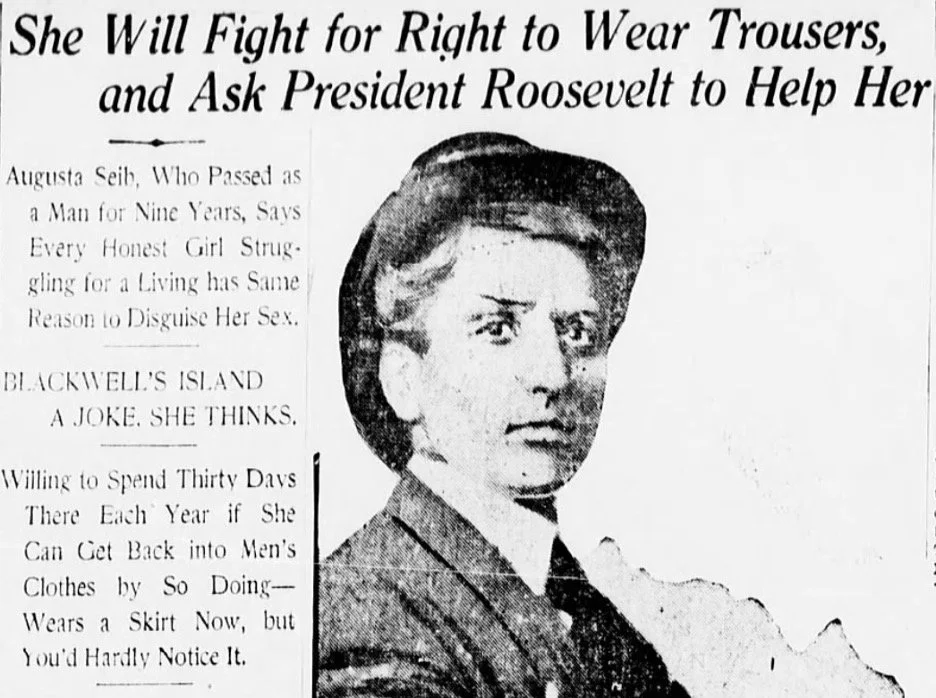
These fashion-forward, gender-crossing New Yorkers refused to stay put. Their stories reveal how people have long dressed contrary to their assigned sex at birth, and asserted that they had every right to do so. They experimented and innovated in fashion and scorned intervention by the state. We tend to take for granted the process by which we assign meaning to fashion, especially gender. When we undress this process, we see how people have always pushed boundaries through dress, despite legal repression. Without them, this city would not be the fashion capital that it is today.
New York Sari: An Interview with Curator Salonee Bhaman
Interviewed By Dominique Jean-Louis
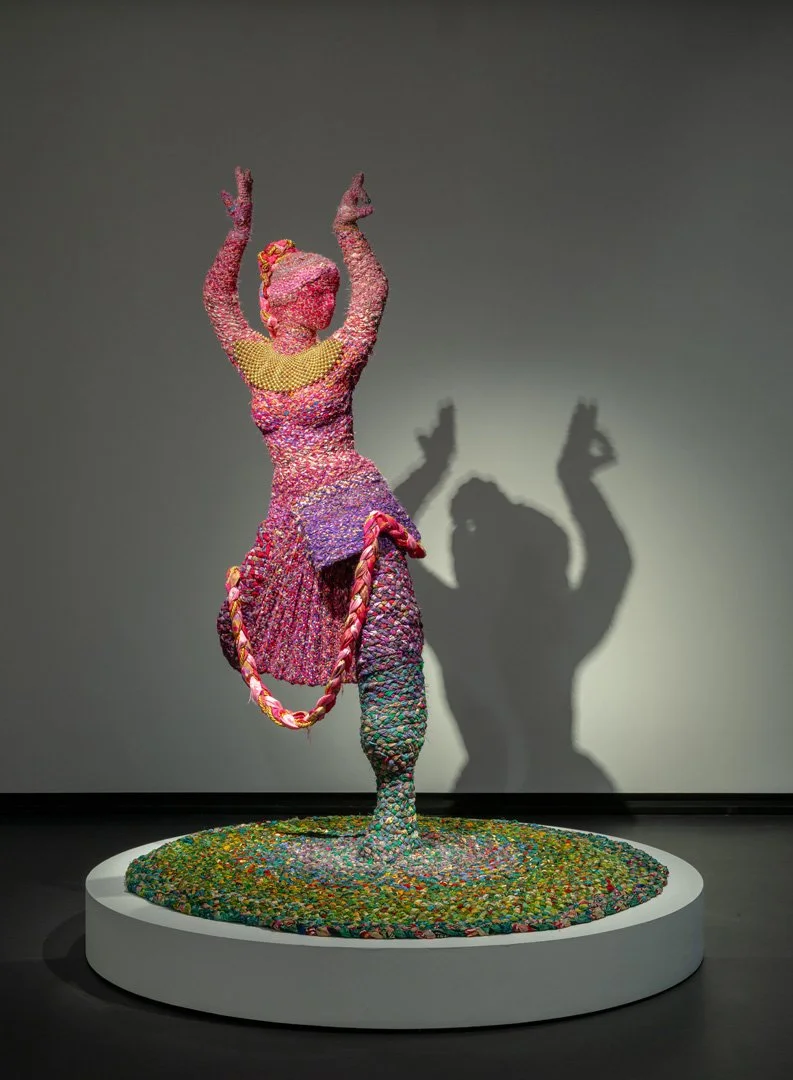
Our social, material, and emotional worlds are shaped by history that is often far more complicated and varied than what we’re likely to learn in a classroom. I hope that people come away from this exhibition with a curiosity to learn more about how and why the things they love in this city — be it a beautiful and colorful fabric or a funky groove, or a tasty and transcendent meal — got to where they are and then follow that curiosity to learn more about the people that brought that thing, or food, or color palate into their lives. New York is a city of immigrants. It has been for a very long time. The themes of displacement, segregation, and persecution that often suffuse our stories of migration come to exist alongside a different set of narratives in this place: stories of community forged across differences of culture and experience.
Jeffrey O.G. Ogbar (ed.), Black Movement: African American Urban History Since the Great Migration
Reviewed by Zariyah Grant
Black Movement: African American Urban History since the Great Migration, edited by Jeffrey O. G. Ogbar, is an ambitious collection that asks: What has happened to Black urban communities since the end of the Great Migration? Historians have yet to write this history, and Ogbar enlists an impressive array of scholars to begin this bold endeavour. […] Hovering over this inquiry are the paradoxes of the Civil Rights Movement: its victories enabled the ascent of a Black middle class, while the Black poor continued to bear the brunt of the assault on the welfare state.
Reel Freedom: Black Film Culture in Early Twentieth Century New York City
Review By Deena Ecker
Reel Freedom challenges the reader to think beyond the Harlem Renaissance and place film, an important piece of leisure in the 1920s and ‘30s, at the center of the Black cultural and intellectual transformation in New York and the nation. While much of the book focuses on the theaters in Harlem, Lopez reminds us that in the first decade of the 20th century, there were pockets of Black life all over the city. The ways that Black moviegoers, critics, projectionists, and producers engaged with film demonstrated a claim to physical, intellectual, and cultural space in early-twentieth-century New York. In real and significant ways, these claims to space were part of the larger Black struggle for equality.
The 1960s brought sweeping changes throughout America, and this included changes to women’s education. The Civil Rights Movement provoked a reassessment of the role of women in society. Many universities were reaching the conclusion that they could not, and should not, remain the restricted domains of male education. […] When Hunter College and Marymount Manhattan College became coeducational, Finch found itself competing with Barnard for the women-only market in the city.
Which Way to the Promised Land? Mabel Lee at the Intersection of Gender and Race
By Mimi Yang
Oppressed people across cultures embrace the Exodus narrative, in which Moses delivers the Israelites from slavery, as a source of hope and strength. “The Promised Land” has become more than a physical locale for modern-day seekers; it represents a cultural and spiritual sphere that offers freedom, equality, and fulfillment. Mabel Ping Hua Lee (李彬华1896 – 1966), a Chinese feminist whose work and commitment was on par with her contemporary suffragists, also sought the Promised Land — a place for a better life and dreams for happiness and fulfillment. New York City entered Lee’s life as the gate, the world, and the destiny of her Promised Land. Intriguingly, her feminism and dedication to securing the universal right to vote originated from a seemingly distant cultural background.
Sadly, Judy did not grow older and develop into a more culturally significant and financially stable feminist voice. The goal was original: these women were familiar with the gendered expectations of the many periodicals where they regularly published – from radical magazines like the Masses to the conventional Ladies’ Home Journal. Although there were influential women editors at the time (Harriet Monroe, Margaret Anderson, Jane Heap, to name a few), no other publication promised to disrupt the status quo in order to present the candid perspective of women. Even if Judy did not have long-term success, the youthful ambition of these women led them to a variety of creative accomplishments and careers in film, radio, the visual arts, journalism, and literature; these media provided other venues for them to privilege the perspective of women.
“this city gets in one’s blood stream with the invisibility of a lover”: City-Making as Queer Resistance in New York, 1950-2020
By Davy Knittle
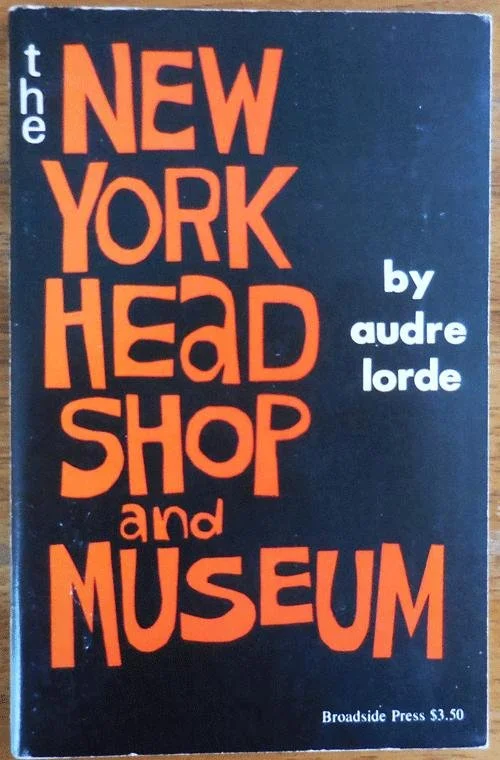
Despite the importance of urban systems to how Lorde characterizes power and inequality, she is not thought of as an urbanist writer. But what becomes possible when we think of Lorde as such is a new approach to telling the familiar history of spatial and political change after urban renewal. As with many queer and trans writers active from the early moments of urban renewal to the beginning of the COVID-19 pandemic in 2020, Lorde uses city-making tools to provide new ways of relating to the city. Importantly, these queer and trans urbanist writers — from the New York School poet James Schuyler to the contemporary trans novelist Zeyn Joukhadar — propose uses, designs, plans, and policies for urban spaces and environments that are focused on facilitating the survival of marginalized people. […] Their work makes evident how, after urban renewal, a cultural imaginary of the single-family home came to define heteronormativity as a relationship to housing as well as to race, gender, and sexuality. It becomes necessary, then, to account for how built environments and normative ideas of race, gender, and sexuality in the U.S. have been co-constituted since the end of World War II in order to more fully tell both queer and trans history and the history of urban redevelopment in New York City.