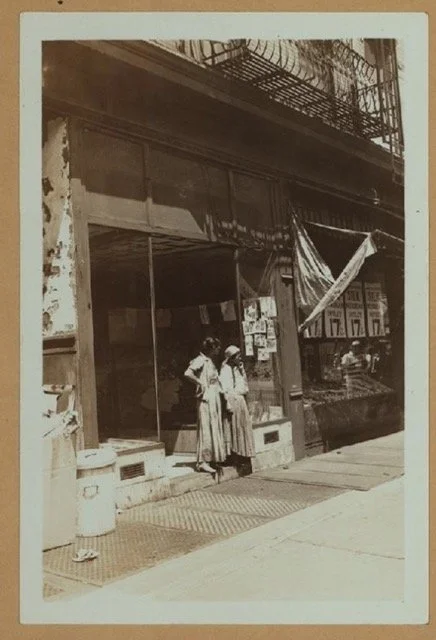
In fact, New Yorkers were convinced that the problem of the “Gypsy fortune teller” had become so bad that the New York Police Department (NYPD) was forced to develop a new strategy to deal with the them. The crackdown on telling the future would come to include the use of discretionary policing, enlisting women into law enforcement roles, and punitive measures doled out by magistrate courts. Ironically, through this campaign against predicting the future, the NYPD would itself become a modern police force.
Panic, Politics, and Policy: An Interview with Curator Stephen Petrus
Interviewed By Adam Kocurek
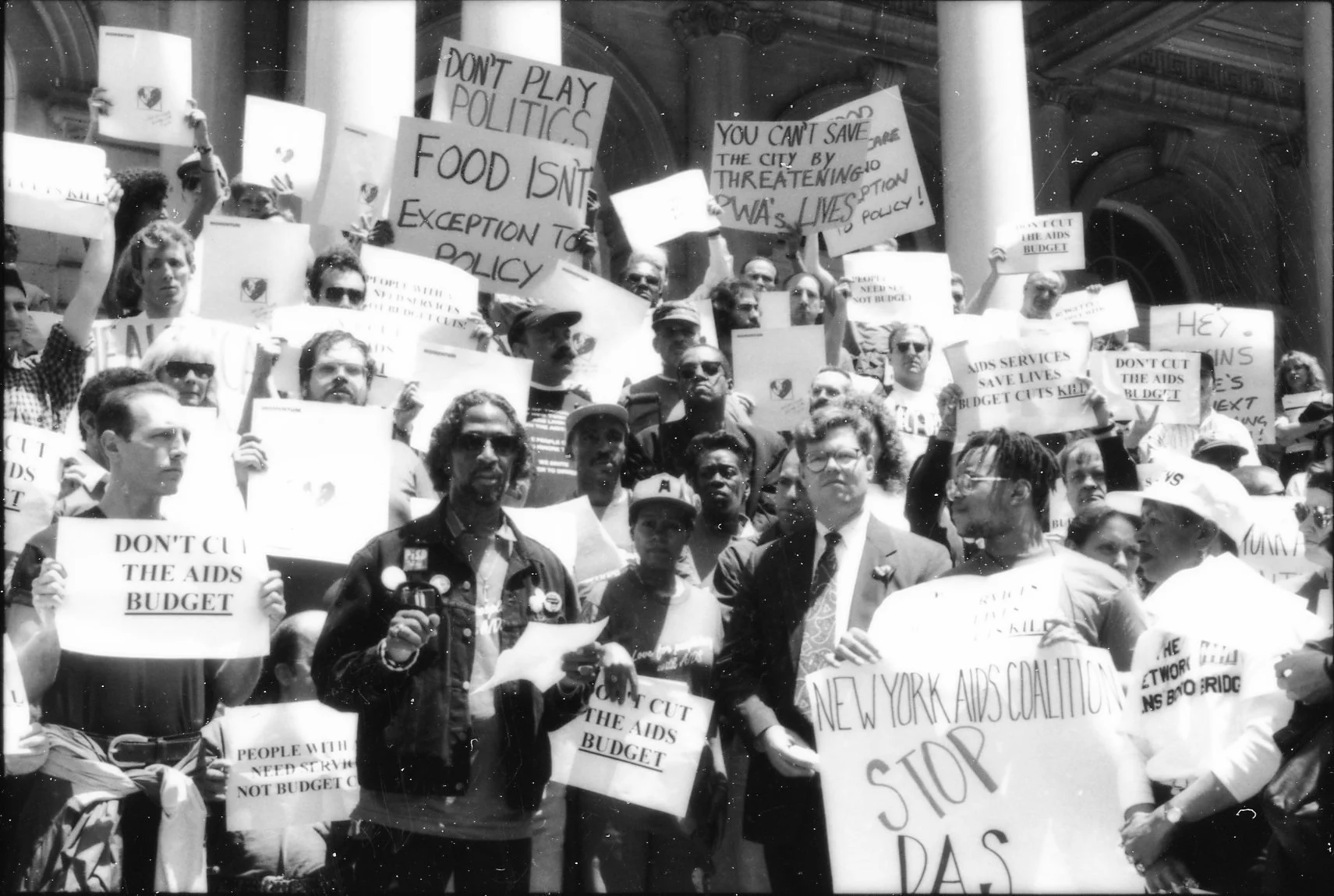
As with past projects, we approached the interviews with an open mind, conscious of confirmation bias. The history of AIDS in New York City is highly contentious. My students and I reviewed the oral histories and saw several themes emerging. For earlier exhibits, key figures came to be the main focus (Mayor Koch, for example, in the city’s gay rights bill struggle) but with this project, we observed themes overlapping, with no single individual coming to the forefront. We ultimately chose six themes, excerpted clips from each interview, and placed them in each theme within our digital gallery. The themes are more or less chronological, but to supplement this we provided a timeline on the right bar of the webpage, which was also new for us – it helped us to stabilize the history. We did not want to tell this complex story through any single person alone, regardless of how crucial individuals like Larry Kramer or Ed Koch were.
Printing Nueva York: Spanish-Language Print Culture, Media Change, and Democracy in the Late Nineteenth Century
Review By Cathy Cabrera-Figueroa
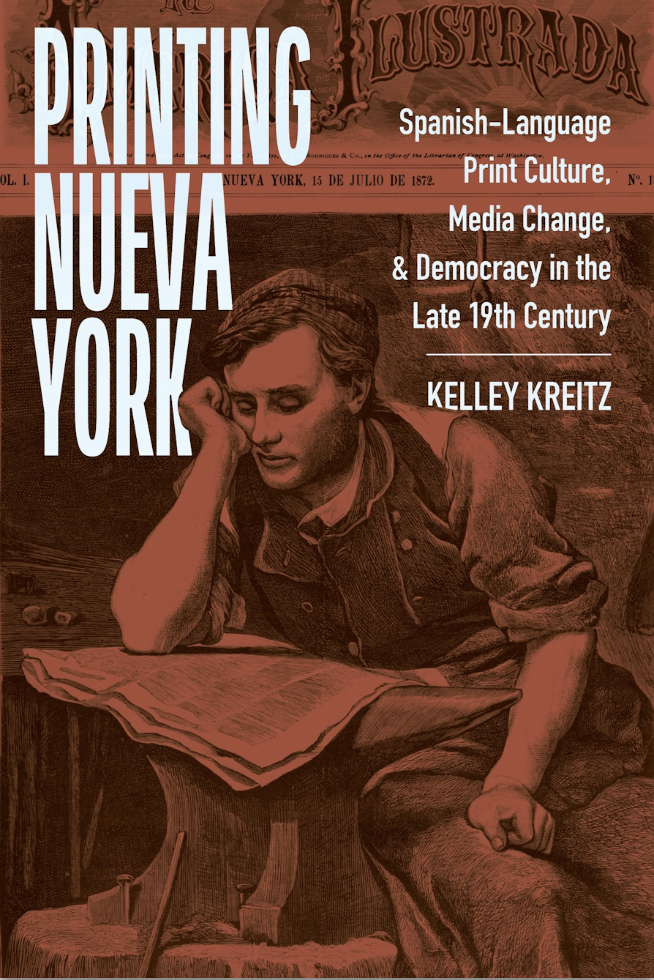
Kelley Kreitz's Printing Nueva York is a compelling yet nuanced contribution to the historiography of New York. By highlighting the cultural and material significance of print within New York City's Spanish-speaking communities, Kreitz explores the city as a center for transnational exchange. The book demonstrates that New York was not only a local urban center but also an important hub for the broader hemisphere, linking Latin America, the Caribbean, and the United States.
The Benab: Where Caribbean Culture Took Root in Queens
By Shafrana Carpen
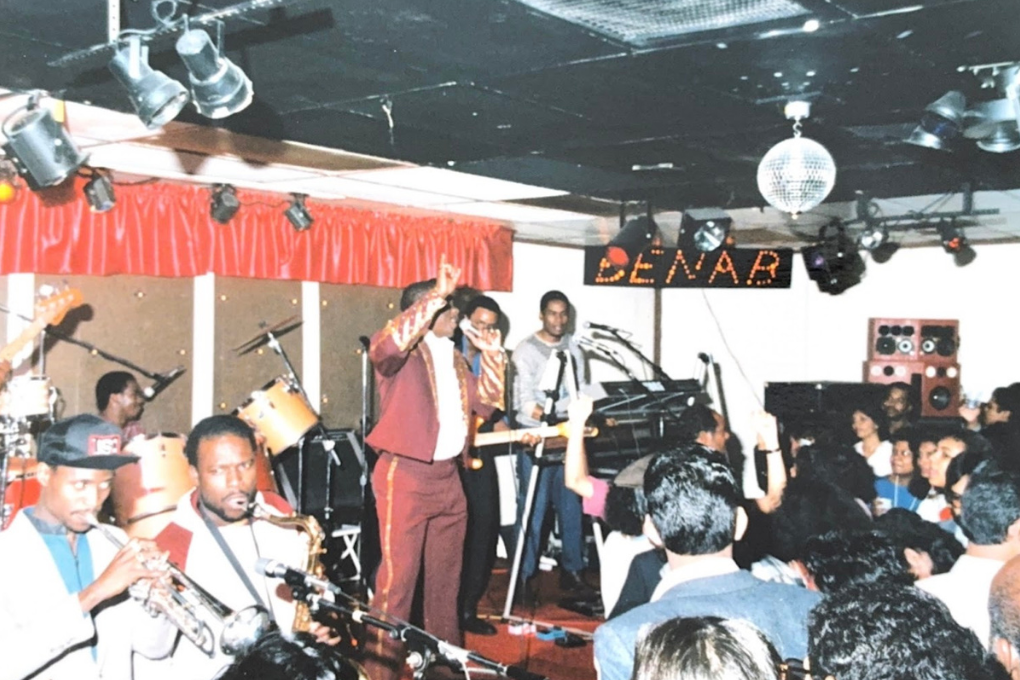
By the mid-1980s, New York City had become a second home for tens of thousands of Caribbean immigrants. Guyanese, Trinidadians, Jamaicans, and others settled in Queens, Brooklyn, and the Bronx, bringing their cultures with them. Between 1980 and 1990, immigrants from the Caribbean made up almost a third of new arrivals, yet in those years, there were few places designed for them—no club where a nurse from Georgetown or a roofer from Berbice could truly feel at home. That absence gave rise to The Benab, a nightclub that became far more than a nightlife destination. Located on Jamaica Avenue in Jamaica, Queens, The Benab was one of the first Indo-Caribbean clubs in the borough and a central meeting point for a generation yearning to find a home away from home.
Jailed for Freedom: Afro-Spanish Sailors and Legal Resistance in Eighteenth-Century New York
By Beatriz Carolina Peña
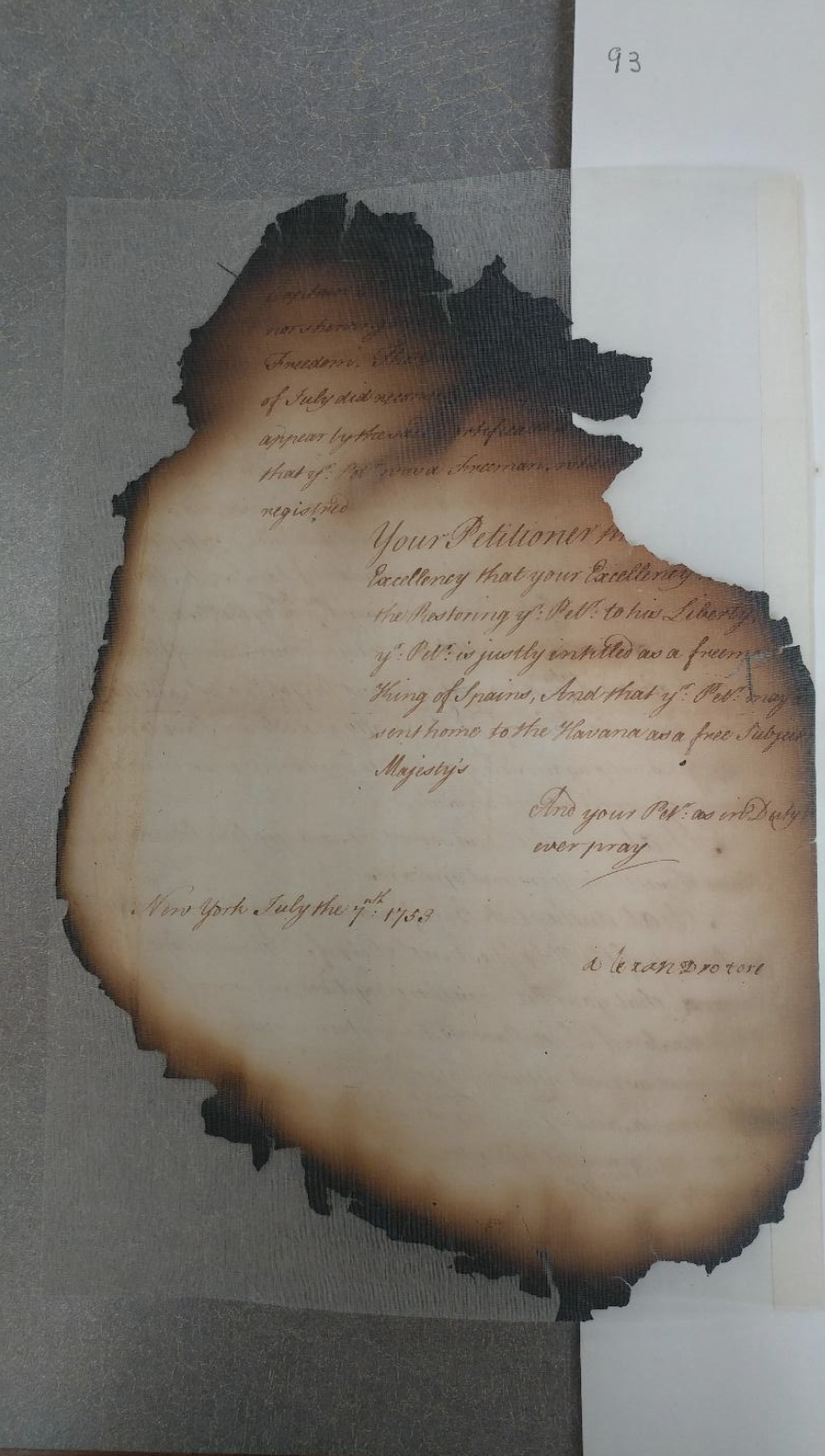
The experiences of Fiallo and De la Torre reveal how Spanish American sailors captured through privateering were reclassified as “prize negroes,” sold, and forced to seek freedom within a legal system structured to uphold slavery. After arriving in New York from London as attorney general in November 1752, Kempe began bringing liberty claims grounded in the Law of Nations before the governor and council. These cases illuminate both the possibilities and the limits of law in a colonial society deeply committed to racialized slavery. Though they came from different Spanish colonies and reached New York about a year apart, their paths converged on July 7, 1753, when both were placed in jail for the protection of their freedom.
Oaths and Interracial Solidarity: New York City’s 1741 Plot
By Kevin Murphy
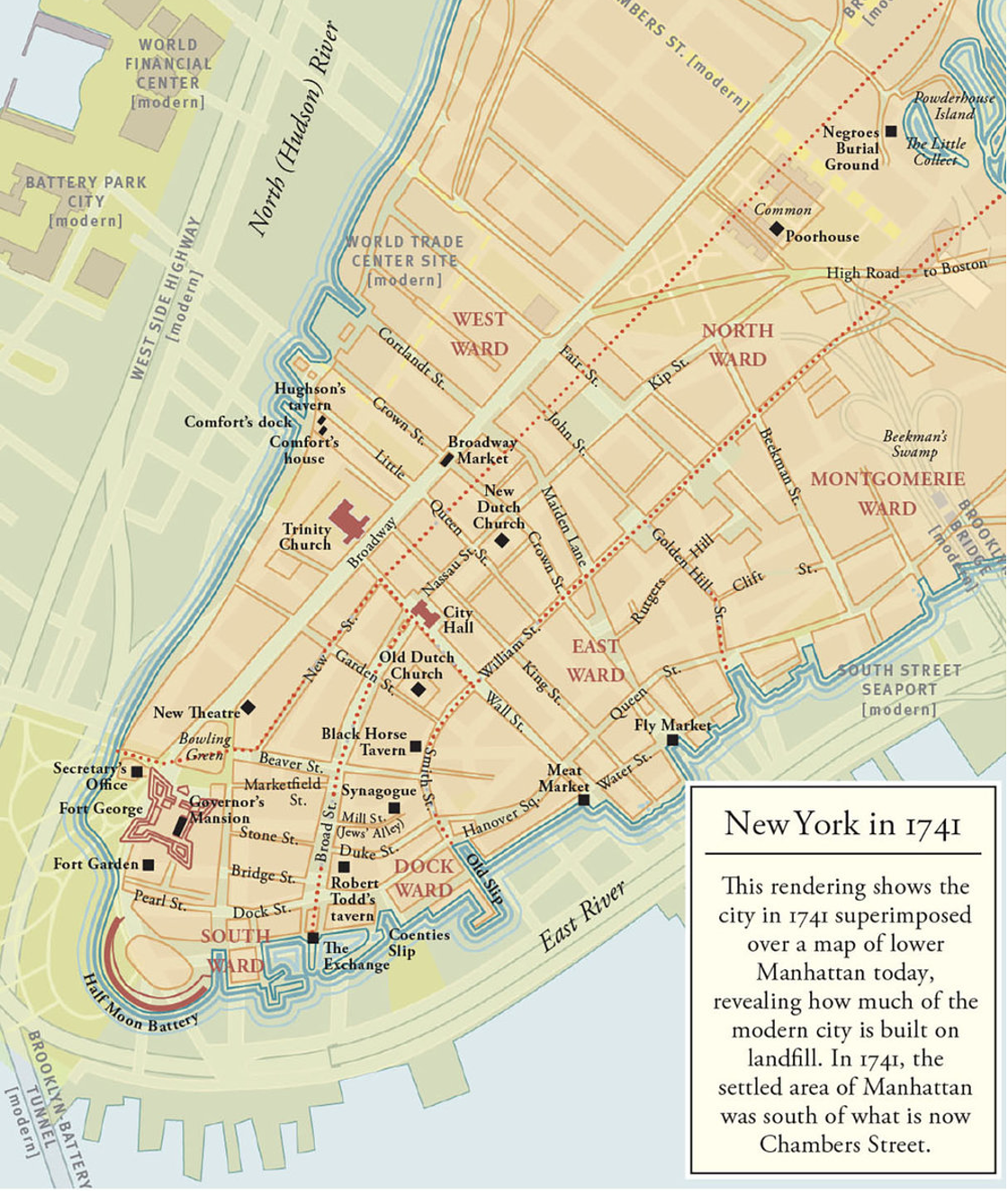
In early 1741, an investigation into a robbery in Manhattan led to rumors of an interracial plot to destroy the city. Local officials tracked stolen coins and other items to John Hughson, a tavern-keeper known for serving enslaved people. Authorities were already concerned about illicit rendezvouses among slaves, soldiers, and poor whites; their suspicions spiked, however, when a series of unexplained fires started at Fort George and then at various places across the city. Mary Burton, the Hughson’s sixteen-year-old “Irish servant girl,” came forward to implicate her “master” and his customers, painting a vivid picture of impending mayhem.
New York Sari: An Interview with Curator Salonee Bhaman
Interviewed By Dominique Jean-Louis
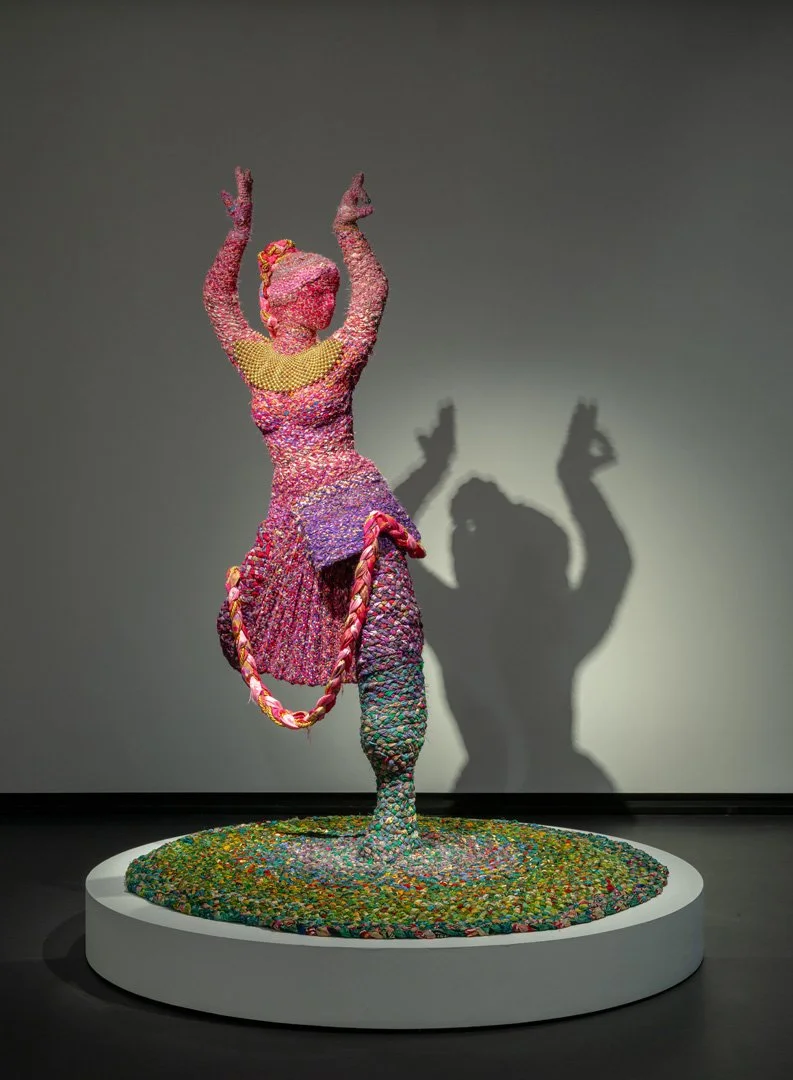
Our social, material, and emotional worlds are shaped by history that is often far more complicated and varied than what we’re likely to learn in a classroom. I hope that people come away from this exhibition with a curiosity to learn more about how and why the things they love in this city — be it a beautiful and colorful fabric or a funky groove, or a tasty and transcendent meal — got to where they are and then follow that curiosity to learn more about the people that brought that thing, or food, or color palate into their lives. New York is a city of immigrants. It has been for a very long time. The themes of displacement, segregation, and persecution that often suffuse our stories of migration come to exist alongside a different set of narratives in this place: stories of community forged across differences of culture and experience.
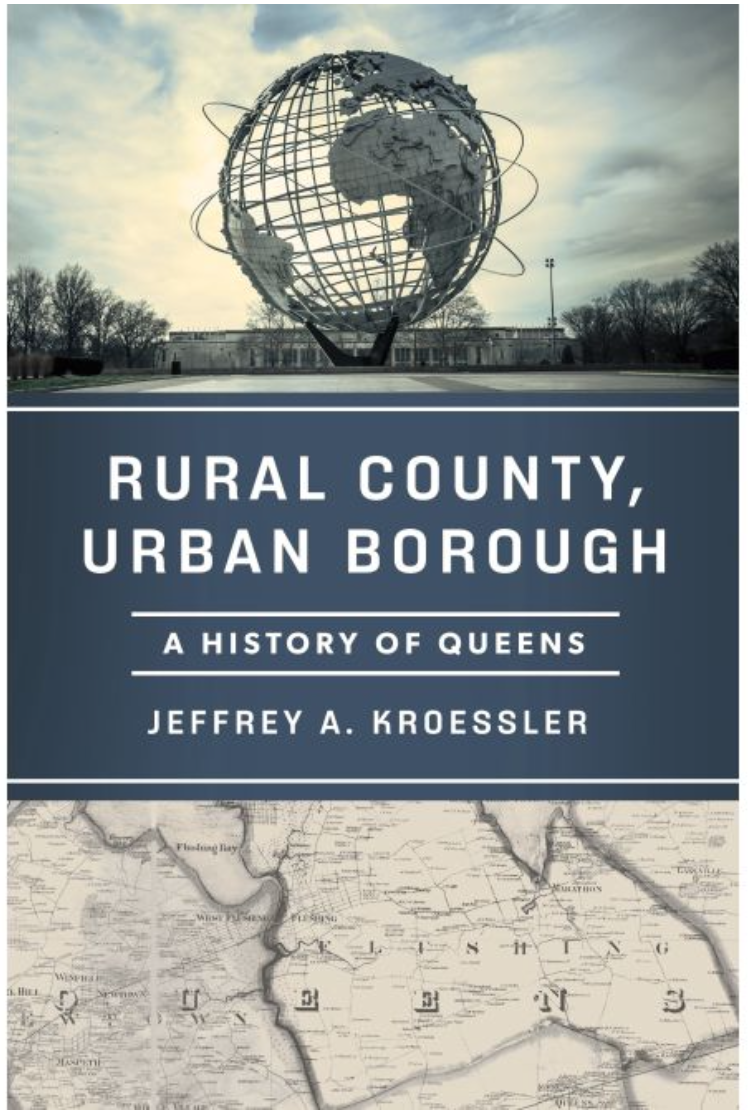
Rural County, Urban Borough is a history with a strong sense of place. Covering the the history of Queens from European settlement to the present, Kroessler charts centuries of change in the landscape. He shows how politics, industry, transportation, government and real estate interests all shaped the borough. Linking Queens to New York City and the wider world, Kroessler illuminates important elements of American metropolitan history.
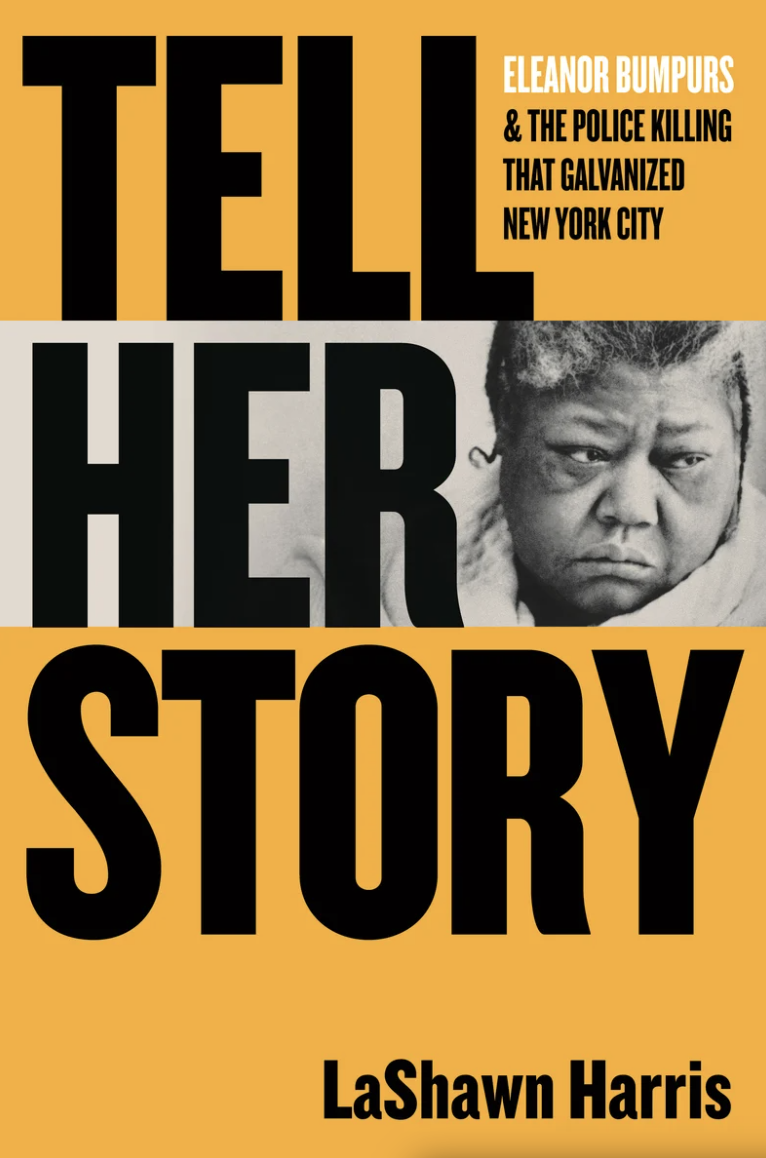
Tell Her Story: Eleanor Bumpurs & The Police Killing That Galvanized New York City
Interviewed By Emily Brooks
The Eleanor Bumpurs story is one of those hard histories. Parts of her story include scenes of personal disappointments, economic struggles, maternal loss, and ultimately state violence. As I was writing the book, I continuously told myself that it was my responsibility to tell this complicated story with nuance and compassion and care. Presenting a nuanced perspective on Eleanor’s life and killing created space for me to offer a full biography, to tell broader stories about 1980s New York City, and to shed light on late-twentieth-century Black women’s socioeconomic and political lives. Moreover, telling hard histories presents the opportunity to draw important lessons and insights from the past and place contemporary moments within historical context.
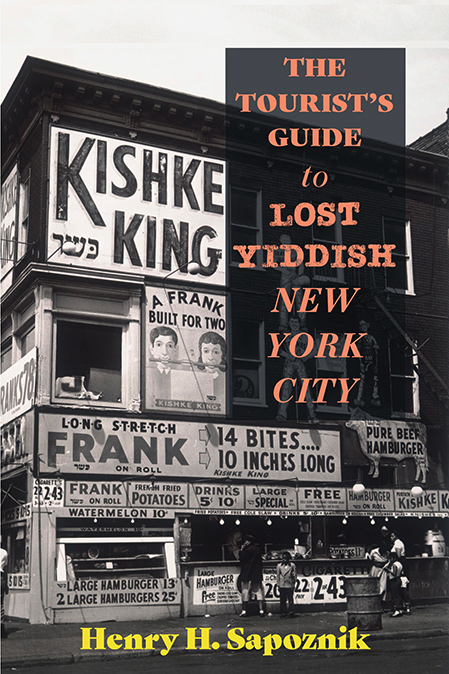
Henry H. Sapoznik: The Tourist's Guide to Lost Yiddish New York City
Interviewed by Rob Snyder
The Tourist's Guide to Lost Yiddish New York City offers a new look at over a century of New York's history of Yiddish popular culture. Henry H. Sapoznik — a Peabody Award-winning coproducer of NPR's Yiddish Radio Project — tells the story in over a baker's dozen chapters on theater, music, architecture, crime, Blacks and Jews, restaurants, real estate, and journalism.