Since the late 1950s, New York City has been an epicenter of rumba outside Cuba. For more than six decades, a rumbacircle in Central Park has embraced those of African descent from Spanish-speaking islands (Cubans, Puerto Ricans, Dominicans) and Latin America (Panamanians, Colombians), local African Americans, AfroLatinxs (Nuyorican, NuyoDominicans, Cuban Americans) and those from other diasporas including American Jews. A focus on Central Park rumba illustrates the intricacies and ancestral functionings of the African Diaspora present in contemporary New York.
“Strike for the Prince of Orange!”: La Garce and the Vicarious Privateers of New Amsterdam
By Julie van den Hout
During the mid-1640s, Manhattan played host to the Dutch privateer Willem Albertsen Blauvelt, with his frigate, La Garce (The Wench).[1] From New Amsterdam, New Netherland Director Willem Kieft and his council granted a commission to Captain Blauvelt to intercept Iberian ships in the Caribbean, as “the enemies of the High and Mighty Lords of the States General of the United Netherlands.”[2] Blauvelt made at least three privateering voyages from New Amsterdam to the Caribbean with La Garce and captured at least seven Spanish ships as “prizes.” With each voyage, more and more local investors signed on to help finance the expeditions in return for a fairly unique commodity — a share in a Spanish prize ship and its cargo.
“Mortars over Stapleton Heights”: Audre Lorde on Staten Island
By David Allen
In the poem, “On My Way Out I Passed Over You and the Verrazano Bridge,” Lorde contemplates leaving Staten Island where she had lived for nearly thirteen years. Her connections to the place were complex, bringing together her love of nature, her need for a place to write and work, to be with her lover and her children, as well as with other poets and activists. All these had come to pass within a social and political climate inscribed with racism, homophobia, and violence.
Rethinking Ellis Island: A History of Asian Detention and Deportation
Reviewed by Maria Paz G. Esguerra
Anna Pegler-Gordon’s Closing the Golden Door: Asian Migration and the Hidden History of Exclusion at Ellis Island offers a glimpse into the very interesting career of Ellis Island and traces its evolution from an immigration station into a detention and deportation center. This evolution unfolds in multiple chapters that focus on the relatively small number, but diverse group of Asian immigrants and nonimmigrants who have often and long been overlooked by scholars of migration: stowaways, smugglers, and sailors, Japanese nationals and Japanese Americans detained during World War II, and Chinese accused of pro-Communist activities in the Cold War.
Soyica Diggs Colbert’s Radical Vision eschews a traditional biographical account of artist-intellectual Lorraine Hansberry. Regarding Hansberry’s oeuvre as a “writing of her life,” Colbert asserts, that Hansberry used her work to creatively imagine an alternative way of being in the world through global collective emancipation. Thus, her writing was a source of her becoming in a world that persistently misunderstood — “misapprehended” — the playwright as well as her work.
Settler colonialism is not a story of friendly relations throughout. The confrontation with an unfamiliar other creates wariness and suspicion and often leads to violent outbursts in which noncombatants become innocent victims. Manhattan in the seventeenth century was no exception, as the events of 1643 show.
Review: Hugh Ryan’s The Women’s House of Detention: A Queer History of a Forgotten Prison
Reviewed by Rachel Corbman
Fifty years ago, an art deco prison towered over Greenwich Village. Between the years of 1929 and 1971, tens of thousands of women and trans masculine people passed through the Women’s House of Detention, waiting for a trial or serving sentences. In The Women’s House of Detention: A Queer History of a Forgotten Prison, Hugh Ryan convincingly demonstrates why this largely forgotten prison matters to queer history. Despite Ryan’s central focus on the so-called House of D, The Women’s House of Detention does not read like an institutional history. Rather, Ryan weaves together the life histories of dozens of women and transmasculine people, following them before and after their time at the House of D.
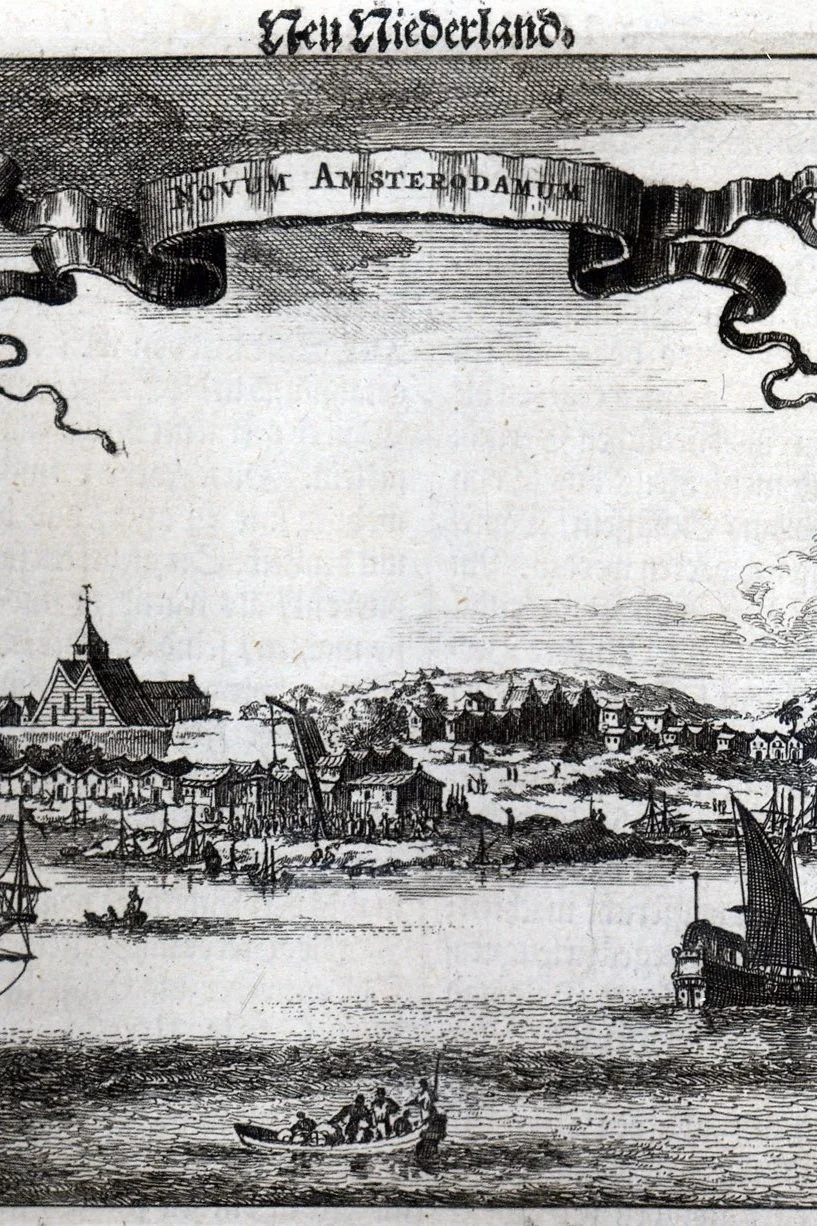
Dutch-American Stories: New Amsterdam: What’s in A Name?
By Jaap Jacobs
The small colonial town that the Dutch founded in North America was called New Amsterdam. We now know it as New York City. The story of how the name evolved has many twists and turns and is, in fact, a tale of war and peace.
Interview: Bob Santelli on the “Songwriters Hall of Fame Experience” Exhibit at the GRAMMY Museum
Bob Santelli interviewed by Ryan Purcell
What makes great music? What gives it power to sway our hips and emotions? These are some of the questions behind the Songwriters Hall of Fame Experience exhibit at the CUNY Graduate Center. Founded in 1969 by songwriter Johnny Mercer, the Songwriters Hall of Fame (SOHF) has celebrated the work and legacy of some of the most significant songwriters in American popular culture. The esteemed ranks of SHOF’s inductees include prolific teams such Rogers and Hammerstein (who helped compile the Great American Songbook), and Holland-Dozier-Holland (the songwriting engine that drove Motown), as well as solo songsmiths from Carole King to Mariah Carey.
Review: Terry Williams, The Soft City: Sex for Business and Pleasure in New York City
Reviewed by Timothy J. Gilfoyle
Public sex in New York evolved amidst wide-ranging social and economic change in Gotham from 1979 to 2018. The “Disneyfication” of Times Square and the elimination of the most visible forms of public pornography attracted the most attention and commentary. But an evolving sexual revolution of sorts simultaneously occurred throughout the city. For four decades, the sociologist and ethnographer Terry Williams was watching closely, taking notes. Literally.