Grand Emporium, Mercantile Monster: The Antebellum South’s Love-Hate Affair with New York City
Review by Emily Holloway
In 1788… a mere 62 bales were shipped to Europe via New York, compared to 153,757 less than thirty years later (2)….Despite the lengthy and arduous journey, tourists, planters, and writers flocked to the city... During their visits, these elite southerners – many of whom owned cotton plantations -- were rubbing elbows with New York’s mercantile and financial leaders,… The close social ties that developed between these classes built on their intimate financial connections through cotton… southern writers remarked critically on the vast economic inequality on display throughout the rapidly growing city, a characteristic they frequently tied to the machinations of industrial capitalism. This critique was frequently deployed as a reaction to northern abolitionist sentiments, a false equivalence between the ravages of industrial “wage slavery” and the racist violence of plantation slavery.
Bound by Bondage: Slavery and the Creation of a Northern Gentry
Review by Emily Holloway
Maskiell argues that both social groups – the enslavers and the enslaved – built, maintained, and challenged their respective terms of community and belonging, whether through diplomacy or corporate mergers disguised as marriage arrangements or by sustaining regional networks of contacts to foment rebellion and resistance. The text at times navigates a vast geographic scale, but successfully keeps the narrative grounded in the roots of elite Dutch society in seventeenth century New Netherlands…The overall book project seeks to illuminate the incremental and cumulative changes along with the continuities linking Dutch colonial practices to English colonial institutions in the transition from New Netherlands to New York.
The Pirate’s Wife: the Remarkable True Story of Sarah Kidd
Review by Kevin McDonald
…[S]he has produced a lively and entertaining biography of Sarah Kidd, from her arrival to the city through her multiple marriages and business dealings, with the book’s main focus on her relationship with William and the aftermath of his notorious demise. The narrative hits full sail when the privateer-turned-pirate returns from the Indian Ocean and Sarah becomes his accomplice in crime. Overall, the book is a stirring and fast paced yarn that helps reveal another layer of the Kidd saga, and more broadly suggests that the old axiom, “behind every great man is a great woman,” might be true even when dealing with pirates.
Sojourner Truth: How the Enslaved Woman of a Dutch-New York Family Became an Icon of America’s Black Liberation Movement
By Jerome Dewulf
…[A]ssisting in the recruitment of Black troops for the Union Army… she had an audience with President Lincoln in 1864… in Washington, D.C., Truth challenged the de facto segregation in the city’s transportation system by insisting on her right to take a seat on streetcars. With her decision to use civil disobedience as a strategy to challenge segregation in public transportation, Truth anticipated Rosa Parks by almost a century. However, Truth could also be an uncomfortable voice within her own community. For instance, when Douglass defended the use of violence in the fight for racial justice at a meeting in 1852, she interrupted him with the words “Frederick, is God gone?” and, in 1867, she provocatively stated that “if colored men get their rights, and not colored women theirs... the colored men will be masters over the women, and it will be just as bad as it was before.”
Dutch-American Stories: The Tale of the White Horse: The First Slave Trading Voyage to New Netherland
By Dennis J. Maika
The first direct shipment of enslaved Africans arrived in New Amsterdam in 1655. The voyage of the White Horse came in the wake of significant changes in the Dutch Atlantic. In this blog, American historian Dennis Maika outlines how family and business connections shaped the development of a slave-trading center in Manhattan.
Being Black in Seventeenth-Century Amsterdam vs. New Amsterdam
By Jeroen Dewulf
Due to a paucity of original sources, many questions regarding the social and religious behavior of New Amsterdam’s Black population have remained unanswered. One way of approaching the existing scholarship with new insights is by using a comparative methodology. Naturally, the observation that similarities in behavior existed in more than one place does not automatically imply that the origin and historical development of one corresponds to that of the other. However, since it is unlikely that many new sources about Manhattan’s earliest Black inhabitants will still be uncovered in the coming decades, a comparative perspective is probably the best strategy to shed new light on this historically marginalized community.
Interview: Andrea Mosterman on her book, Spaces of Enslavement
Interviewed by Deborah Hamer
In her new book, Spaces of Enslavement: A History of Slavery and Resistance in Dutch New York, Dr. Andrea Mosterman looks at the lives of enslaved people in New Netherland and Colonial New York from the 1620s until 1820. She shows how central enslaved labor was to individual households and to the colony as a whole and how this dependence on enslaved people shaped life for all New Yorkers — Black and white — over this two hundred year period.
The First Reconstruction: Black Politics in America from the Revolution to the Civil War
Van Gosse interviewed by Jessica Georges
It may be difficult to imagine that a consequential black electoral politics evolved in the United States before the Civil War, for as of 1860, the overwhelming majority of African Americans remained in bondage. Yet free black men, many of them escaped slaves, steadily increased their influence in electoral politics over the course of the early American republic. Despite efforts to disfranchise them, black men voted across much of the North, sometimes in numbers sufficient to swing elections.
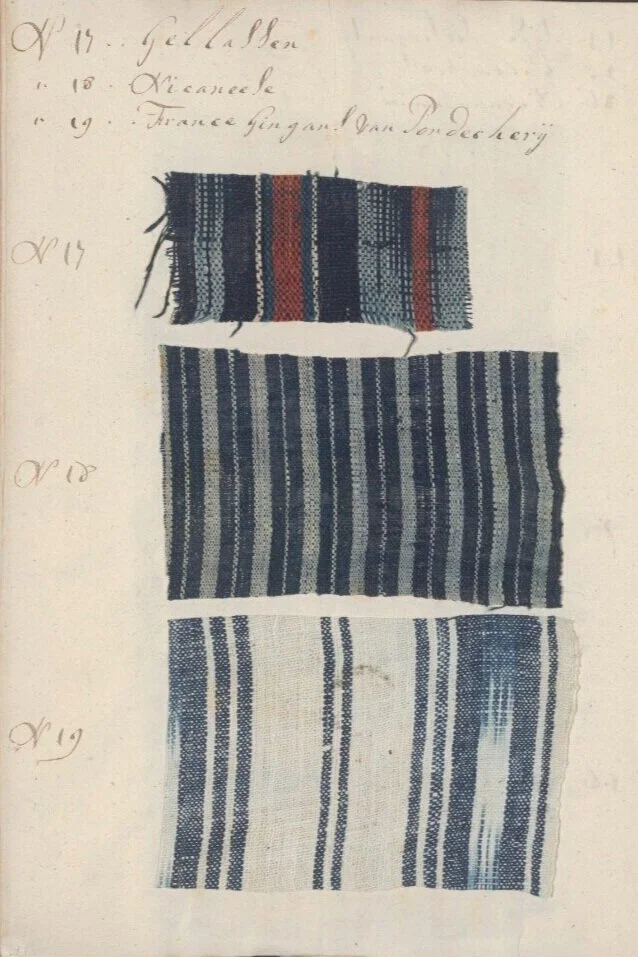
Contiguous Cloth: Textiles and the Slave Trade in New Netherland
By Carrie Anderson
Sometime in the fall of 1661 the Nieuw Nederlantse Indiaen docked in the harbor of New Amsterdam carrying documents and cargo from Curaçao, the Dutch colony that served as a central hub of the slave trade for both Dutch and Spanish colonies in the Americas. The skipper of the ship, Dirck Jansz van Oldenburg, carried with him a list of documents that were to be delivered to Pieter Stuyvesant (1612-1672), the director-general of New Netherland between 1647 and 1664.
Mastering Paradox: John Jay as a Slaveholding Abolitionist
By David N. Gellman
“Alexander Hamilton, Enslaver? New Research Says Yes” announced the New York Times in a November 2020 news story. A paper published online by Jessie Serfilippi, a researcher at the Schuyler Mansion State Historic Site, uncovered striking new evidence to clarify long muddied waters about Hamilton’s personal connections to this deep-seated New York institution. Serfilippi’s dogged research is proof once again that even traditional archives still hold revelations.