Masthead_Gloucester_Kearn.jpg
Posts in Manhattan
Black Nationalist Women's Activism in 1920s Harlem

Black Nationalist Women's Activism in 1920s Harlem

By Keisha N. Blain

Founded by Marcus Garvey, with the assistance of Amy Ashwood, in Kingston, Jamaica, in 1914, the UNIA (Universal Negro Improvement Association) was the largest and most influential Pan-Africanist movement of the twentieth century. Emphasizing racial pride, black political self-determination, racial separatism, African heritage, economic self-sufficiency, and African redemption from European colonization, Garvey envisioned the UNIA as a vehicle for improving the social, political, and economic conditions of black people everywhere. From Kingston, Jamaica, Garvey oversaw UNIA affairs before relocating to Harlem. At its peak, from 1919 to 1924, the organization attracted millions of followers in more than forty countries around the world.

This post is excerpted and adapted from Set the World on Fire: Black Nationalist Women and the Global Struggle for Freedom, courtesy of University of Pennsylvania Press.

Read More
A (Female) Walker in the City: An interview with Lauren Elkin

A (Female) Walker in the City: An interview with Lauren Elkin

Today on Gotham, editor Nick Juravich speaks with Lauren Elkin, about her recent book Flâneuse: Women Walk the City in Paris, New York, Tokyo, Venice and London, selected as a Book of the Year by the Financial Times, Guardian, New Statesman, Observer, The Millions and Emerald Street, and shortlisted for the PEN/Diamonstein-Spielvogel Award for the Art of the Essay.

Read More
Enter Donald: The Trump Empire Goes to Manhattan

Enter Donald: The Trump Empire Goes to Manhattan

By Gwenda Blair

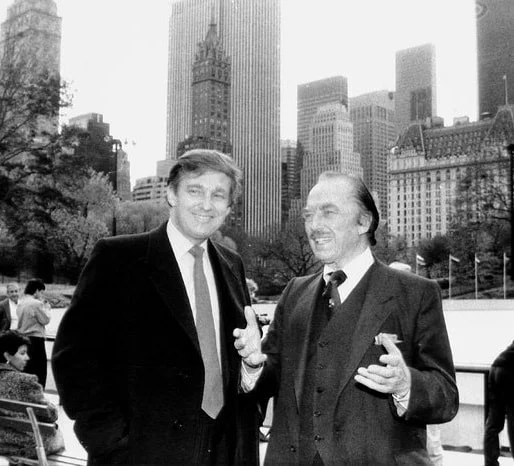
At the age of twenty-six Donald Trump had sealed his first multi-million-dollar deal. It was a sweet thing for a young man who had been his father’s full-time student ever since graduation from Wharton. Every morning he and his father drove from Jamaica Estates to Fred Trump’s modest office in Beach Haven, one of the large housing developments the older man had built near Coney Island in the early 1950s. Inside a nondescript, three-story brick building on Avenue Z, the headquarters of the Trump family empire still looked like the dentist’s office it had once been, with a linoleum floor, shag carpet, and chest-high partitions between cubicles.

This is the last of three profiles of the Trump patriarchs, adapted from the author's bestseller, The Trumps: Three Builders and a President, courtesy of Simon & Schuster.

Read More
Daniel Kane's "Poetry and Punk Rock in NYC"

Daniel Kane's "Poetry and Punk Rock in NYC"

Reviewed by Louie Dean Valencia-García

Punk culture, like most subcultures, depends upon mythology. These mythologies are built around people, spaces, and events of the past, often reused to create something new — pieced together in what cultural theorist Dick Hebdige calls “bricolage.” Daniel Kane’s “Do You Have a Band?”: Poetry and Punk Rock in New York City attempts to demystify one particular aspect of the early days of the New York City punk scene: its connection to the New York poetry scene. In a way, this work functions much like a sequel to the author’s 2003 work, All Poets Welcome: The Lower East Side Poetry Scene in the 1960s, focusing primarily on the well-known. Kane gives just about equal time to both analysis of poetic influences and to biography, intertwining them in his narrative. Do You Have a Band? is divided into chapters that focus on The Fugs, Lou Reed, St. Mark’s Poetry Project, Richard Hell, Patti Smith, Eileen Myles, Dennis Cooper, and Jim Carroll. The author’s decision to focus on these individuals and places does not surprise — they all fit into a sort of mythologized New York proto-punk canon. When given the opportunity to talk about punk-poets outside the canon, Kane avoids researching the less-famous individuals who were part of the scene. This focus on the select few is particularly noticeable in choices such as Kane’s decision not to elaborate upon the lesser known poets that figured into the mimeograph punk poet magazine published by Richard Hell — leaving the mythology of the New York punk-poetry scene largely intact.

Read More
Myth #8: Static Manhattan, Part II

Myth #8: Static Manhattan, Part II

By Gerard Koeppel and Jason M. Barr

Today, the image of Manhattan is as a vertical city — a place that, as E. B. White saw it, “has been compelled to expand skyward because of the absence of any other direction in which to grow.” With our eyes focused skyward, we think little of the city’s horizontal expansion, as the grid plan seemingly set Manhattan in stone, literally and figuratively.

This is the final installment of the authors' series The Manhattan Street Grid: Misconceptions and Corrections.

Read More
Myth # 7: Static Manhattan, Part I

Myth # 7: Static Manhattan, Part I

By Jason M. Barr and Gerard Koeppel

Today, Manhattan is synonymous with its Cartesian configuration. Unlike a standard mathematical graph, which starts at the intersection of zero and zero, Manhattan “begins” at First Street and First Avenue (the “nexus of the universe,” according to Seinfeld’s Kramer). From there, it’s a simple counting exercise north or west. The integer-based order creates the perception that Manhattan is a frozen lattice.

But, when one starts to look a bit deeper, we can see that the grid plan has, in fact, shown significant evolution, both in the early phases of its implementation and throughout the 20th century. Though the pace of change is slow, a “helicopter tour” through time reveals these cumulative modifications.

Read More
Myth #3: Aaron Burr

Myth #3: Aaron Burr

By Gerard Koeppel with Jason M. Barr

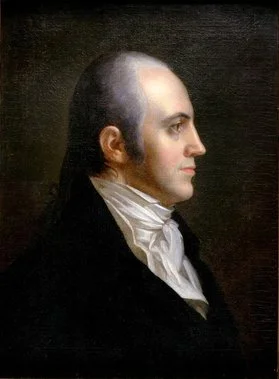
It could be said that Aaron Burr, the baddest boy of early American democracy, is responsible for the famous Manhattan street grid. In a backhanded way — a way he surely would appreciate — he is.
But, like a perverse Madame de Pompadour, the deluge of orderly streets came after him, entirely without his input while he was laying low in Europe.

Read More