Morganthau: Power, Privilege, and the Rise of An American Dynasty by Andrew Meier
Reviewed by David Huyssen
Henry wasn’t grateful. He hired Pinkerton agents to keep Lazarus away from his wedding. A talented, volcanically ambitious middle son, Henry had been nursing an Oedipal grudge for years. Lazarus had forced him to drop out of City College at fourteen to go to work, and the sting of this betrayal overshadowed the fact that it had also prompted a vital step on Henry’s journey to riches and repute: a job in a law firm run by one of Lazarus’s acquaintances, who initiated him into the world of property management.
Henry rejected his father but embraced his methods.
From roughly 1850 to 1950, Fulton Market would dominate wholesale fish provisioning in the United States and much of the country’s fish would pass through Fulton…As the market supplied itself from more distant locales, Fulton’s ecological impact widened. … wholesalers had to look further and further away and develop more and more complex means of preserving and moving fish. … the length and complexity of this process served to obscure the ecological impact of food—consumer appetites were, after all, destroying ecosystems a world away.
The Rise and Fall of Protestant Brooklyn: An American Story
Reviewed by Jon Butler
Between the Civil War and 1900, "old" Brooklyn both prospered and declined. Real estate developers and the new Brooklyn Bridge swelled Brooklyn's tony neighborhoods with middling and upper-class commuters to Manhattan….The New York Times may have been condescending when it labelled Brooklyn "that moral suburb" before the Brooklyn Bridge dedication, as Blumin and Altschuler put it. But it hadn't missed the Protestants' aim.
Henry Collins Brown and the Museum of the City of New York
By Claudia Keenan
Since at least the turn of the 20th century, New Yorkers raised the possibility of establishing a city museum. In 1904 when subway excavations at Bowling Green turned up a stone from the early 17th-century Fort George, a local author named Charles Hemstreet opposed giving it to the New-York Historical Society. “Once in the possession of the Society,” he told a reporter, “it would be as inaccessible to the general public as if it had been left in its underground resting place.” He urged the creation of a “municipal museum.”
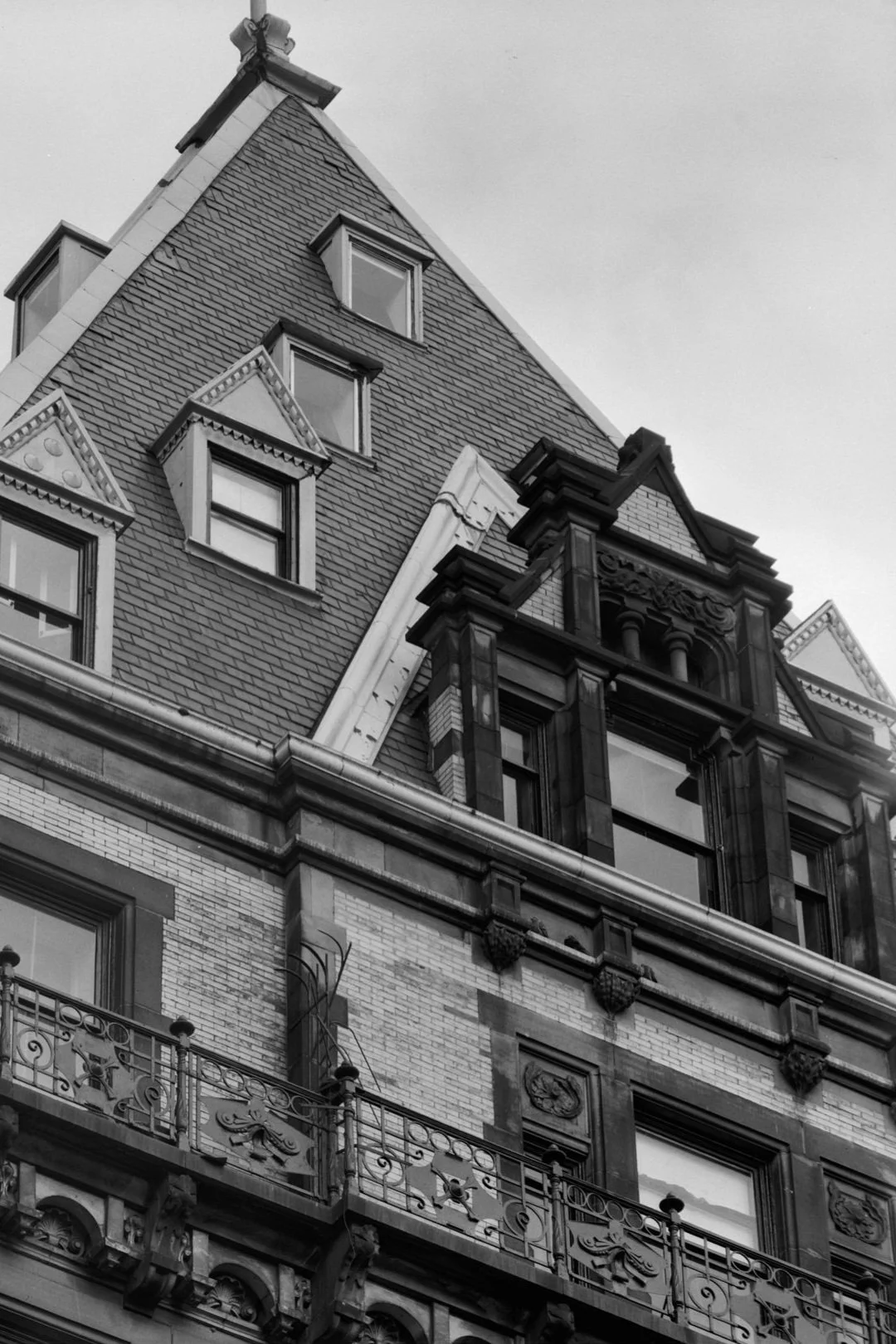
In the late summer of 1883, the Dakota Apartments was nearly ready for tenants. After three years of construction, the luxury apartment building had only a few months’ work left to go. Slate-tile roofers, sheet-metal workers, and ironworkers were completing the roof, while carpenters, plasterers, and plumbers finished the interiors. Every day, hundreds of craftsmen trekked uptown to work on the million-dollar building that was not only unusually expensive but also remote in location.
The Great Disappearing Act: An Interview with Christina A. Ziegler-McPherson
Interviewed by Hongdeng Gao
Today on the Blog, Gotham editor Hongdeng Gao speaks to Christina Ziegler-McPherson about her latest book, The Great Disappearing Act: Germans in New York City, 1880-1930. Ziegler-McPherson discusses how over the span of a few decades, New York City’s German community went from being the best positioned to promote a new, more pluralistic American culture that they themselves had helped to create to being an invisible group. She offers fresh insights into how German immigration shaped cultural, financial, and social institutions in New York City and debates about assimilation and multi-lingualism in the United States.
The Gilded Age in a Glass: From Innovation to Prohibition
By Zachary Veith
In the early 20th century, bartenders at the world-famous Waldorf-Astoria memorized 271 concoctions. Scores of signature drinks were dreamt up in honor of people and events: the “Arctic” to celebrate Peary’s discover of the North Pole, the “Coronation” to commemorate King Edward’s ascension to the throne, the “Commodore” and “Hearst,” honoring business tycoons, and even the “Charlie Chaplin.” Imbibing at the mahogany bar aligned oneself with the wealth and tastemakers of America; crowds of Wall Street bankers like J.P. Morgan, celebrities like Buffalo Bill Cody and Mark Twain, and the high-society elites all enjoyed more than a few of the bar’s signature cocktails.
Review: Robert A. McCaughey’s A College of Her Own: The History of Barnard
Reviewed by Kelly Marino
In A College of Her Own, scholar Robert McCaughey examines the history of Barnard College and the changes in its leadership, programs, and demographics from its founding in 1889 to the present. He argues that the school's administrators, location in New York City, and relationship with Columbia University made Barnard distinct among the “Seven Sisters,'' the group of elite women’s liberal arts colleges in the Northeast.
Podcast Interview: Patria: Puerto Rican Revolutionaries in Nineteenth Century New York
Edgardo Meléndez Interviewed by Jesse Hoffnung-Garskoff
Edgardo Meléndez's book Patria: Puerto Rican Revolutionaries in Nineteenth Century New York (Centro Press, 2019) examines the activities and ideals of Puerto Rican revolutionary exiles in New York City at the end of the nineteenth century. The study is centered in the writings, news reports, and announcements by and about Puerto Ricans in Patria, the official newspaper of the Cuban Revolutionary Party. Both were founded and led by the Cuban patriot José Martí.