The War Brought Home: The Greenwich Village Townhouse Explosion of 1970
By Brendan Mahoney
The Weather Underground (Weathermen) rose from the dust as the pallbearers of the now deceased SDS and dying anti-war movement. This group sought to destroy many of the white, bourgeois remnants of the SDS, abandoning electoral and peaceful tactics in favor of guerrilla warfare, with solidarity across racial lines. Their motivation was to bring the war home. In plain terms that meant bringing the destruction and chaos that the US war machine had brought to the people in Vietnam and elsewhere, into the United States.
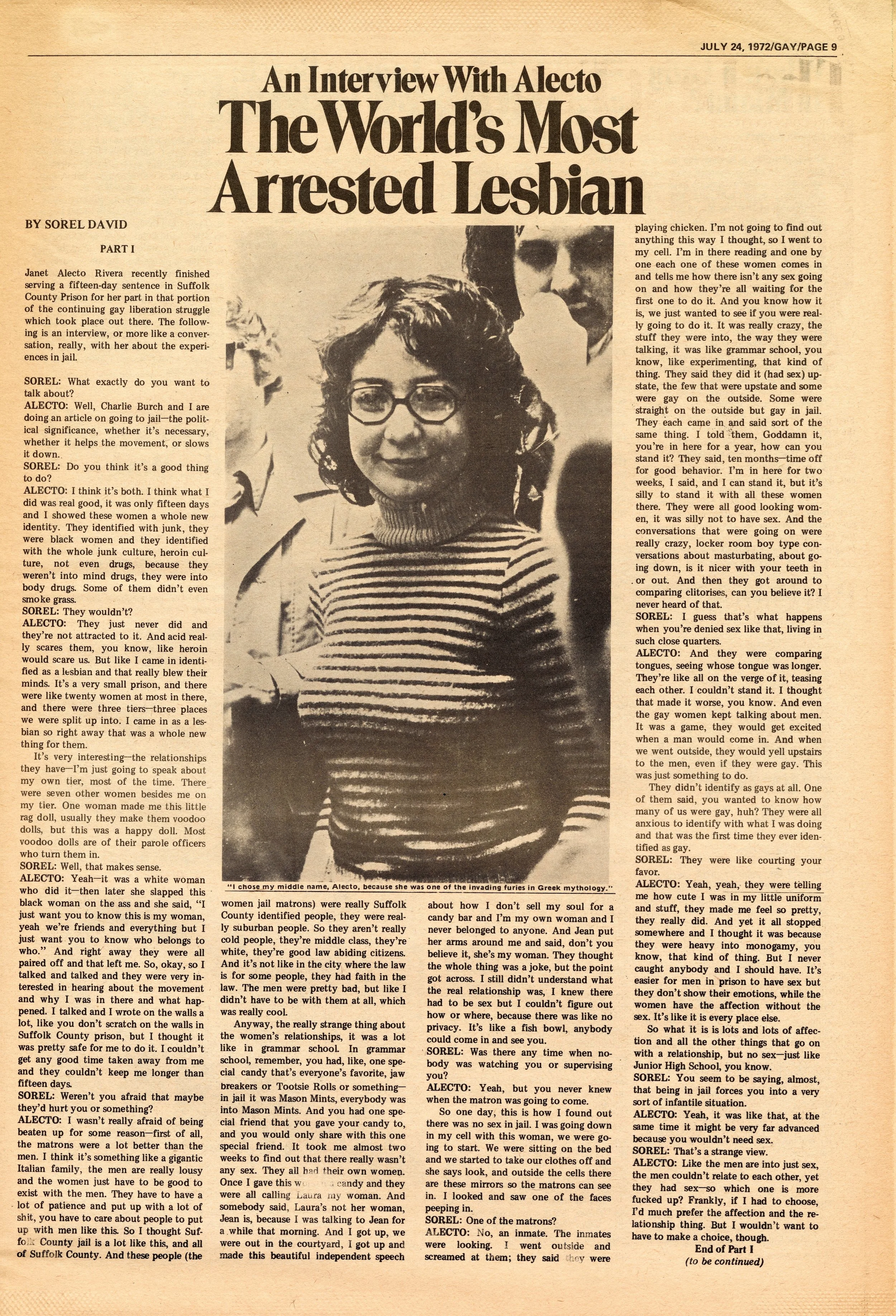
“‘The World’s Most Arrested Lesbian:’ Corona Rivera and the New York Gay Activists Alliance, 1970-72.” An Interview with Marc Stein
Interviewed By Ben Serby
I think historians of LGBTQ+ activism should become more familiar with Corona’s story because it’s fascinating in and of itself, but also because it might change the way we think about the history of GAA-New York and the broader history of LGBTQ+ activism in the 1970s. More generally, I think GAA-New York was responsible for one of the most creative and powerful waves of direct action ever seen in the United States, with lessons for LGBTQ+ and other activists today. Corona was a leading GAA-New York activist for two years and we should know more about her.
In 1849, riots, including theater riots, were nothing new in New York, and the Astor Place tragedy came in an era of profound social unrest in New York. But the city’s militaristic response—opening fire on civilians—was something new, and armed violence, or the threat of it, was used again and again in the wake of Astor Place […]
The Case of Ernest Gallashaw: Achieving Justice in an Earlier Era of White-Backlash Politics
By Robert Polner and Michael Tubridy
The episode proved to be a revelatory moment in a city whose conceit of tolerance was belied by stark economic inequality as well as segregation in housing, employment and schools. Now virtually forgotten, the eruption on poor and working-class streets 15 miles from City Hall was—and still remains—historically significant for signaling New York City’s seething racial tensions and the potential for intense right-wing reaction.
Astor Place, though barely five hundred feet long, is a hectic street of cafes and stores, with the bustling Astor Place subway station as the centerpiece and Cooper Union at its eastern end. But 175 years ago this month, the state militia confronted an angry mob on Astor Place and blood was spilled. It was one of the deadliest riots in New York’s history. How did it happen, and why did it happen there?
Policing the World from New York City: How Policing Changed from 1880 to 1920
A Collaboration with Public Books: Matthew Guariglia, interviewed by Emily Brooks
From the 1880s to the 1940s, New York City was transformed—and so too was the New York City Police Department. This is the second of two interviews—published in collaboration with Public Books—where Matthew Guariglia and Emily Brooks discuss this pivotal era, through their exciting new books on the NYPD. The first interview was published on Public Books. You can read it here.
Gotham’s War Within a War: Policing and the Birth of Law-and-Order Liberalism in World War II-Era New York City
Review By Douglas Flowe
This work is not only timely but reflective of growing scholarship on law enforcement that places New York City front and center; rightfully so considering how influential Gotham is in terms of law enforcement and penology. With resources like the La Guardia papers, court record books, oral histories, and NAACP papers from the Library of Congress, Brooks has crafted a major contribution to the history of the often overlooked mid-twentieth century development of America’s criminal justice system; a story that will be relevant to all students of law, urban history, criminality, and twentieth-century politics.
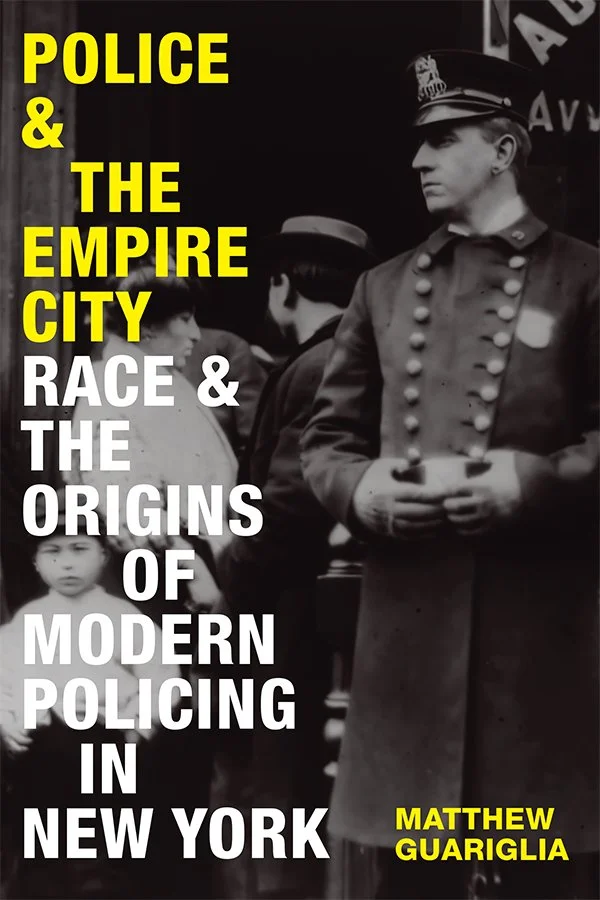
Police and the Empire City: Race and the Origins of Modern Policing in New York
Review By Emily Holloway
Set from the original founding of the NYPD in 1845 and concluding around the first World War, Guariglia’s book situates the NYPD as a medium of American imperial ambition and statecraft. Police and the Empire City is not merely a history of the country’s largest and most influential police department; it also positions the NYPD as a repository of scientific knowledge about race, gender, and sexuality that is mobilized and iterated to assert state authority and preserve order.
The Pirate’s Wife: the Remarkable True Story of Sarah Kidd
Review by Kevin McDonald
…[S]he has produced a lively and entertaining biography of Sarah Kidd, from her arrival to the city through her multiple marriages and business dealings, with the book’s main focus on her relationship with William and the aftermath of his notorious demise. The narrative hits full sail when the privateer-turned-pirate returns from the Indian Ocean and Sarah becomes his accomplice in crime. Overall, the book is a stirring and fast paced yarn that helps reveal another layer of the Kidd saga, and more broadly suggests that the old axiom, “behind every great man is a great woman,” might be true even when dealing with pirates.
Morganthau: Power, Privilege, and the Rise of An American Dynasty by Andrew Meier
Reviewed by David Huyssen
Henry wasn’t grateful. He hired Pinkerton agents to keep Lazarus away from his wedding. A talented, volcanically ambitious middle son, Henry had been nursing an Oedipal grudge for years. Lazarus had forced him to drop out of City College at fourteen to go to work, and the sting of this betrayal overshadowed the fact that it had also prompted a vital step on Henry’s journey to riches and repute: a job in a law firm run by one of Lazarus’s acquaintances, who initiated him into the world of property management.
Henry rejected his father but embraced his methods.