Wasted City: A History of Waste and Water Pollution in New York City
Reviewed by Erik Wallenberg
Coastal cities face a dizzying array of environmental problems, from rising seas due to climate change chaos, to polluted waters endangering fish, wildlife, and drinking water. New York City, rocked by Superstorm Sandy and struggling to rebuild a harbor ecosystem that can sustain edible fish and shellfish populations, is ripe for historical examination as environmental crises increase. Throughout its modern lifetime, New York harbor has experienced waste dumping, toxic pollution, a changing coastline, and growth as an international shipping port with attendant dredging issues, all of which we might look to for current context, historical lessons, and to help us better understand our relationship within this ecosystem.
Kara Murphy Schlichting Interviewed by Garrett Reed Gutierrez
In New York Recentered: Building the Metropolis from the Shore, Kara Murphy Schlichting offers a fresh perspective on New York City’s history by shifting readers’ gaze away from Manhattan and towards the coastal periphery—where local planning initiatives, waterfront park building, the natural environment, and a growing leisure economy each had a stake in the regional development of New York City. Schlichting’s regional and environmental approach frames New York’s extensive waterways as points of connection that unite, rather than divide, the urban core and periphery to one another.
Dead Rivers and Day’s End: Cruising and Preserving New York’s Queer Imaginaries
By Fiona Anderson
Whenever I’m in New York, I make a point of spending time looking at the wooden pilings that stand in the Hudson, remnants of the warehouses and piers that occupied the waterfront until the mid-1980s. Gathered together in intimate coalition, they jut up and out along the riverside like rugged swimmers leaping in to rescue a drowning comrade. They look both like placeholders for future construction and hardy traces of a long-lost culture, like a forgotten work by Robert Smithson or an American Pompeii. This area is the subject of my recent book Cruising the Dead River: David Wojnarowicz and New York’s Ruined Waterfront (University of Chicago Press, 2019),which looks at how and why this site hosted a vibrant cruising scene and art scene in the late 1970s and early 1980s.
Review: Malgorzata Szejnert's Ellis Island: A People’s History
Reviewed by Sarah Litvin
Ellis Island: A People’s History, by Polish journalist Malgorzata Szejnert, tells an undulating history of the island through a chronological series of character studies and vignettes. Five sections, aptly entitled “Rising Tide,” “Flood,” “Becalmed,” “Pitch and Toss,” and “Ebb Tide” chart the rise and fall of New York’s famous immigration station that processed more than twelve million people between 1892, when it opened, and 1954, when it closed. Immigration through Ellis Island peaked in 1907, when 3,818 ships delivered more than 1.2 million people, a flood that calmed at the outbreak of WWI, and ebbed as deportations increased during the Red Scare and immigration was restricted by quotas created by the Johnson-Reed Act of 1924.
In the Company of Pirates: New Amsterdam and the Atlantic World
By Timo McGregor
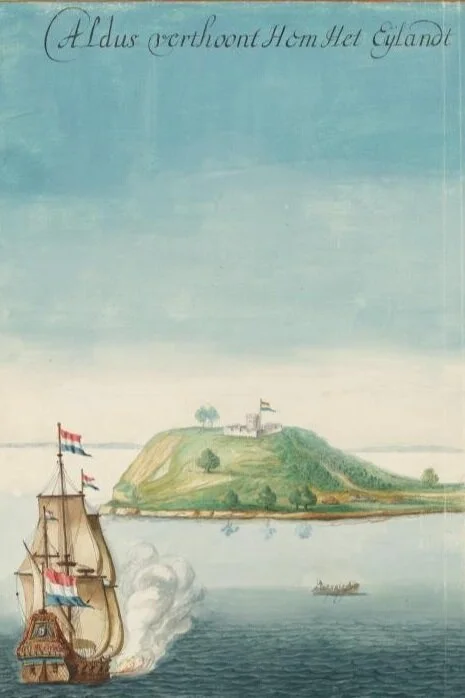
Preserved in an unassuming folder of Dutch colonial correspondence at the New York State Archives lies a vivid first-hand account of deceit, avarice, and violence in the seventeenth century Atlantic world. The scene, surprisingly, is not New Amsterdam or the Hudson Valley but the coast of modern-day Senegal. Here, in the winter of 1659, Abraham Velthuijsen witnessed a small but swashbuckling episode in the rise of Atlantic piracy and privateering.
In the summer of 1641, a Wiechquaskeck man murdered Claes Smits, an aged wheelwright who lived in a small house north of Fort Amsterdam. He had visited Smits’ house to exchange beaver skins for duffels of cloth. But as Smits bent over to grab the cloth from a chest, the Native man (the records have not preserved his name) struck him dead with an axe. The Commander of the Dutch garrison at Fort Amsterdam pursued the man back to his village and accosted him with questions.
The Sustainability Myth: An Interview with Melissa Checker
Interviewed by Katie Uva
Today on the blog, Gotham editor Katie Uva speaks to Melissa Checker about her recent book, The Sustainability Myth: Environmental Gentrification and the Politics of Justice. In it, Checker examines and critiques current frameworks of sustainability in New York, where sustainability and economic development are often seen as goals that are mutually supporting. Checker argues that this belief leads to gentrification, deepens economic inequality, and even winds up worsening environmental conditions in some parts of the city.
Forbs, Fungi, and Fading Memories: What Can Preserving a Disappearing Staten Island a Century Ago Teach Us Today?
By Melissa Zavala
Staten Island’s rich history of conservation is overshadowed by its reputation as a “dump,” most often associated with Fresh Kills, the notorious landfill which at its peak point of operations in the 1980s was considered the largest landfill in the world. A look through the Staten Island Museum’s archival collections, however — its founder’s letters, journals, publications, photographs, and a wide array of other objects including herbariums, assorted wet and dry collections of specimens, and more — reveals an island that has transformed radically.
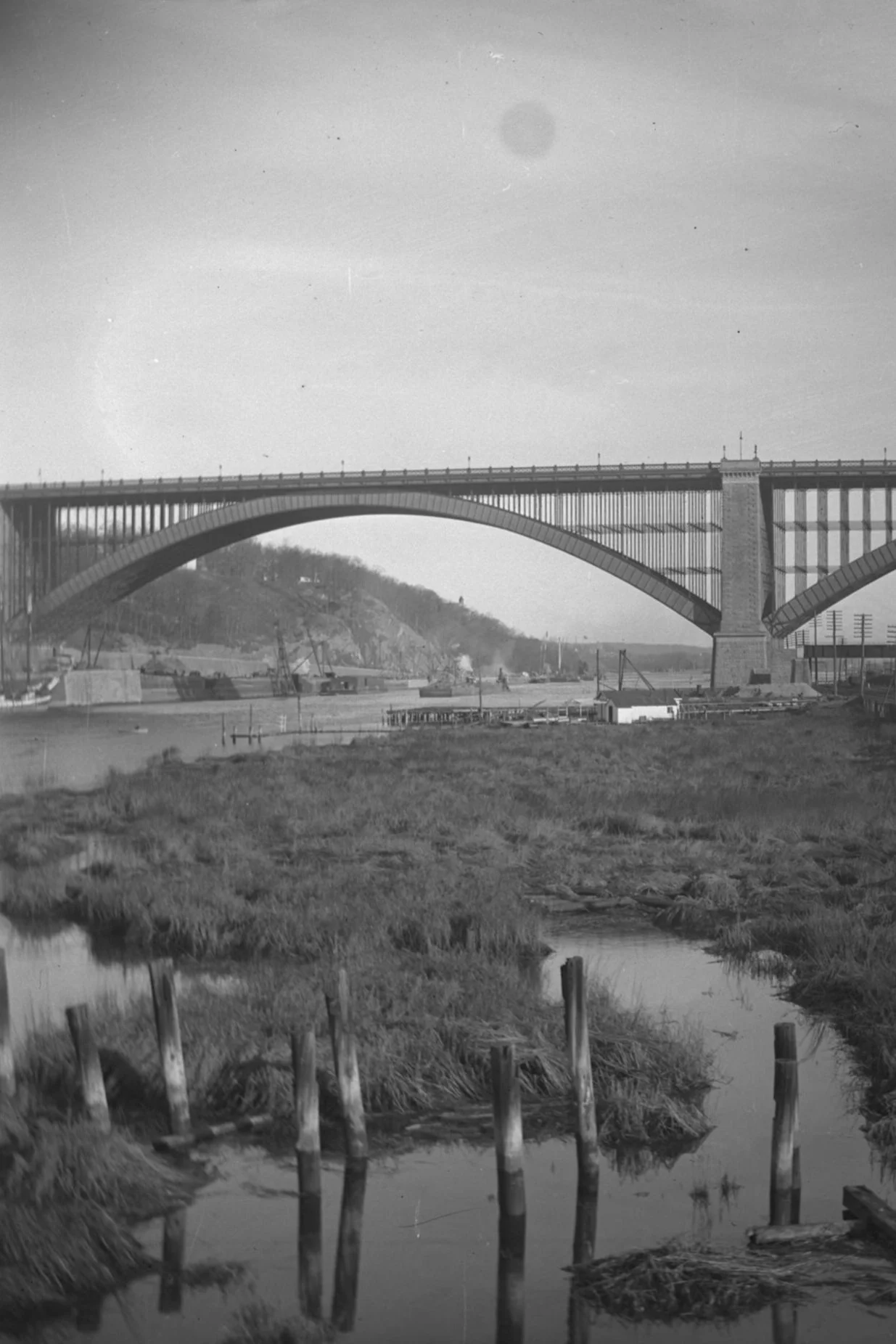
Recently, I led the first digital history walk of the Harlem River, with Duane Bailey-Castro and Nathan Kensinger. Using their photos to explore the river’s history, we focused on how the Harlem has been disconnected from its community, and what can be done to reconnect with it. But I also used the experience to clarify the value of river history more generally. If there’s one thing the COVID-19 pandemic has made clear, it’s that the virus has exacerbated existing inequalities in our country.
The Jewel of Eastern Long Island: Precarity and the Peconic Bay Scallop Industry
By Erin Becker
Peconic Bay scallops, argopecten irradians, are the jewel of the Eastern Long Island recreational and commercial fishery; their market rate can be as high as $30 for a single pound. The shellfish are a fall and winter delicacy throughout the Northeastern United States. Peconic Bay scallops have enormous cultural and economic significance.