
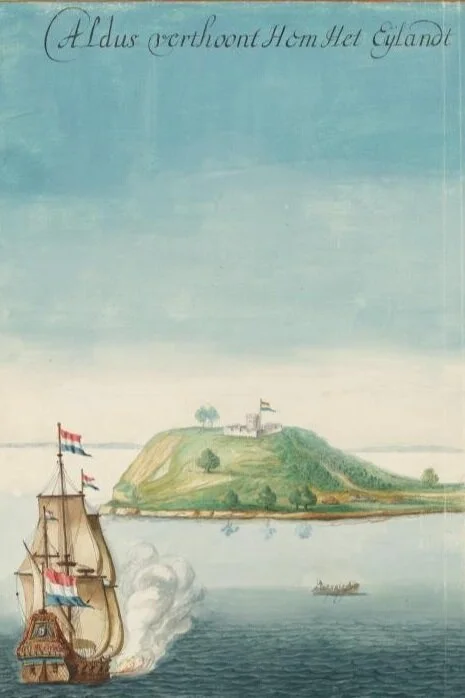
In the Company of Pirates: New Amsterdam and the Atlantic World
By Timo McGregor
Preserved in an unassuming folder of Dutch colonial correspondence at the New York State Archives lies a vivid first-hand account of deceit, avarice, and violence in the seventeenth century Atlantic world. The scene, surprisingly, is not New Amsterdam or the Hudson Valley but the coast of modern-day Senegal. Here, in the winter of 1659, Abraham Velthuijsen witnessed a small but swashbuckling episode in the rise of Atlantic piracy and privateering.
Read More
Nieuw Amsterdam As Manhattan
By Harrison Diskin
In the summer of 1641, a Wiechquaskeck man murdered Claes Smits, an aged wheelwright who lived in a small house north of Fort Amsterdam. He had visited Smits’ house to exchange beaver skins for duffels of cloth. But as Smits bent over to grab the cloth from a chest, the Native man (the records have not preserved his name) struck him dead with an axe. The Commander of the Dutch garrison at Fort Amsterdam pursued the man back to his village and accosted him with questions.
Read MoreThe Sustainability Myth: An Interview with Melissa Checker
Interviewed by Katie Uva
Today on the blog, Gotham editor Katie Uva speaks to Melissa Checker about her recent book, The Sustainability Myth: Environmental Gentrification and the Politics of Justice. In it, Checker examines and critiques current frameworks of sustainability in New York, where sustainability and economic development are often seen as goals that are mutually supporting. Checker argues that this belief leads to gentrification, deepens economic inequality, and even winds up worsening environmental conditions in some parts of the city.
Read More
Forbs, Fungi, and Fading Memories: What Can Preserving a Disappearing Staten Island a Century Ago Teach Us Today?
By Melissa Zavala
Staten Island’s rich history of conservation is overshadowed by its reputation as a “dump,” most often associated with Fresh Kills, the notorious landfill which at its peak point of operations in the 1980s was considered the largest landfill in the world. A look through the Staten Island Museum’s archival collections, however — its founder’s letters, journals, publications, photographs, and a wide array of other objects including herbariums, assorted wet and dry collections of specimens, and more — reveals an island that has transformed radically.
Read More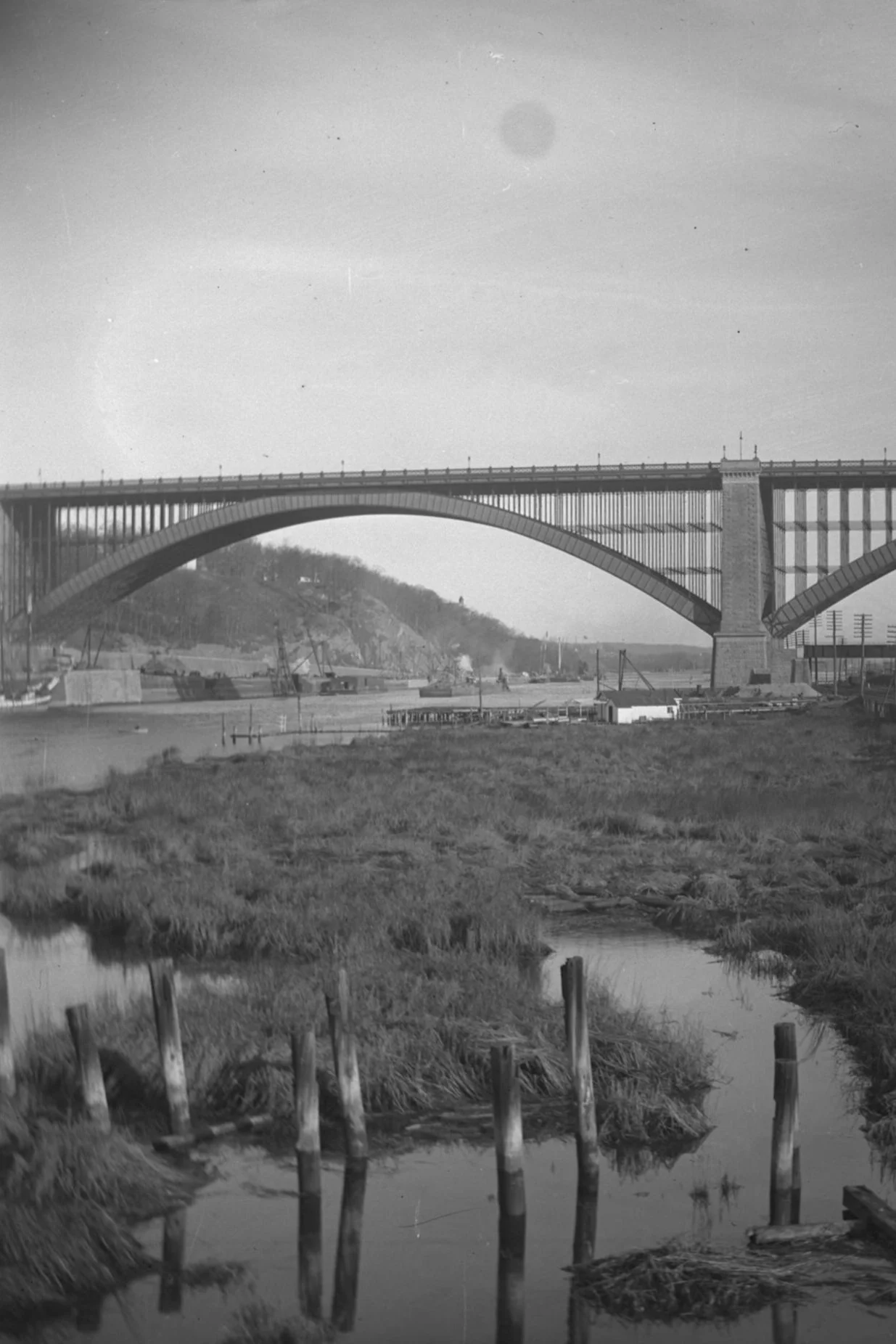
Reconnecting with the Harlem River
By Scot McFarlane
Recently, I led the first digital history walk of the Harlem River, with Duane Bailey-Castro and Nathan Kensinger. Using their photos to explore the river’s history, we focused on how the Harlem has been disconnected from its community, and what can be done to reconnect with it. But I also used the experience to clarify the value of river history more generally. If there’s one thing the COVID-19 pandemic has made clear, it’s that the virus has exacerbated existing inequalities in our country.
Read More
The Jewel of Eastern Long Island:
Precarity and the Peconic Bay Scallop Industry
By Erin Becker
Peconic Bay scallops, argopecten irradians, are the jewel of the Eastern Long Island recreational and commercial fishery; their market rate can be as high as $30 for a single pound. The shellfish are a fall and winter delicacy throughout the Northeastern United States. Peconic Bay scallops have enormous cultural and economic significance.
Read MoreNew York’s Unrighteous Beginnings
By Erin Kramer
In the initial instructions to New Netherland’s director general regarding obtaining land from indigenous peoples, the company leadership wrote: “For trading-goods or by means of some other amicable agreement, induce them to give up ownership and possession to us, without however forcing them thereto in the least or taking possession by craft or fraud, lest we call down the wrath of God upon our unrighteous beginnings, the Company intending in no wise to make war or hostile attacks upon any one.”[1]
When they first ventured into the spaces they would eventually call New Netherland, the Dutch knew that Europe was watching. Because they wanted to set themselves apart from the horrors of bloody conquest and slavery that made up the Black Legend of Spanish colonization, the Dutch were determined to set a better example. Instead of taking land by force, they relied on a legal tradition that acknowledged Native sovereignty over land in the Americas and they deployed capitalism to establish a foothold in North America.
Read More
Gabe: A Tribute to the U.S. Merchant Mariner Veterans of World War II
By Johnathan Thayer
The American Merchant Marine Veterans Association (AMMV) has worked on behalf of merchant mariner veterans of World War II since its founding in 1984. Representing a “Voice for the American Merchant Mariner” and advocating for just compensation and recognition for merchant mariner veterans of WWII and other wars, the the New York and New Jersey chapters of the AMMV have hosted countless meetings and celebrations for decades. Sadly, they have also lent their services to memorial remembrances for chapter members who have passed away. It is with a heavy heart that the New York City-based Edwin J. O’Hara chapter recently did so recently for Gabriel “Gabe” Frank, who passed away on January 29th.
Read More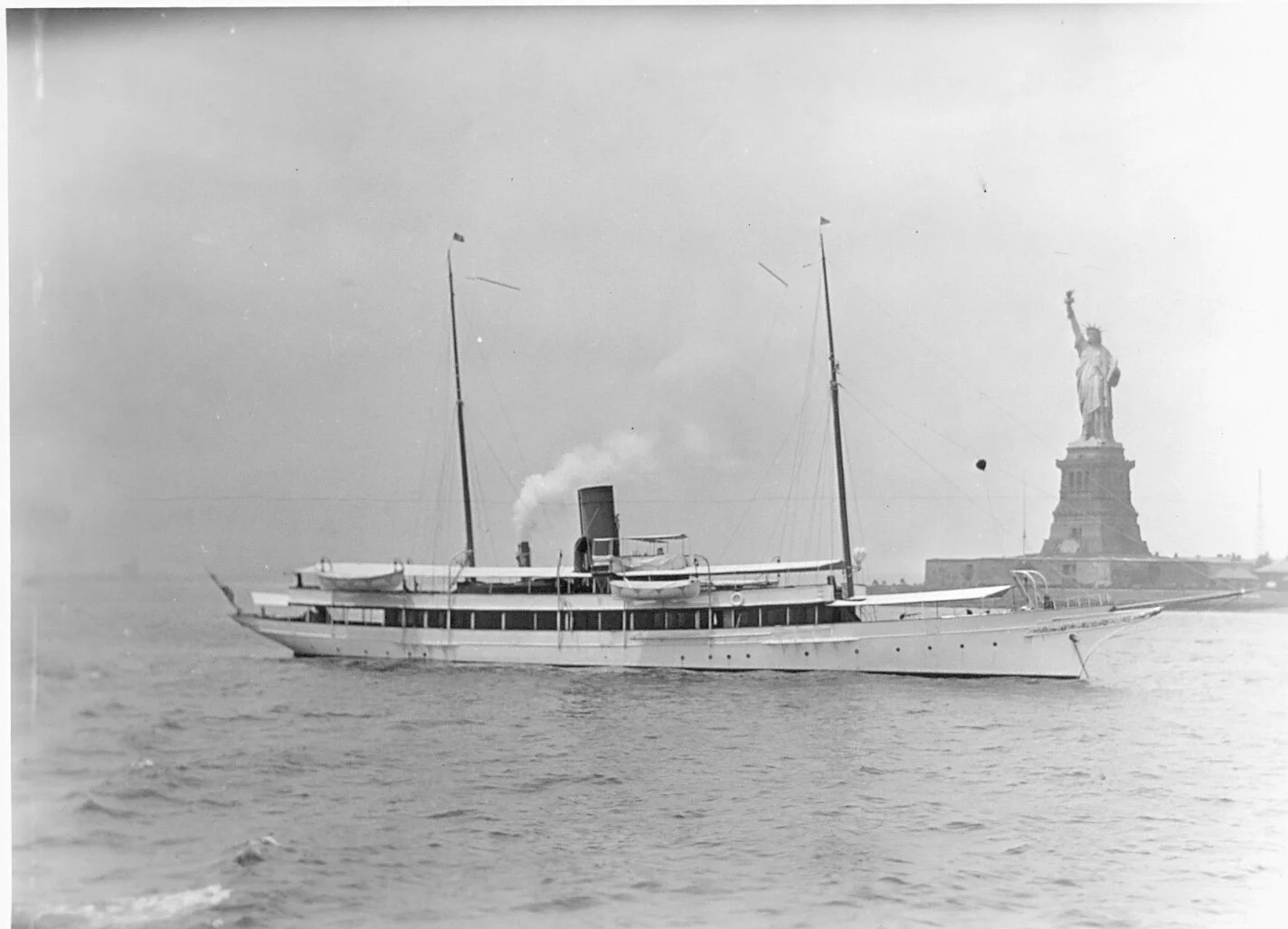
Rumrunners and Smugglers in New York City
By Ellen NicKenzie Lawson
“New York City, as the greatest liquor marker in the United States, is a great temptation for the rum runners,” wrote a Coast Guard Intelligence officer in the 8th year of Prohibition. Liquor to be smuggled ashore first was taken to Rum Row, an area of floating foreign liquor supply ships over 12 miles out off Long Island and Nantucket. Then American contact boats smuggled the liquor to shore.
Although smugglers had hundreds of miles of metropolitan waterfront to choose from, they preferred landing directly at docks on Manhattan’s twenty miles of shoreline, or in Brooklyn on the East River, or across the Hudson in Newark and Hoboken and, if necessary, farther up that river in Yonkers or Kingston. Smuggling directly to New York City saved smugglers the cost of trucking liquor from landings in eastern Long Island or south on the Jersey Shore. But smuggling directly into the Upper Bay was difficult: it was patrolled by Customs, the Marine Police, and the Coast Guard.
Read More