Masthead_Gloucester_Kearn.jpg
Posts in Waterfront & Islands
Urban Ornithology: 150 Years of Birds in New York City

Urban Ornithology: 150 Years of Birds in New York City

Reviewed by Leslie Day

I lived on a boat on the Hudson River in Manhattan from 1975 to 2011 and it was then that I became an avid birder. Living on the Hudson I watched canvasback ducks with their beautiful red heads arrive each winter in huge numbers in the 1980’s. And I observed them as their numbers diminished greatly after the 1990’s. When I first moved to the river there were many laughing gulls that migrated to the city each April. My father’s birthday was April 12th, around the time they’d show up. The happy sound of their calls would bring me running outside to my deck to look at them and hear the joyous cries — my harbinger of the beautiful warm months to come. By the time I moved away in 2011, there were just a few arriving each spring.

Read More
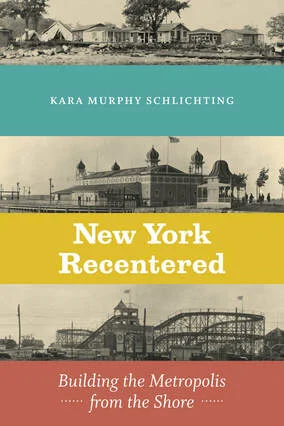
New York Recentered: Building the Metropolis from the Shore

New York Recentered: Building the Metropolis from the Shore

By Kara Murphy Schlichting

In 1865 New York City park commissioner Andrew Haswell Green came to the conclusion that the city had outgrown Manhattan Island. In a report for the Board of Commissioners of Central Park, Green argued that the city’s future should include its mainland environs of Westchester County north of the Harlem River. He articulated a river-spanning future for New York. Green reasoned that lower Westchester was “so intimately connected with and dependent upon the City of New York, that unity of plan for improvements on both sides” of the Harlem was “essential.”

Reprinted with permission from New York Recentered: Building the Metropolis from the Shore, by Kara Murphy Schlichting, published by the University of Chicago Press. © 2019 by the University of Chicago Press. All rights reserved.

Read More
Hugh Ryan's When Brooklyn Was Queer

Hugh Ryan's When Brooklyn Was Queer

Reviewed by Benjamin Serby

“Pick a random book about ‘New York City’ history, and chances are, it will mention Brooklyn… sporadically if at all. The chance that it talks about the queer history of Brooklyn? Nearly zero.” Thus writes Hugh Ryan, a curator and author whose new book, When Brooklyn Was Queer, marks a first attempt at correcting the ingrained Manhattan-centrism of queer studies and recovering the stories of queer Brooklynites in particular.

Read More
Rivers, Filth and Heat: Riverbaths and the Fight over Public Bathing

Rivers, Filth and Heat: Riverbaths and the Fight over Public Bathing

By Naomi Adiv

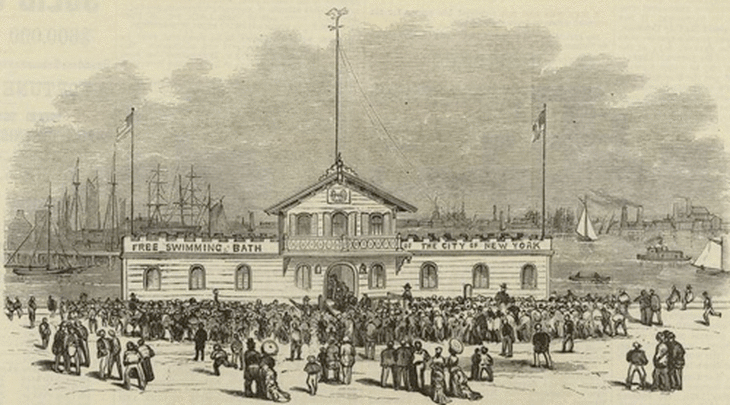
In the summer of 1870, New York City got its first municipal bath: swimming pools sunk into the rivers, through which river water flowed. An 1871 New York Times article describes them: “baths are of the usual house-like model, and have a swimming area of eighty-five feet in length by sixty-five feet in width. They are… provided with sixty-eight dressing-rooms, have offices and rooms in an additional story, and are well lighted with gas for night bathing.” In the year after they were built, the Department of Public Works reported that they were regularly used to their capacity, particularly on hot summer days. At their height, there were twenty-two such baths around the waters of New York City.

Read More
Brooklyn’s Renaissance: Commerce, Culture, and Community in the Nineteenth-Century Atlantic World

Brooklyn’s Renaissance: Commerce, Culture, and Community in the Nineteenth-Century Atlantic World

Reviewed by Jocelyn A Wills

One never knows where a family heirloom will lead. Brooklyn’s Renaissance began with a cultural artifact that Italian Renaissance scholar Melissa Meriam Bullard’s mother inherited from a distant cousin: a portrait of Luther Boynton Wyman (1804-79), a forgotten shipping merchant for Liverpool’s Black Ball Line, long-time resident of Brooklyn Heights, and “guiding hand” in the founding of the “arts-friendly community” along Montague Street during the 1850s and 1860s (with the Academy of Music, now “BAM,” as Brooklyn’s cultural center).

Read More
Myth #5: The Grid Plan Leveled Manhattan

Myth #5: The Grid Plan Leveled Manhattan

By Jason Barr with Gerard Koeppel

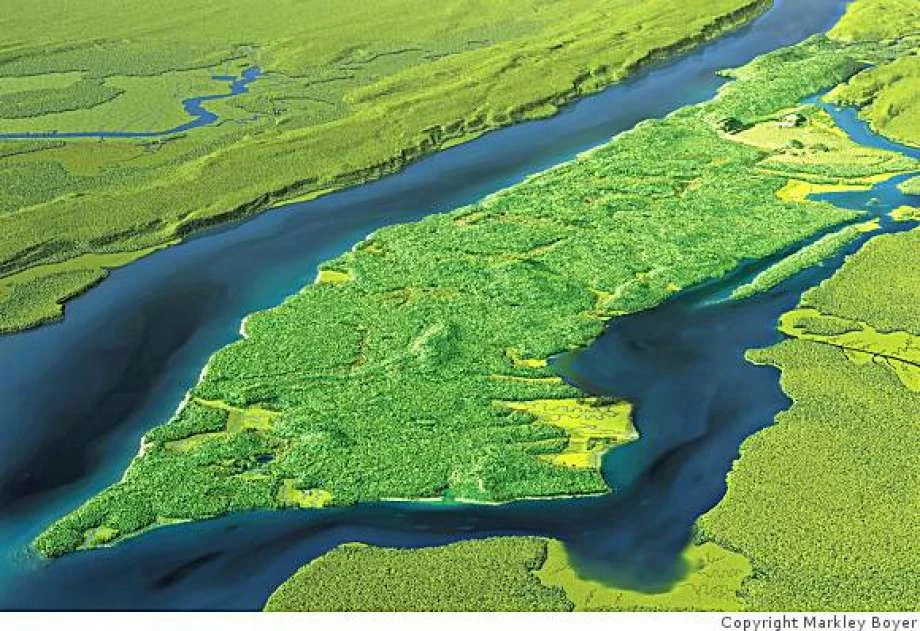
In 1609, when Henry Hudson sailed up the river that now bears his name, he saw an island forest covered in oak, pine and tulip trees. Two centuries later, in 1811, when the grid plan was enacted, most of Manhattan was still undeveloped. In fact, the footprint of the city itself encompassed only 1.3 square miles at the lower tip. The rest was quite sleepy - farms, country estates, and pockets of unspoiled nature.

Read More