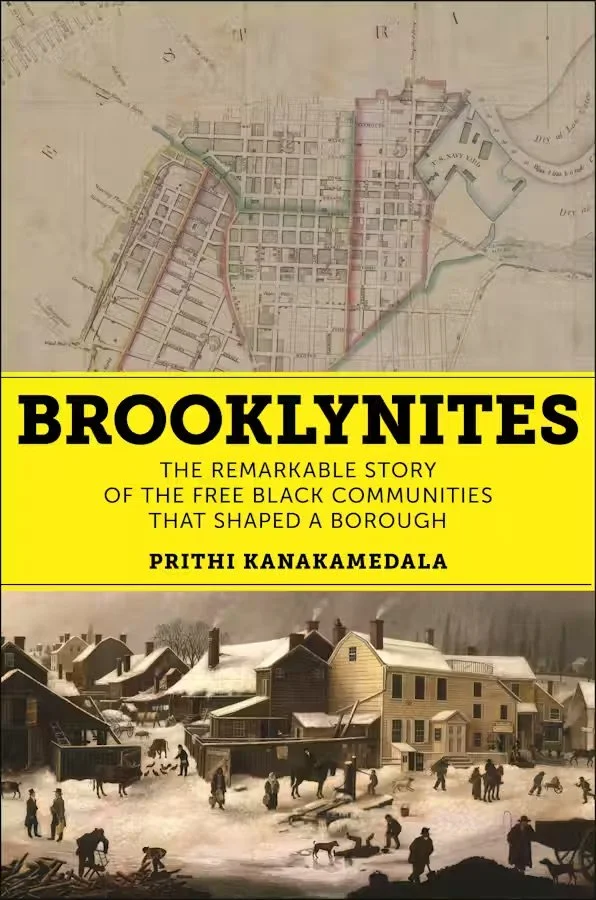
At the end of the American Revolution, even as slavery was on the decline in places like Philadelphia, Boston, and neighboring Manhattan, slavery’s numbers strengthened in Brooklyn. And that traumatic history is intricately tied to the land. The economy in Kings County was still largely agricultural, and so it was the labor of enslaved people of African descent who made this land a capitalist possibility. Simply put, there would be no Brooklyn without the labor of unfree Brooklynites. That history deserves to be honored; we owe Black Brooklynites a debt today as New Yorkers. In addition, the idea of Brooklyn that we know today — a brand in its own right, with its own attitude and its own entrepreneurial spirit — all of that is deeply embedded in the history of its free Black communities.
By 1929, Black lady lovers were becoming so visible in Harlem that the powerful and popular pastor of the Abyssinian Baptist Church, Adam Clayton Powell Sr., delivered one of the first known sermons that singled out the harm caused by queer women. The New York Age reported he declared, “homo-sexuality and sex perversion among women” has “grown into one of the most horrible debasing, alarming and damning vices of present day civilization.” Powell “asserted that it is not only prevalent to an unbelievable degree but that it is increasing day by day.” This shows the community pushback that accompanied the increasing awareness of Black women in Harlem who sought relationships with other women.
The Battle For Gay Rights In New York City – a Conversation With Stephen Petrus
Stephen Petrus, interviewed by Adam Kocurek
Adam Kocurek interviews Dr. Stephen Petrus about his new project, a virtual exhibition titled The Battle for Intro. 2: The New York City Gay Rights Bill, 1971 – 1986. Petrus is the Curator, as well as the Director of Public History Programs, at the LaGuardia and Wagner Archives. This exhibition dives into the story of New York City’s Gay Rights Bill, a local law known as Intro. 2 in the City Council. This was a collaborative project, with faculty and undergraduate students at LaGuardia Community College compiling sources, conducting and recording oral history interviews, and chronicling the many key individuals and moments leading up to the passage of the Gay Rights Bill.
Working Against Type: Typographical Union No. 6 and the Battle Over Women’s Night Work
By R.B. Tiven
After the Triangle Shirtwaist Factory fire, New York passed a law barring women from nighttime factory work. The definition of “factory” covered binderies and printing presses, including morning newspapers whose type was set overnight. As a result, bookbinders and the small number of women who worked as printers and proofreaders lost their prized night shifts, the shortest and best-paying positions. Two of the printers, Ada R. Wolff and Margaret Kerr-Firth, turned to their union to help salvage their jobs at the New York Times. Their advocacy triggered a fight that pitted the powerful New York Typographical Union against the New York State Federation of Labor, and generated bills vetoed by both Republican and Democratic governors. It also set the terms of a multi-decade dispute about who spoke for working-class women.
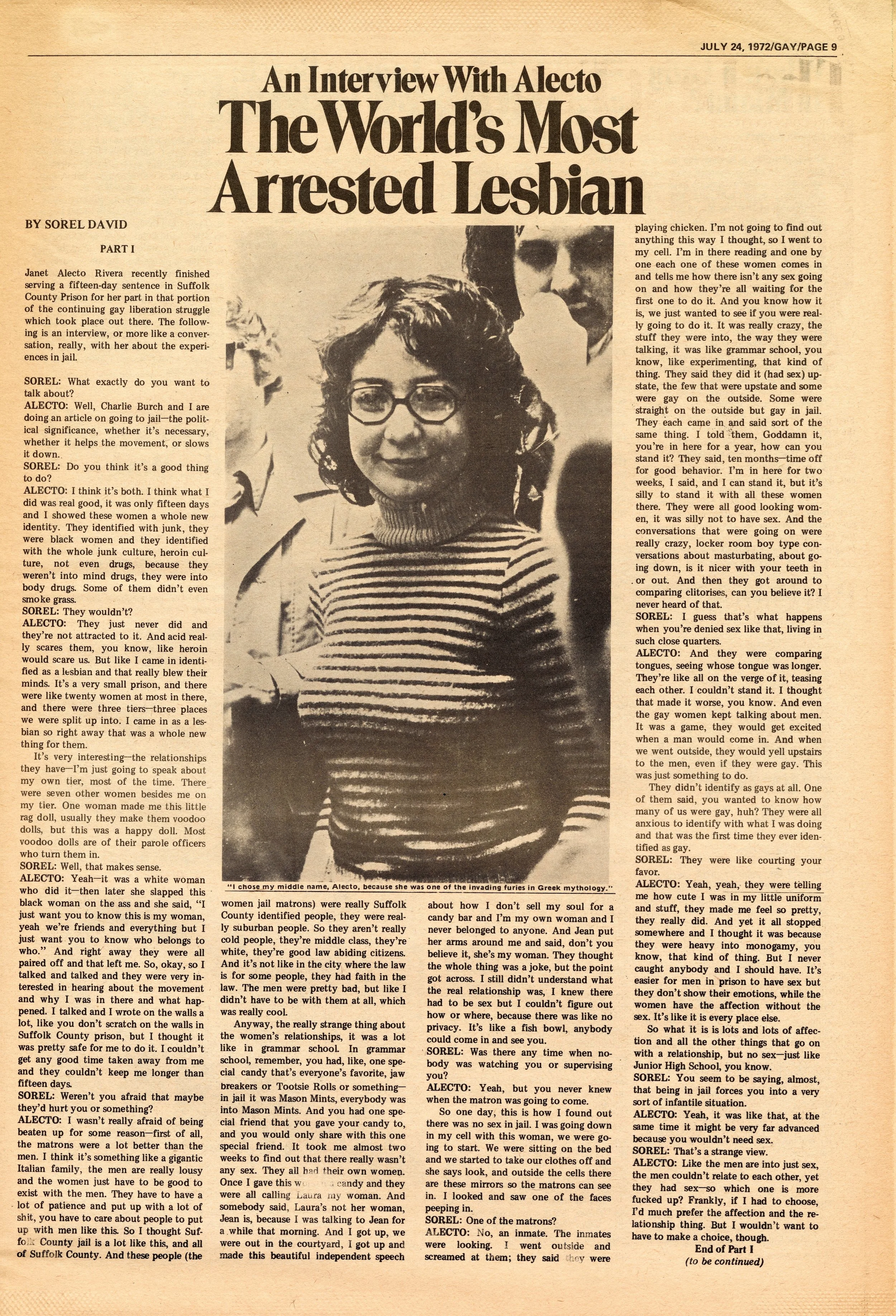
“‘The World’s Most Arrested Lesbian:’ Corona Rivera and the New York Gay Activists Alliance, 1970-72.” An Interview with Marc Stein
Interviewed By Ben Serby
I think historians of LGBTQ+ activism should become more familiar with Corona’s story because it’s fascinating in and of itself, but also because it might change the way we think about the history of GAA-New York and the broader history of LGBTQ+ activism in the 1970s. More generally, I think GAA-New York was responsible for one of the most creative and powerful waves of direct action ever seen in the United States, with lessons for LGBTQ+ and other activists today. Corona was a leading GAA-New York activist for two years and we should know more about her.
Preserving a Lost Chapter of NYC Queer History Via Club Flyers: An Interview with David Kennerley
Interviewed By Ken Lustbader
What were meant to be disposable ads are now compelling pieces of ephemera that you can’t find in guidebooks or oral histories. In the book, we’ve mapped these locations, which create a cultural and geographic landscape of queer nightlife in the ‘90s. For me, personally and as a Manhattan resident, it’s been fascinating to revisit these spots to see their current incarnations. Some buildings survive, which has rekindled my emotional connection to those places. That speaks to the power of place and the value of LGBTQ history.
Policing the World from New York City: How Policing Changed from 1880 to 1920
A Collaboration with Public Books: Matthew Guariglia, interviewed by Emily Brooks
From the 1880s to the 1940s, New York City was transformed—and so too was the New York City Police Department. This is the second of two interviews—published in collaboration with Public Books—where Matthew Guariglia and Emily Brooks discuss this pivotal era, through their exciting new books on the NYPD. The first interview was published on Public Books. You can read it here.
Our Secret Society: Mollie Moon and the Glamour, Money, and Power behind the Civil Rights Movement
Review By Dominique Jean-Louis
Tanisha Ford describes Mollie Moon, and social power brokers like her, as “the glue that connected Black social clubs, church groups, sororities, fraternities, and professional organizations into a national network of contributors who gave of their time and money to keep the movement afloat,” forming a “Black Freedom financial grid [that] established the economic base that supported the frontline activism of Martin Luther King Jr., Fannie Lou Hamer, and John Lewis.” Mollie Moon was perhaps best known for her role as head of the National Urban League Guild, the social and volunteer auxiliary arm of the National Urban League, connecting a national grid of donors, activists, strategists and philanthropists
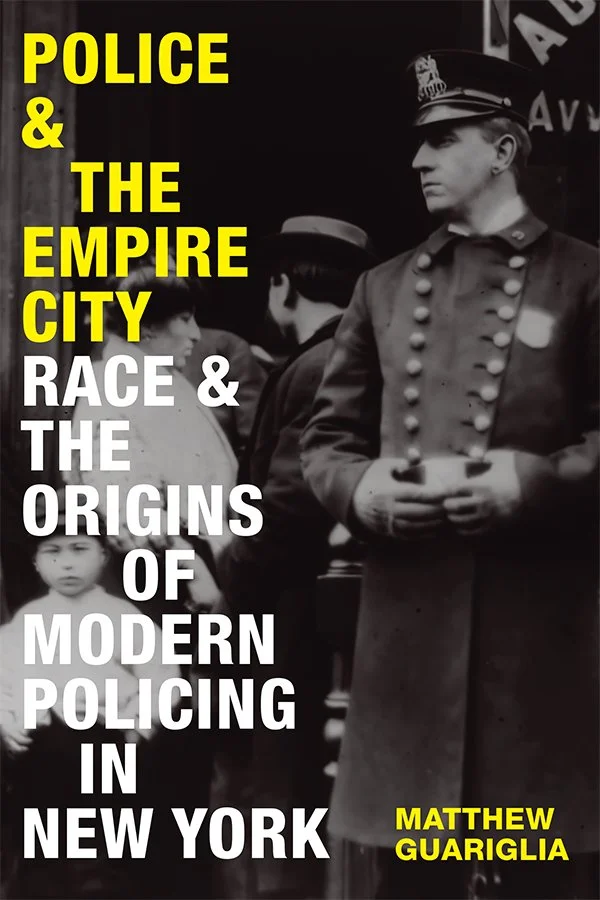
Police and the Empire City: Race and the Origins of Modern Policing in New York
Review By Emily Holloway
Set from the original founding of the NYPD in 1845 and concluding around the first World War, Guariglia’s book situates the NYPD as a medium of American imperial ambition and statecraft. Police and the Empire City is not merely a history of the country’s largest and most influential police department; it also positions the NYPD as a repository of scientific knowledge about race, gender, and sexuality that is mobilized and iterated to assert state authority and preserve order.
The Slip: The New York City Street That Changed American Art Forever
Review By Miriam Grotte-Jacobs
Immortalized by writers like Herman Melville and Walt Whitman, the Slip dates back to the seventeenth century, a liminal site between land and water that maintained, as Peiffer argues, an altogether distinct sensibility; a place apart from the rest of Manhattan that offered artistic alternatives to its inhabitants with major consequences for the trajectory of modernism and postmodernism in the United States. A counternarrative to accounts of the New York art world that center around Cedar Tavern and Max’s Kansas City, Peiffer offers a close reading of a different New York and the artistic community it enabled.