Masthead_Gloucester_Kearn.jpg
Posts in Crime & Policing
World War I Preparedness and the Militarization of the NYPD

World War I Preparedness and the Militarization of the NYPD

By Matthew Guariglia

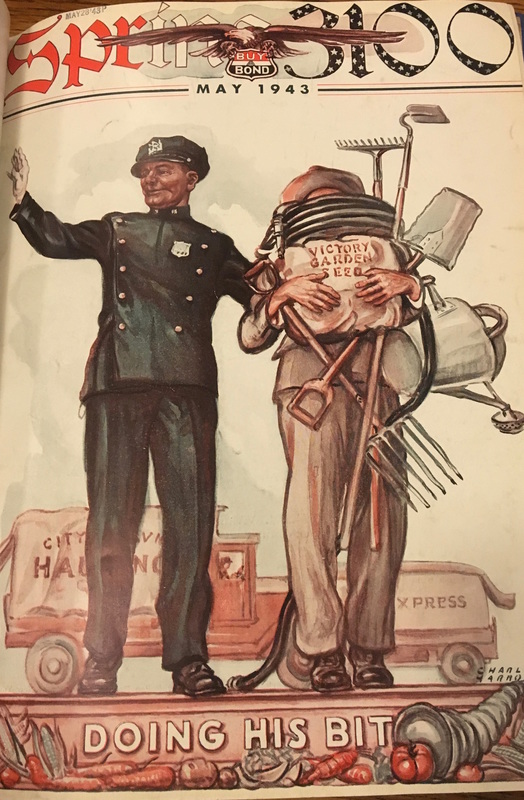
As the rest of the world continues to ruminate on the 100-year anniversary of the armistice that ended World War I, New Yorkers also must grapple with the lasting impact the “Great War” had on their city. In the years leading up to, during, and following the United States’ 1917 entrance into the war, “preparedness” became the watchword that signaled New York’s increasing awareness of its connection to the world and the conflicts happening beyond the harbor. From food rationing to drafting soldiers, preparedness and all it involved included a full-scale reorganization of American society, including the New York City Police Department.

Read More
Cut-Throat: The Murder of William Lurye

Cut-Throat: The Murder of William Lurye

By Andy Battle

On an average day at midcentury, New York City’s Garment District was a chaotic welter of sewing, schlepping, and schmoozing. But on May 12, 1949, the streets went silent for William Lurye, an organizer for the International Ladies Garment Workers Union (ILGWU), the 400,000-strong body representing workers in the women’s clothing trade. Three days earlier, Lurye had been shoved into in a telephone booth in the lobby of a building on West Thirty-Fifth Street that housed dozens of loft-style garment factories. There, two assailants had stabbed the thirty-seven year-old father of four in the neck with an icepick.

Read More
Grassroots Anti-Crack Activism in the Northwest Bronx

Grassroots Anti-Crack Activism in the Northwest Bronx

By Noël K. Wolfe

During the 1970s and 1980s, the Bronx was a national symbol of urban decay, used as a political backdrop to send messages of despair, governmental failure, the decline of urban spaces and other racialized messages of fear. Drug addiction and drug selling became a national, state, and local political battleground that reflected differing political ideologies. Even at the community level, a tension existed within New York City neighborhoods about how best to respond to drug crises. In 1969, New York Black Panther Party member Michael “Cetewayo” Tabor warned Harlemites about the long-term implications of inviting police, who he described as “alien hostile troops,” into their community to address heroin addiction and drug-related crime. While Tabor did not deny that those addicted to heroin were committing “most of their robberies, burglaries and thefts in the Black community against Black people,” he challenged community members to be suspicious of the motives behind “placing more pigs in the ghetto.” Tabor sought a community-driven solution to heroin addiction — one that did not include the police. Similarly in the Bronx, members of the Young Lords Party responded to heroin addiction by occupying the administrative offices of Lincoln Hospital in November 1970 and successfully demanding a drug treatment program for community members. The Lincoln Hospital Detox Program, a “community-worker controlled program,” paired political education with therapeutic support to assist those seeking help to overcome addiction.

Read More