
Panic, Politics, and Policy: An Interview with Curator Stephen Petrus
Interviewed By Adam Kocurek
Today on the blog, Adam Kocurek, Ph.D. candidate in History at The CUNY Graduate Center and adjunct lecturer at Hunter College, talks with Stephen Petrus, Director of Public History Programs at LaGuardia and Wagner Archives, about the new digital exhibit “Panic, Politics, and Policy: New York City during the AIDS Crisis, 1981-1996,” that chronicles the NYC history of the AIDS Crisis from when it was first reported in the media to when it transformed from a typically fatal diagnosis to a manageable chronic condition.
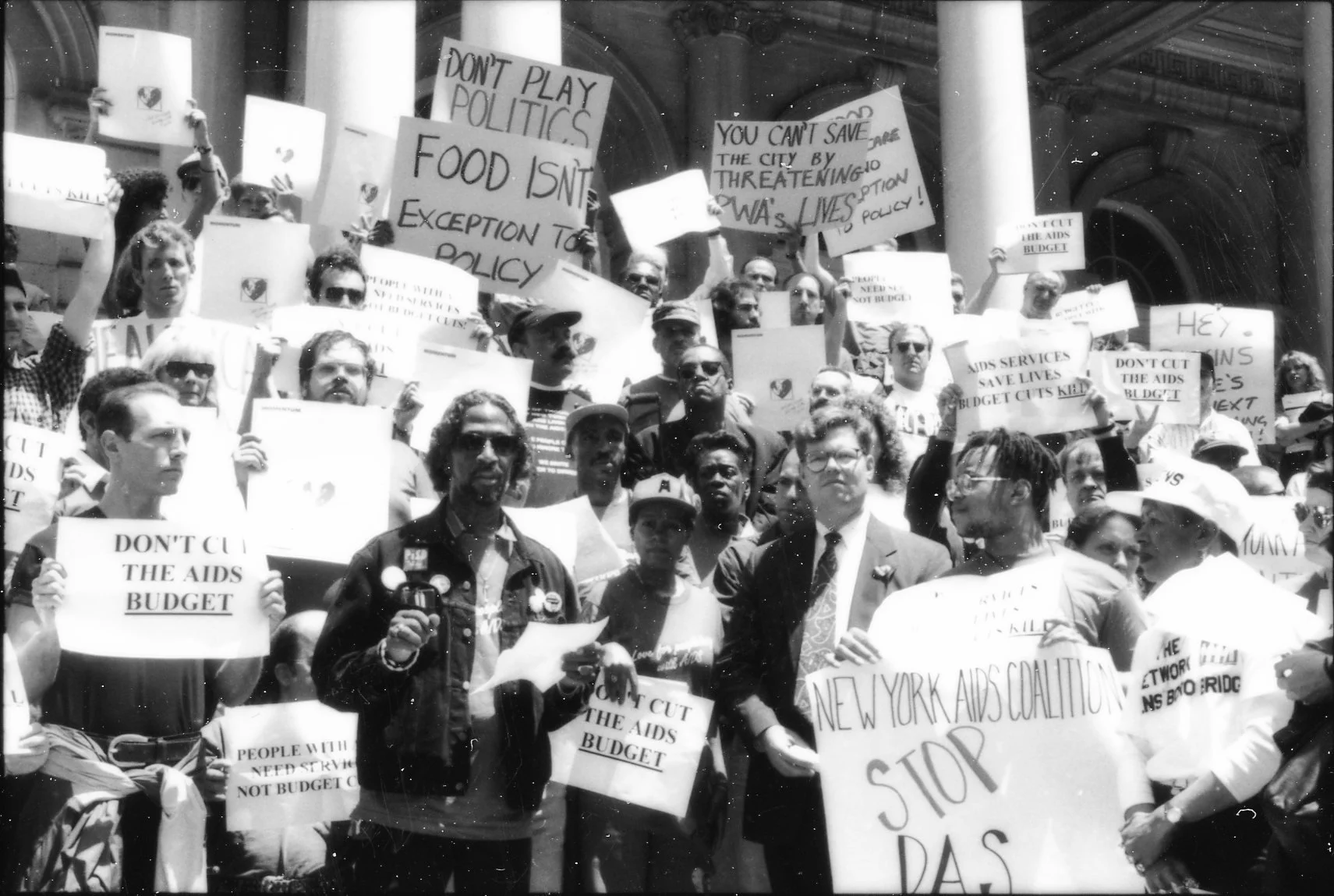
Tom Duane and Andrew Sidamon-Eristoff at a rally against budget cuts to AIDS programs at City Hall in 1994, by Dan Luhmann.
Can you elaborate for readers on your selection or broader methodological practices? How did you ultimately locate and determine who to interview?
We started the project in September 2025 with three LaGuardia LGBTQ+ student fellows funded by the LaGuardia & Wagner Archives. The exhibit was inspired by the political advocacy of Tom Duane, the first openly HIV-positive City Council Member, elected in 1991. Duane and Antonio Pagán also made history as the first openly gay council members. He donated his collection to LaGuardia several years ago, and it had been untapped. We immersed ourselves in his papers, learned about his political work in the 1970s in the Chelsea Gay Association and in the 1980s as an ACT UP member. In City Council, Duane championed the Division of AIDS Services (DAS), established in 1985 to provide case management, housing assistance, and public benefits for low-income New Yorkers living with HIV/AIDS. In 1994, he successfully led the battle against the Giuliani administration’s attempt to cut DAS. Our next step was to establish a chronological framework. We chose the period from 1981, when the media began to report about the illness that would become known as AIDS, to 1996, when the advent of protease inhibitors transformed HIV from a typically fatal diagnosis to a manageable chronic condition. Our emphasis was on policy and public health, and this led us to research the Ed Koch, Danny Dromm, and the City Council Collections for supplemental material. So, the fall was dedicated to archival research. My students and I gained an understanding of the debates surrounding AIDS in New York City. It was intense – you never feel like you’ve researched enough. The second part came in the spring with oral histories. We wanted to go beyond the traditional narrative oriented around the Gay Men’s Health Crisis and ACT UP – there’s been great work on both, and while those institutions feature in this work, we wanted to broaden the focus and look at the diverse face of the epidemic, one that was not discussed much in the 1980s, when it was often depicted as a white gay men’s disease. We looked at injecting drug users, women, children, people of color. We learned about these groups through interviews with, among others, Ronald Johnson, the city’s first coordinator of AIDS policy, appointed by Mayor David Dinkins, Dr. Marjorie Hill, who worked under Dinkins as the Director of the Office for the Lesbian and Gay Community, C. Virginia Fields, the City Council Member representing Harlem from 1989 to 1997, and Judy Pedraza, the AIDS Center of Queens County Site Director. This perspective influenced who we chose to interview. We are a small team – we initially aimed to do 15 interviews, and we ended up doing 17. We did extensive research on our subjects before the interviews; we would have liked to interview many more, but we are pleased with the result.
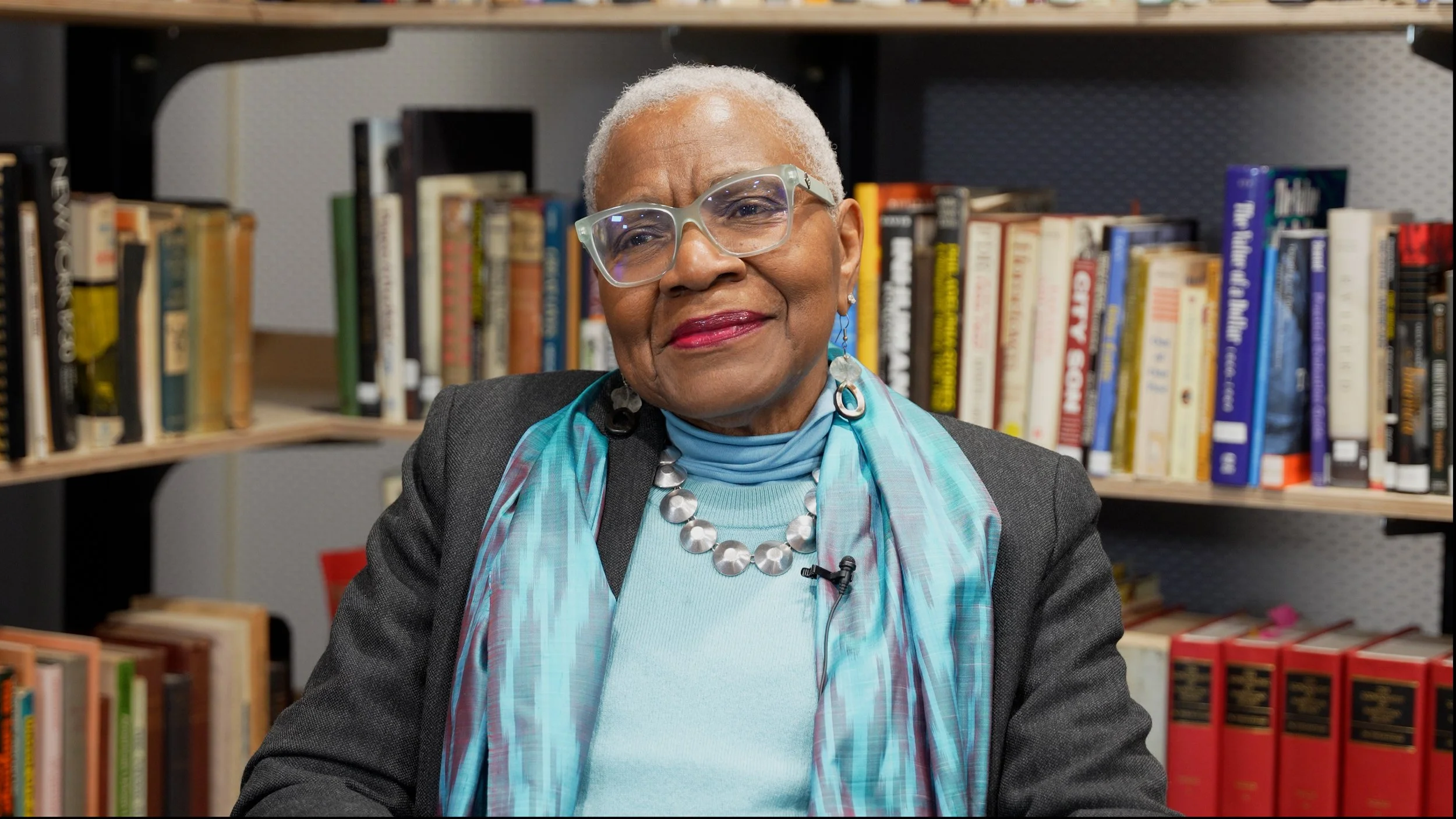
C. Virginia Fields: New York City Council Member, 1990 - 1997. Image courtesy of interviewer.
As you were building this virtual exhibit, did the process look in any way different from how you built the other virtual exhibits? Did anything about your methods or vision change?
As with past projects, we approached the interviews with an open mind, conscious of confirmation bias. The history of AIDS in New York City is highly contentious. My students and I reviewed the oral histories and saw several themes emerging. For earlier exhibits, key figures came to be the main focus (Mayor Koch, for example, in the city’s gay rights bill struggle) but with this project, we observed themes overlapping, with no single individual coming to the forefront. We ultimately chose six themes, excerpted clips from each interview, and placed them in each theme within our digital gallery. The themes are more or less chronological, but to supplement this we provided a timeline on the right bar of the webpage, which was also new for us – it helped us to stabilize the history. We did not want to tell this complex story through any single person alone, regardless of how crucial individuals like Larry Kramer or Ed Koch were.
Now that this virtual exhibit is complete, what (if any) lessons have you or your undergraduate researchers taken away from the experience? These can be methodological, political, or personal.
Our student fellows are from Generation Z. The AIDS crisis was largely unfamiliar to them – they did not learn about it in high school. It was distant from them in their education, conceptually and temporally. On a personal level, it was wonderful to train them in archival research and oral history methods and watch them flourish. I hope that high school and college educators and their students grapple with the power of stigma and discrimination during this era in New York City history. We all were astonished to read reports from the NYC Human Rights Commission, and to interview Katy Taylor and Mitchell Karp from the commission, about cases of discrimination, of people being denied healthcare, losing their jobs or housing. Patrick McGovern and Bernárd Lynch recalled healthcare workers at the Cabrini Medical Center and St. Vincent’s Hospital unsure about transmission of HIV, wearing hazmat suits, leaving food outside of rooms of patients with AIDS. We learned about dentists refusing to treat people with HIV and funeral parlors refusing to embalm people who had died from AIDS. We felt it was necessary to devote a section to this issue - the level of uncertainty, the political maneuvering that was happening during the Koch era. When government does not or will not act, private entities and individuals have to step up, and I am not just referring to GMHC but other groups like Dignity, the AIDS Center of Queens County, the New York AIDS Coalition, the Upper Room AIDS Ministry, and Housing Works. This exhibit spotlights their work and enriches our understanding of community caretaking. Researchers and educators will have much to draw from.
Can you speak a bit more about how you envision or hope this digital exhibit will impact the narratives – historical, as well as contemporary political – surrounding either New York City’s history, the history of LGBTQ+ life and activism, etc.?
One of the key interventions lies in the politics of public health. One example is our coverage of the needle exchange program and the changing feelings and discourses around this initiative. Beginning in 1988, the city’s health department provided clean needles to injecting drug users to reduce the spread of disease. There was intense controversy around this initiative, rooted in the concern that the spread of clean needles legitimated drug use; this was felt particularly strongly by members of the clergy from Black and Latinx communities in the midst of a growing crime and crack epidemic. Law enforcement also opposed needle exchange. Mayor Dinkins even initially terminated the program, but Marjorie Hill, Ronald Johnson, C. Virginia Fields, Tom Duane, and others were able to convince the mayor that this program lowered the spread of HIV. This is an important truth we put at the forefront of the exhibit – attitudes shifted over time with advocacy and data, and policy was impacted in turn.
On the politics of public health, I also want to underscore the infamous ACT UP and WHAM! “Stop the Church” protest at St. Patrick’s Cathedral in 1989. We asked Tom Duane, Bernárd Lynch, Charles King, and Patrick McGovern to comment on this demonstration against the church’s opposition to safe sex education and condom distribution. We got provocative responses, and I invite exhibit viewers to engage with them. Did the protest hurt the cause? Lynch criticized the desecration of the eucharist but asked what was worse: “Throwing this sacred symbol on the floor or throwing real bodies out on the street as they died of AIDS?” McGovern recounted having lunch with ACT UP leader Rodger McFarlane after the action and discussing the ramifications. McGovern quoted McFarlane, “There’s no such thing as bad publicity. The action is in the reaction.” Even though potential allies were alienated, the protest forced the media to address the church’s disproportionate influence on public health policy.
The final theme — biomedical breakthroughs but limited access — also marks a contribution to AIDS historiography. With the advent of protease inhibitors in 1995-96, a belief emerged that AIDS was no longer an existential threat but rather manageable due to the introduction of Highly Active Antiretroviral Therapy (HAART). But there was limited access to this drug cocktail because of high treatment costs, complex dosage requirements, the need for housing stability, and more. This WAS a biomedical breakthrough, but for whom? Andrew Sullivan wrote a piece for the NYT magazine in 1996 titled “When Plagues End,” and, while he noted the limited access of the AIDS cocktail, he focused on the end of the epidemic for gay men in his circle. His focus was on the trauma of survivor’s guilt and re-entering society. We approached this watershed from a different perspective. Joey Pressley from the New York AIDS Coalition and Charles King from Housing Works reflected about those left behind, primarily those struggling with addiction and homelessness. We learned about the battles for Medicaid funding in the 1990s that pitted older Community Service Projects like GMHC against newer multi-service agencies like Harlem United and Housing Works. The latter took risks with Medicaid but positioned themselves well for further breakthroughs in 2006 with the single pill regimen.
These oral history interviews offer fascinating insights into the history of HIV/AIDS in New York City, and I know from experience that these interviews can often be emotionally and intellectually charged for both interviewers and interviewees. Were there any enormous surprises for you or your undergraduate researchers as you were conducting these oral history interviews?
In contrast to previous exhibits, where oral history narrators felt empowered to do interviews in which they could talk about their struggles and – in many cases – triumphs, this was different. These 17 individuals were deeply committed, but nobody felt like they did enough. And nobody did, not Mayors Koch, Dinkins, and Giuliani, though there were noteworthy distinctions among them. I think our interviewees felt obligated to share their stories with us but were not triumphal in the least. Everyone spoke about operating on a shoestring budget with limited resources and working in a harsh political environment. It was difficult for our narrators to revisit this history.
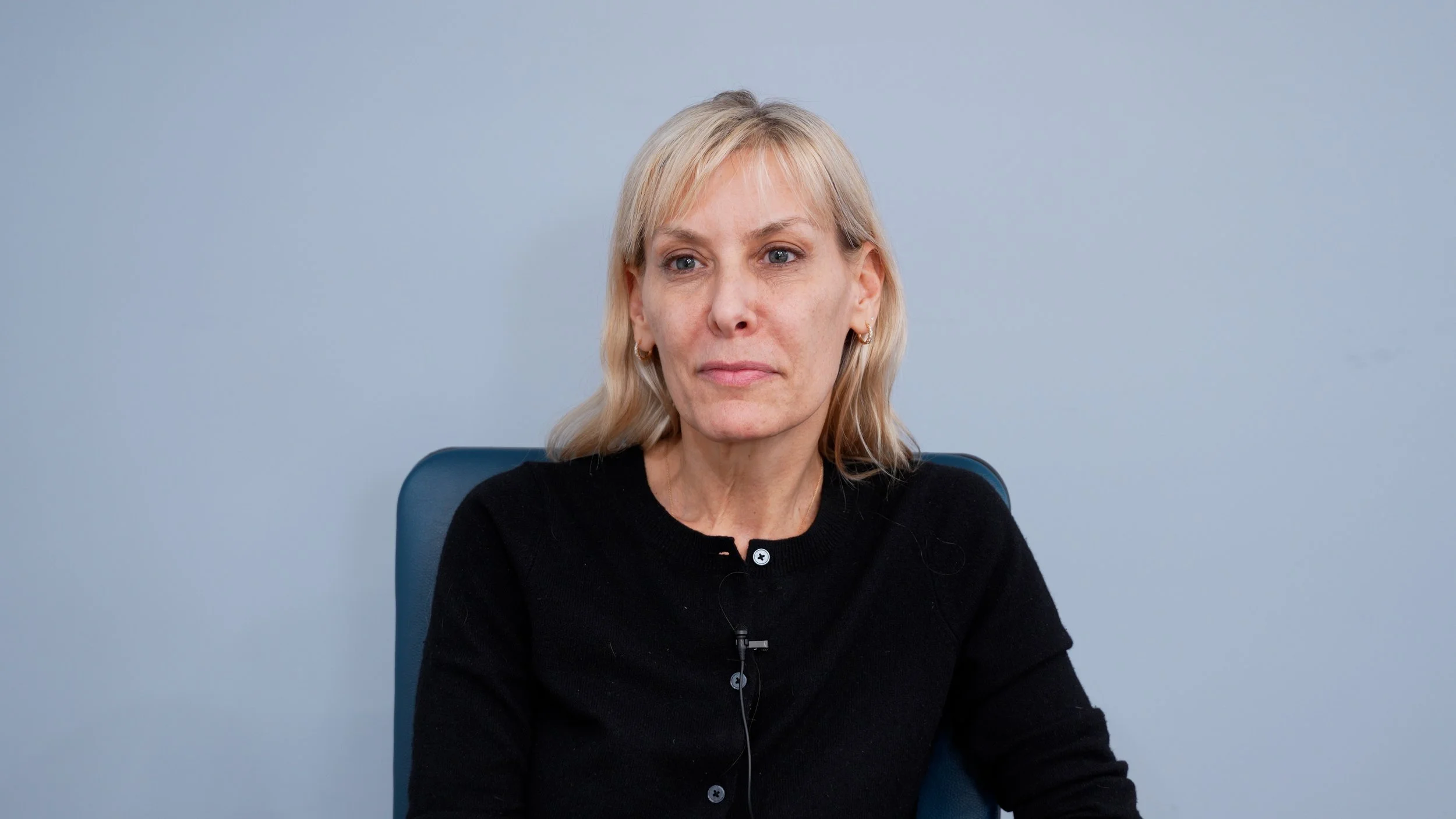
Laura Anhalt: AIDS Center of Queens County Director of Behavioral Health Services. Image courtesy of interviewer.
As interviewers, my students and I tried to be empathetic, to do as much preliminary research as possible to know what we were getting into. We were struck by how heroic these efforts were. We were honored to give our interviewees a platform to discuss these efforts to provide counsel and care or to advocate and lobby. Many had never been interviewed before. We heard about the compassionate work of the AIDS Center of Queens County through interviews with Rosemary Lopez and Laura Anhalt and the grief at funerals through Judy Pedraza. It was often too much to bear. We were all inspired by their commitment.
As I was going through these video segments, I was again struck by how terror and endurance thread through everything — for me, who is well acquainted with these histories, it helped again to make the HIV/AIDS crisis more visceral, tangible, and real. I am already thinking of how I want to use them in my classroom at Hunter College. How do you think this digital exhibit can make waves pedagogically?
Courses across the curriculum could make use of this exhibit. College and high school instructors might not use all of it, but many parts of it. Classes on public health and pandemics could find this exhibit useful. NYC historians could incorporate the exhibit into their lessons, as it shines a light on topics ranging from law and policy to daily life and culture in the 1980s and 1990s, at a time when Reagan was arguing that government was the problem and not a solution and cutting social services – the AIDS crisis could not have happened at a worse time. Political scientists could find this exhibit valuable, too – studying government response to different forms of advocacy and how policies can change. Instructors teaching about culture wars will find material here – our work illustrates religious leaders pushing back against HIV advocacy. The wave of anti-trans legislation in the last ten years reads to me as similar to the anti-gay hysteria in the 1980s and 1990s, and educators can use this project to prompt class discussions and compare how different groups mobilize across time and space to oppose queer people. There are parallels between the late 20th century and now with respect to fear mongering, discrimination, and hostility to trans people. The history of race is also explored in this work – it took a while for the broader African American community to support AIDS services, with responses ranging from tacit disapproval to outright hostility. The traditional clergy, a backbone of African American activism in NYC, discriminated against gay men and drug users. The immunologist and public health activist Pernessa Seele, who organized the Harlem Week of Prayer in 1989, helped to change this narrative and raise awareness. It was important to have culturally competent education and intervention – the messaging around safe sex was not the only thing that mattered, but who the messenger was! Having Seele, a respected community leader, spearhead this intervention made more of a difference than an outside expert likely would have. There is so much rich material here for people teaching across a variety of topics, disciplines, and levels!
What can we expect from you/LaGuardia & Wagner archives next?
I am excited to announce that we will be expanding our previous exhibit on the NYC Gay Rights Bill Struggle of 1971-1986. We are going to incorporate new material into the exhibit, including more oral history interviews (we did 25, but there’s more to do), we will add archival material from the Mitchell Karp and Andy Humm Collections and incorporate video footage from the Phil Zwickler Collection at Cornell University. I received a grant from the Zwickler Foundation to research this material – he had some 100 hours of footage in his archive, only about 60 minutes were used for his documentary Rights and Reactions (1988). This material is largely untapped, and we will incorporate it to add another dynamic component to our exhibit.
Discussions are underway to curate this exhibit at the American LGBTQ+ Museum, slated to open in 2028 on the New York Historical campus. We pitched this idea to them, and they’re interested. They are interested in the New York angle but also want to explore this movement on a national scale. In 1972, 3 municipalities passed a gay rights bill: East Lansing, San Francisco, and Ann Arbor. By 1986, over 50 cities had non-discrimination clauses. The New York City battle was informed by all these other cities and college towns passing progressive legislation. The exhibit will trace this trajectory and explore the connections.
“You can’t judge or indict somebody on the basis of what you think is their psychology or motivation, even if it’s accurate.” Lawrence Mass said this in response to a deliberation on Larry Kramer’s legacy. I’ve been thinking a lot about Larry Kramer and the value or utility of rage, both historically and in our present moment, defined by far right-wing politicians who have LGBTQ+ communities and rights in their crosshairs and in the aftermath of a devastating global pandemic. I’m curious if you can speak on this.
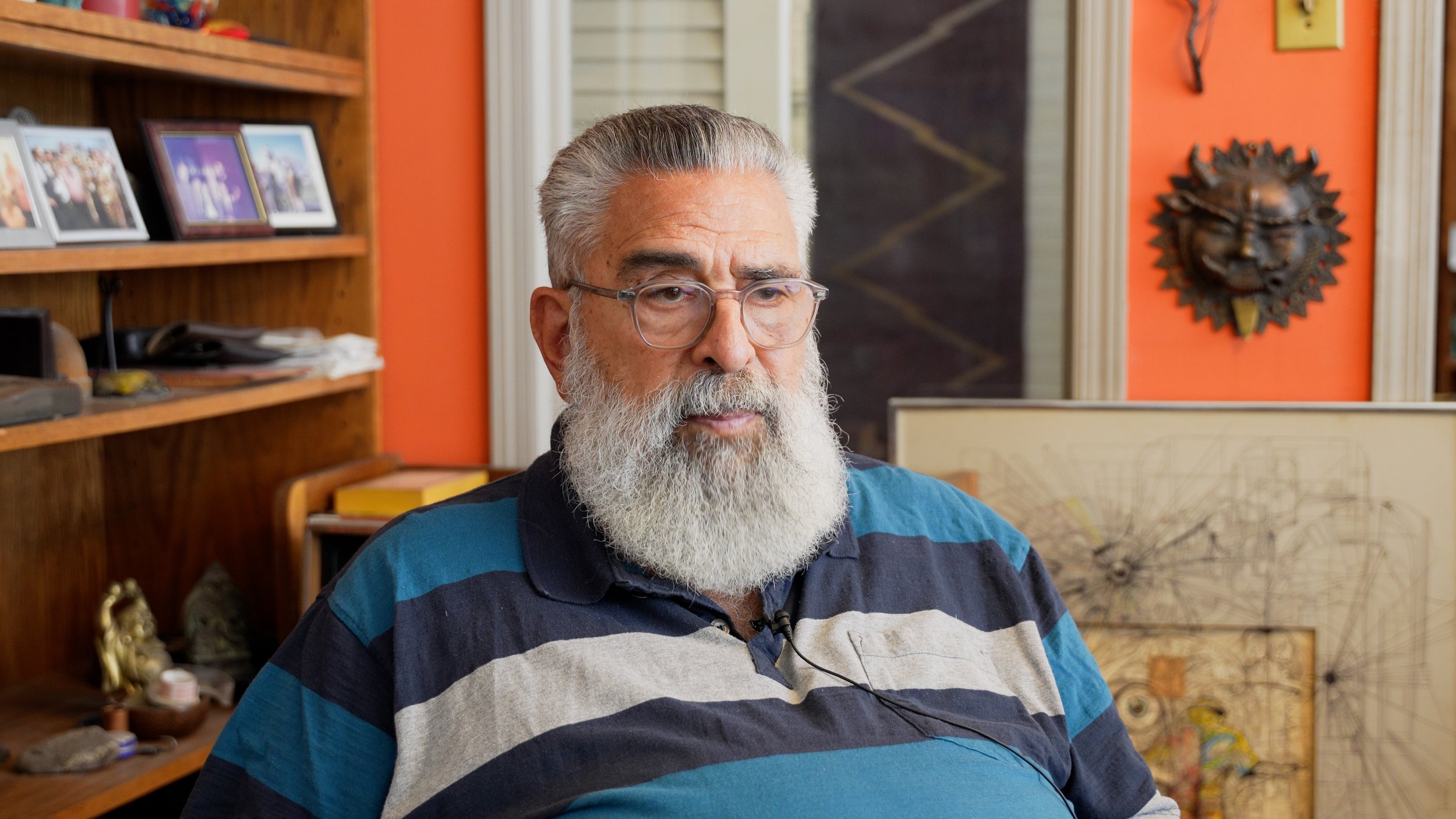
Lawrence Mass: Gay Men's Health Crisis Co-founder, 1982. Image courtesy of interviewer.
The Lawrence Mass interview was illuminating. He worked closely and was friends with Larry Kramer. He actually wrote a book on Kramer titled We Must Love One Another Or Die. They were cofounders of GMHC in 1982. Dr. Mass wrote the first journalistic piece on what would become known as AIDS for the New York Native in 1981. He also authored the foundational GMHC guide Medical Answers about AIDS – all four editions. In my view, Mass was persuasive in his analysis of Kramer, noting that you can be both abrasive and effective as an activist. In fact, the two often go hand in hand. The personality, the ideology of rage and confrontation, were necessary given the circumstances of government inaction and public panic. In 1987, Kramer called for the establishment of ACT UP after being forced out of GMHC because of his aggressive and confrontational style. I am persuaded that all this was necessary — this confrontation, this rage, which was unsettling, uncomfortable and hurtful to many. Kramer and others in this fight felt no choice but to be combative. Sure, he was a firebrand, but this is not a shortcoming — we look at the results of ACT UP and the transformations around public health policy and the expedited approval process for experimental drugs – the need to light a fire under the feet of FDA administrators and politicians at the local and national levels. Excessive attention on his behavior and psychology is secondary and distract from his heroic role, at a time when thousands were dying with no salvation in sight. Rage was necessary for getting the attention of establishment figures and forcing them to act. We do not need to have a politics of respectability — Kramer knew this, as did others in ACT UP and groups that came out of it, like Housing Works, which filed many lawsuits against Giuliani, who retaliated against them by cancelling housing contracts. Housing Works successfully sued the city. The lesson here is perseverance, unwavering commitment, even if it means making people uncomfortable.
“Panic, Politics, and Policy: New York City During the AIDS Crisis (1981 - 1996)” can be viewed at the following link:
Adam Kocurek is a Ph.D. candidate in History at The CUNY Graduate Center who specializes in 20th century U.S. history. He teaches as an adjunct lecturer at Hunter College, has taught a number of courses with The Osher Lifelong Learning Institute, and has held fellowship positions across the City University of New York. A licensed tour guide of New York City and Brooklyn resident, he holds a passion for New York City history.
Stephen Petrus is Director of Public History Programs at LaGuardia and Wagner Archives. He is a 20th-century US urban and cultural historian with a focus on New York City. Since 2017, he has co-curated six LGBTQ exhibits at LaGuardia, including the critically acclaimed “The Battle for Intro. 2: The New York City Gay Rights Bill, 1971 – 1986” and “A Seat at the Table: LGBTQ Representation in New York Politics.” Prior to his work at LaGuardia, he held Andrew W. Mellon Fellowships at the New-York Historical Society and at the Museum of the City of New York, where he curated the exhibition “Folk City: New York and the Folk Music Revival” and co-authored the accompanying book, published by Oxford University Press in 2015. In 2016, he co-curated the festival “Camus: A Stranger in the City” with the Albert Camus Estate to commemorate the 70th anniversary of Camus’ visit to New York. He is a member of the New York Academy of History.