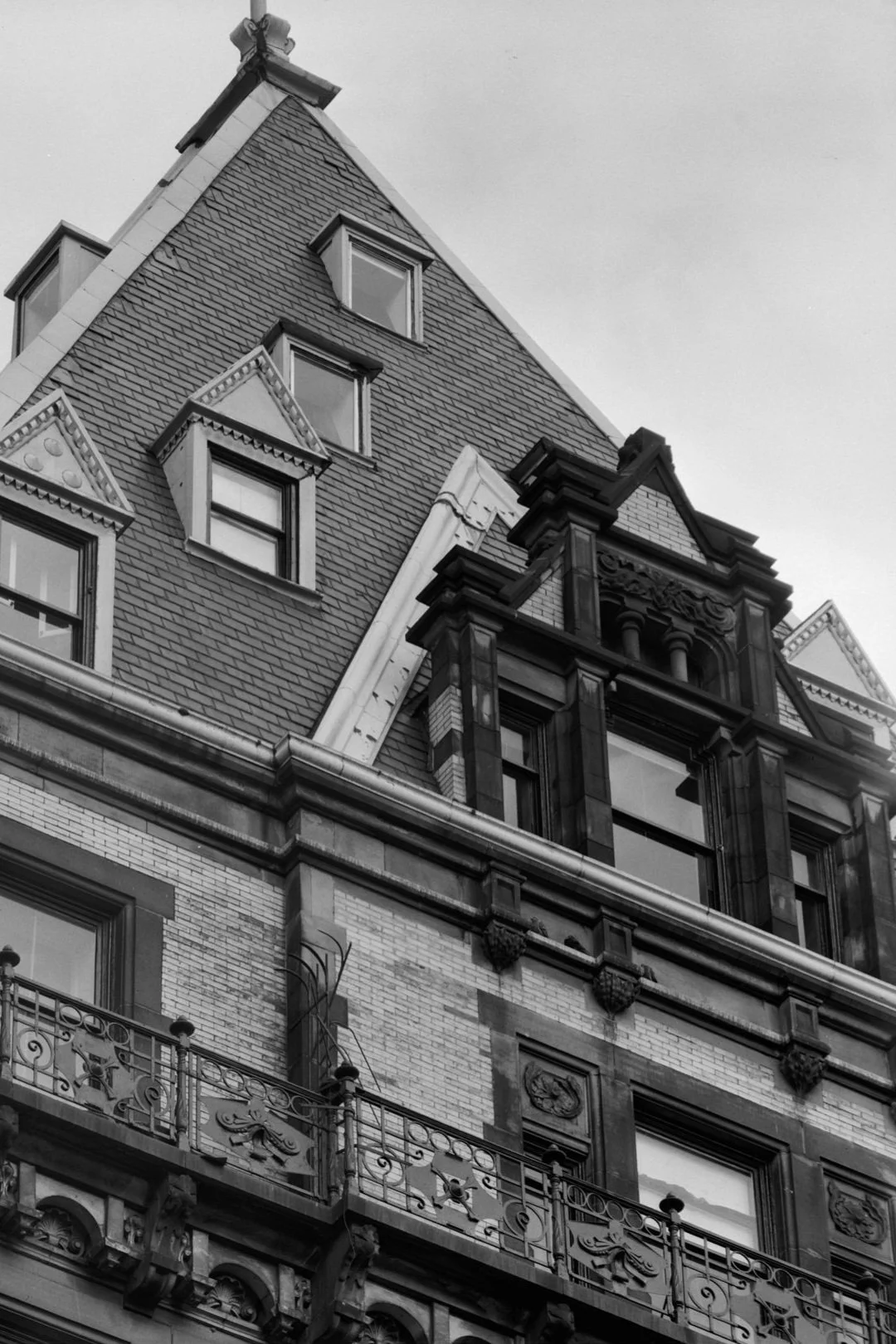
In the late summer of 1883, the Dakota Apartments was nearly ready for tenants. After three years of construction, the luxury apartment building had only a few months’ work left to go. Slate-tile roofers, sheet-metal workers, and ironworkers were completing the roof, while carpenters, plasterers, and plumbers finished the interiors. Every day, hundreds of craftsmen trekked uptown to work on the million-dollar building that was not only unusually expensive but also remote in location.
Interview: Anthony Tamburri on the John D. Calandra Italian American Institute
Interviewed by Adam Kocurek
Today on the blog, Gotham editor Adam Kocurek speaks with the dean of the John D. Calandra Italian American Institute, Anthony Tamburri about the history of the Institute, and the work it does for supporting Italian American scholars and the history of Italian Americans.
This Is a Cemetery: The Saga of the Second Asbury African Methodist Episcopal Church Cemetery of Staten Island
ByPatricia M. Salmon
Having studied cemeteries for the last thirty-six years and spending the first nineteen years of my life living next to a Homestead Graveyard that was abandoned, I should perhaps not be so surprised about the demise of Second Asbury, an African Methodist Episcopal Church Cemetery in Port Richmond Center, Staten Island, also known colloquially as “Cherry Lane.” Designated a “Colored Cemetery” because African-Americans were interred at the site, it used to be called the “Old Slave’s Burying Ground.” Not only was the last living enslaved person from Staten Island buried therein, but numerous others were, too.
The Great Disappearing Act: An Interview with Christina A. Ziegler-McPherson
Interviewed by Hongdeng Gao
Today on the Blog, Gotham editor Hongdeng Gao speaks to Christina Ziegler-McPherson about her latest book, The Great Disappearing Act: Germans in New York City, 1880-1930. Ziegler-McPherson discusses how over the span of a few decades, New York City’s German community went from being the best positioned to promote a new, more pluralistic American culture that they themselves had helped to create to being an invisible group. She offers fresh insights into how German immigration shaped cultural, financial, and social institutions in New York City and debates about assimilation and multi-lingualism in the United States.
Transatlantic Radicalism in Early National New York
By Sean Griffin
New York City has long been considered a hotbed of radical political ideas, as well as a cosmopolitan center of culture and commerce. But while the roots of the latter have been traced back to the city’s origins as a Dutch trading post with a decidedly commercial outlook and a polyglot population, fewer historians have explored the origins of the city’s radical political culture.
Review: God in Gotham: The Miracle of Religion in Modern Manhattan
Reviewed by Kenneth T. Jackson
When we think of New York and history, religion is not typically the first thing that comes to mind. Organized crime perhaps, or skyscrapers, or labor disputes, or nightclubs, legitimate theaters, museums, subways, Wall Street, wealth, poverty, the list could be endless. To most people, Gotham is more associated with sin than with morality, more with prostitution than with sermons, more with sports venues than with churches.
Anti-Asian Violence and Acts of Community Care from the 1980s to the Present
Vivian Truong Interviewed by Hongdeng Gao
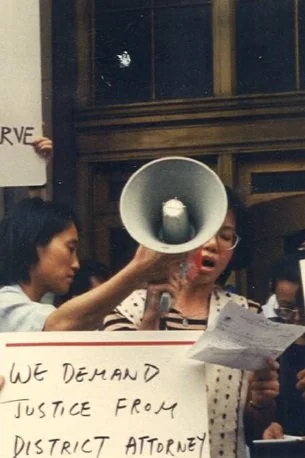
Today on the Blog, Gotham’s editor Hongdeng Gao speaks with Vivian Truong, author of “From State-Sanctioned Removal to the Right to the City” and a core committee member of the A/P/A Voices: A COVID-19 Public Memory Project.Truong discusses segregationist and police violence against Asian American, Black and Latinx residents in southern Brooklyn in the 1980s and 1990s and the cross-group, cross-issue movements that developed in response to such violence.
War Weary Nature: Environment, British Occupation, and the Winter of 1779-1780
By Blake McGready
In December 1779, New Yorkers helplessly watched as their harbor froze solid and ice slowly strangled the proud entrepôt. In the late 18th century, New York City served as the principal destination for packet ships, offered a range of specialized services for the British military, and facilitated trade between the continental interior and Atlantic world. The loss of the city’s maritime and riverine networks, even temporarily, were disastrous. Ice floes appeared in the Hudson River early in the month. By December 22, the lawyer William Smith reported that ice had formed along the shoreline and had obstructed transportation between Manhattan and New Jersey.
The Complicated Legacy of Paul Moss, La Guardia’s Infamous “Gutter-Cleaner”
By Jonathan Kay
Outside the conference room at the Bow Tie Partners offices in Times Square, there is a framed letter, dated September 5, 1944, addressed to one “Master Charles B. Moss, Jr.” — the grandson of legendary New York City film exhibitor B.S. Moss (1878-1951), who still presides over the family film and real-estate business.
“The Avant-Groove”: Excerpt from No Sounds Are Forbidden
By Matthew Friedman
Morton Subotnick arrived in New York in the fall of 1966 already a giant of the burgeoning avant-garde music scene. Together with composer Ramon Sender, a tape recorder, scattered equipment borrowed from a local high school or through a fortuitous connection with the local Ampex representative, and support from Mills College, he had built the San Francisco Tape Music Center into a force in electronic music rivaling the Columbia-Princeton Electronic Music Center (CPEMC), uptown.