Masthead_Gloucester_Kearn.jpg

Gotham

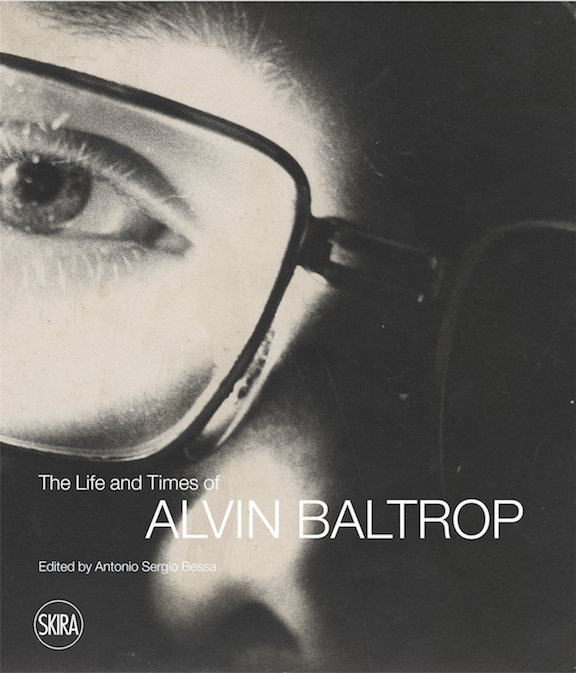
Desire & Documentary in the Photography of Alvin Baltrop

Desire & Documentary in the Photography of Alvin Baltrop

By Jeffrey Patrick Colgan and Jeffrey Escoffier

Documentary photography in New York City has a long history, going back to Jacob Riis in the 1880s and Lewis Hine in the early twentieth-century with their documentation of poverty and slums. During the 1930s and 40s, Weegee covered the criminal underworld and the world of high society for the tabloids, while Helen Levitt shot scenes of the everyday life of housewives, children and working men. In the 1950s and 60s, Roy de Carava, Garry Winogrand, Fred McDarrah and Nan Goldin managed to capture both the grit and the glamour of New York’s post-war period. By the seventies, however, the glamour was gone, though the grit remained, as New York was overtaken by its industrial collapse and fiscal woes.

Read More
Horizon Line: An Interview with Jennifer Harley and Emily Chow Bluck

Horizon Line: An Interview with Jennifer Harley and Emily Chow Bluck

Interviewed by Elena Ketelsen Gonzalez

Today on the blog, Elena Ketelsen González sits down with artists Jennifer Harley and Emily Chow Bluck to discuss their collaborative work on race and gentrification in the city. Their work Horizon Line is on display at Gracie Mansion until the end of December, 2019.

Read More
Peter-Christian AignerComment
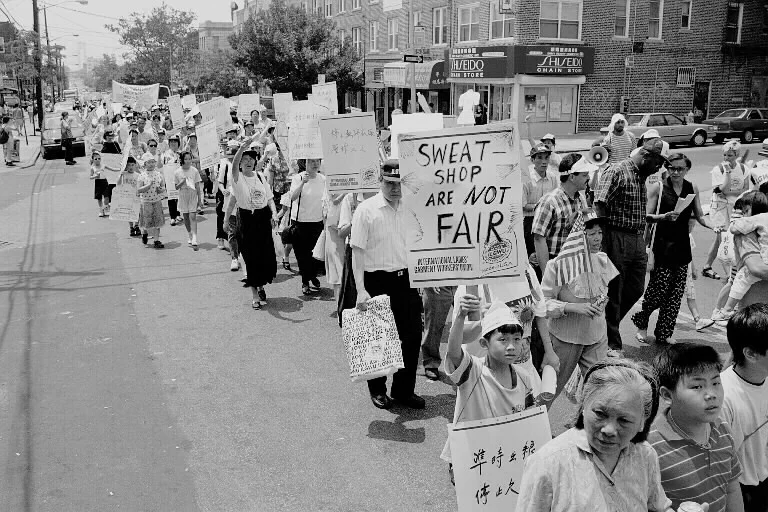
Made in New York? Innovation Economies and Immigrant Precarity

Made in New York? Innovation Economies and Immigrant Precarity

By Tarry Hum

As one of New York City’s last remaining industrial waterfront neighborhoods, Brooklyn’s Sunset Park figures prominently in Mayor de Blasio’s 2017 New York Works plan, which laid out priority industry sectors and strategies to create 100,000 middle class jobs that pay a minimum $50,000 annual salary within the next decade. The targeted industry sectors and job creation projections are: 30,000 jobs in technology (especially in cybersecurity); 25,000 jobs related to new office districts (such as East Midtown) and outer borough commercial centers; 20,000 jobs in industry and manufacturing based on reactivating the city’s vast industrial infrastructure and implementing the Freight NYC plan; 15,000 jobs in life sciences and health care; and 10,000 jobs in creative and cultural sectors that define and promote New York City’s global brand.

Read More
Peter-Christian AignerComment
Theodore Roosevelt: A Man for the Modern World

Theodore Roosevelt: A Man for the Modern World

Reviewed by Kathleen Dalton

“Theodore Roosevelt: A Man for the Modern World” greets visitors in the entrance as they enter the Old Orchard Museum to buy tickets to visit his house, Sagamore Hill. The current exhibit, on view until December 2019, is a temporary addendum to Sagamore Hill’s extensive permanent exhibit on Roosevelt’s life  and argues that TR was “A Man for the Modern World” who embraced new technologies in order to communicate better with the public. Born into a world of the horse and buggy, he became president at a time when telephones, movies, radio, and automobiles were changing daily life for average Americans. However, the actual central theme of the exhibit is broader than the idea of TR as technologically modern; the exhibit also gathers in moments that exemplify TR as a modern political thinker and reformer.

Read More
New Editors

New Editors

We’re delighted to announce that we’ve expanded here at Gotham, yet again. Since we launched the blog four years ago this month, readership has grown steadily, and with it our desire to make sure that we are representing New York City history in its fullest breadth and richness. With this latest expansion, raising the number of editors from 10 to 15, our digital semiweekly now has much stronger chronological and thematic representation among its first readers and solicitors than ever before. We’ve also recruited (if we may say) an impressively talented group of scholars. Click here to learn more about them.

Read More
Peter-Christian AignerComment
The Decorated Tenement: How Immigrant Builders and Architects Transformed the Slum in the Gilded Age

The Decorated Tenement: How Immigrant Builders and Architects Transformed the Slum in the Gilded Age

Reviewed by Paul Ranogajec

Violette’s important book opens a new chapter on urban housing in architectural history and helps the reader understand a whole set of buildings—indeed, whole swathes of the cityscapes of both New York and Boston—that are prominently visible but often overlooked. Amplifying elite architects’ and reformers’ disdain for so-called tenement “skin-builders,” architectural historians have studied in detail bourgeois design but have paid much less attention to buildings built by and for the working class. The Decorated Tenement helps to correct the historical record, treating the immigrant-built tenement commensurate with its prominence in the two cities. It is a timely book for that, even if the author does not explicitly make the connection to today’s immigration debates.

Read More
The Red Line Archive: An Interview with Walis Johnson

The Red Line Archive: An Interview with Walis Johnson

Interviewed by Prithi Kanakamedala

Today on the blog, editor Prithi Kanakamedala sits down with artist Walis Johnson to discuss her current work, The Red Line Archive Project, which activates conversations about the personal and political effects of redlining using her own family’s story growing up in Brooklyn.

Read More
Suffrage and the City: New York Women Battle for the Ballot

Suffrage and the City: New York Women Battle for the Ballot

Reviewed by Susan Goodier

Just when we thought there simply couldn’t be another thing to say about the New York women’s suffrage movement, Lauren Santangelo presents us with an immaculately researched, well-written book that adds a new and provocative dimension to the topic. At the center of this monograph is New York City itself, with its myriad public spaces and its fascinating complexity, and Santangelo draws us into her rendition of suffragism in the city that never sleeps. Suffrage and the City does not presume to replace the historiography of the movement, but it raises the bar for casting a wide net for sources, for contextualization of a social movement, and for bringing a historical period (in this case, the Gilded Age and Progressive Era) to life. She convincingly argues that the city—Manhattan in particular—is more than a setting; it is an essential part of the drama of the women’s suffrage movement.

Read More
Bad Faith: Teachers, Liberalism, and the Origins of McCarthyism

Bad Faith: Teachers, Liberalism, and the Origins of McCarthyism

Reviewed by Clarence Taylor

For decades, pundits, conservative writers, and political officials have obscured the political and ideological differences between liberals, democratic socialists and communists. It is quite common for both rightwing Republicans and those in the mainstream media to label liberals as the “far Left,” in order to imply their ideas pose a danger to the country. In the 1988 presidential election, for example, George H. W. Bush called his Democratic opponent, Governor Michael Dukakis of Massachusetts, a “card-carrying member of the American Civil Liberties Union,” equating membership in the ACLU with membership in the Communist Party. Several Republicans and members of the Tea Party have accused former President Barack Obama of being a “socialist.” President Donald Trump has labeled Democrats as “radicals” who have adopted a “far-left agenda.”

Read More