Masthead_Gloucester_Kearn.jpg

Gotham

Rough Paradise: Sex, Art, and Economic Crisis on the New York City Waterfront

Rough Paradise: Sex, Art, and Economic Crisis on the New York City Waterfront

By Jeffrey Patrick Colgan and Jeffrey Escoffier

New York City was for many years one of the world’s leading ports. In the early 1950s, the docks in New York City, by far the country’s busiest, directly and indirectly supplied, according to the City’s Department of Marine and Aviation, livelihood for almost 10% of the city’s population. Nevertheless, even then there were signs of the port’s impending doom. Plagued with racketeering, traffic congestion, and outmoded facilities, the invention of container shipping was the final straw. Without adequate rail and road access and the space to operate cranes and stack containers, most of the port’s Manhattan-based business moved to New Jersey where new container facilities were being built.

Read More
Taking Care of Brooklyn: An Interview with Erin Wuebker

Taking Care of Brooklyn: An Interview with Erin Wuebker

Interviewed by Katie Uva

Today on the blog, editor Katie Uva talks to Erin Wuebker, Assistant Curator of the Brooklyn Historical Society's new exhibition, Taking Care of Brooklyn: Stories of Sickness and Health. The longterm exhibition, on view until June 2022, examines 400 years of Brooklyn's history through the lens of public health.

Read More
“HORRID BARBARITY:” A Trial Against Slaveholders in New York City

“HORRID BARBARITY:” A Trial Against Slaveholders in New York City

By Kelly A. Ryan

In February 1809, three seamstresses made their way to the special justices of New York City to register a complaint against their employers for abusing the slaves living in their household. They charged Amos and Demiss Broad, a married couple who ran an upholstery and millinery business in the second ward of New York City, with a litany of abuses, including throwing a knife at a three-year-old child. An unlikely trial occurred at the Court of General Sessions by the end of the month, in which the Broads stood trial for assaulting Betty and her three-year-old daughter Sarah. Ultimately, nine witnesses came forward against the Broads, and two of the witnesses who originally agreed to provide evidence for the Broads ended up supporting the prosecution. Though the employees and neighbors of the Broads would be critical to pushing this case forward, Betty’s efforts to get help forced New York City to reckon with the cruelty of slaveholding. The case against the Broads would be a stunning victory for African Americans and the New York Society for the Manumission of Slaves (NYMS), as well as an important moment in generating discussions about the rights of slaves to live unmolested.

Read More
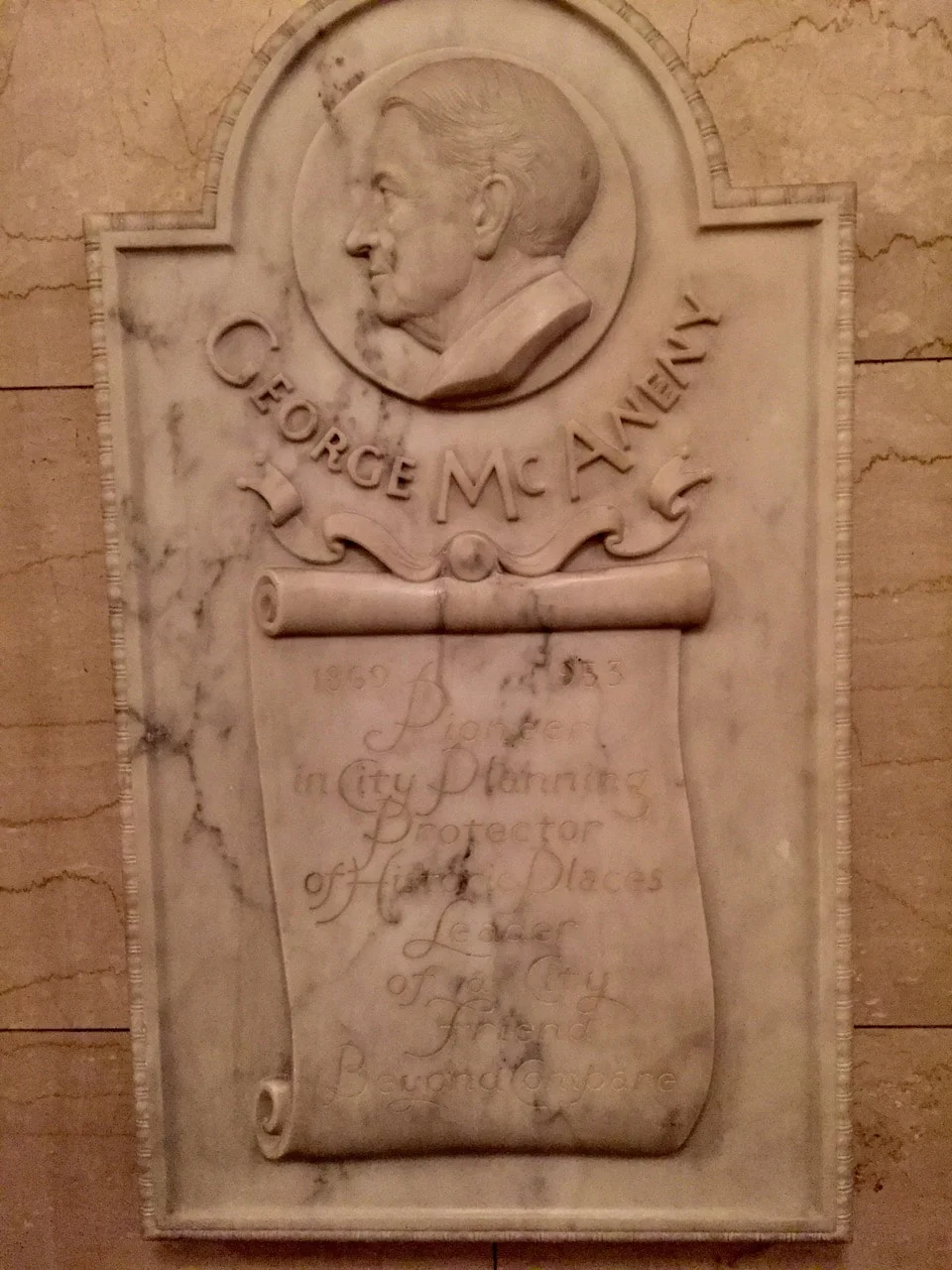
Remembering George McAneny: The Reformer, Planner, and Preservationist Who Shaped Modern New York

Remembering George McAneny: The Reformer, Planner, and Preservationist Who Shaped Modern New York

By Charles Starks

The power to shape the built environment on a metropolitan scale is inevitably shared, contested, and compromised, especially in a city-region as large, diverse, and fragmented as New York has been for the last two centuries. Despite the fervent wishes of more than a few of its leading citizens, the city has never been friendly ground for would-be visionaries seeking to brusquely mold the city’s form to suit their wills—the tech mogul Jeff Bezos being only the latest to find himself chagrined by Gotham’s aversion to imperious planners.

Read More
The 51st State: Norman Mailer, Jimmy Breslin, and the Politics of Imagination

The 51st State: Norman Mailer, Jimmy Breslin, and the Politics of Imagination​

By Gabe S. Tennen

It was early April in 1969, and Norman Mailer, holding court on the top floor of his Brooklyn Heights brownstone, was in his element. Surrounding the forty-six-year-old author, social commentator, and rabble-rouser were an array of the city’s writers, activists, and politicos, and, probably to the liking of the notoriously egotistical Mailer, the topic of the night concerned him.

Read More
Distant Islands: The Japanese American Community in New York City

Distant Islands: The Japanese American Community in New York City

Reviewed by Olga Souudi

Daniel H. Inouye’s Distant Islands is a richly detailed, extensive account of the lives of Japanese living in New York City between 1876 and the 1930s. Little scholarly work on the lives of Japanese in New York, and on the East Coast in general, exists, either historical or contemporary, and Inouye’s book is a valuable contribution to this underexplored field.

Read More
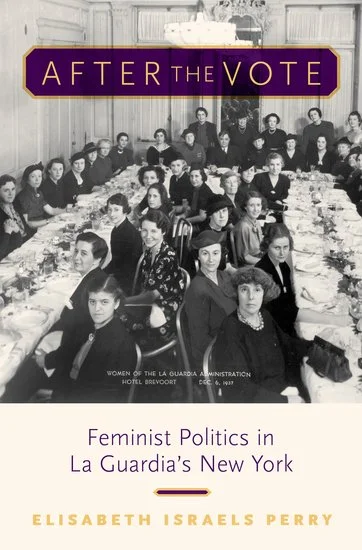
After the Vote: Feminist Politics in La Guardia's New York

After the Vote: Feminist Politics in La Guardia's New York

Reviewed by Karen Pastorello

Elisabeth Israels Perry has enriched the historical record by documenting New York City women’s activism in the first half of the twentieth century. Inspired by the life of her grandmother, “political influencer” and civic reformer Belle Linder Israels Moskowitz, Perry goes well beyond recounting “firsts” for women and instead offers specific examples of accomplished women — all of whom surmounted a myriad of personal and professional challenges to enter a male-controlled political world. After suffrage was won, women attempted to ascend from their newly acquired position as voters to officeholders intent, for the most part, on advancing a social justice platform for all.

Read More
Suzanne Hinman's The Grandest Madison Square Garden: Art, Scandal, & Architecture in Gilded Age New York

Suzanne Hinman's The Grandest Madison Square Garden: Art, Scandal, & Architecture in Gilded Age New York

Reviewed by Paul Ranogajec

Madison Square Garden was among the premier places to see and be seen in New York City at the turn of the twentieth century. As Suzanne Hinman amply documents in her new book, this palace of popular entertainment was truly a modern wonder of architecture and spectacle. Like the old Penn Station (another McKim, Mead and White building that sadly no longer graces the city’s streets) the Garden helped define the aesthetic and social landscapes of New York in the years around 1900.

Read More
Inclusive Archiving, Public Art, and Representation at the Hall of Fame for Great Americans

Inclusive Archiving, Public Art, and Representation at the Hall of Fame for Great Americans

By Cynthia Tobar

The Hall of Fame for Great Americans, created in 1900, was the first monument of its kind that sought the active involvement of Americans in nominating their favorite "Great Americans.” The Hall was conceived of by Dr. Henry Mitchell MacCracken, Chancellor of New York University (NYU), who envisioned a democratic election process for selecting these greats modeled after presidential elections. Nominations came to the election center and after a person received a certain number of votes, an NYU Senate of 100 voters made the final choice. The Senate was composed of American leaders: past American presidents, presidents of colleges, senators, and men of renown in various fields. Problems soon arose, however, when this initial process yielded 29 nominees, all male. The lack of women created a scandal and in the next election eight women were elected (currently, there are 11 women in the Hall). However, the contentious nomination of Robert E. Lee remained.

Read More
The Outcast: A Review of Wright and New York by Anthony Alofsin

The Outcast: A Review of Wright and New York by Anthony Alofsin

Reviewed by Fran Leadon

Frank Lloyd Wright didn’t care for cities. In his 1954 manifesto The Natural House, he advised prospective homebuilders looking for land to “go as far out as you can get . . . way out into the country—what you regard as ‘too far’—and when others follow, as they will (if procreation keeps up), move on.”

Read More