

Before Central Park
Reviewed by Kara Murphy Schlichting
Before Central Park is Sara Cedar Miller’s fourth publication about New York City’s famous greensward. Miller is historian emerita and, since 1984, a photographer for the Central Park Conservancy. Before Central Park is distinctive in its combination of Miller’s photography, her expert understanding of the park’s geography and archeology, and her meticulous real estate history of parkland from the 17th through the 19th centuries.
Read MoreCentral Park Soundscapes: The Rumba Cypher
By Berta Jottar
Since the late 1950s, New York City has been an epicenter of rumba outside Cuba. For more than six decades, a rumba circle in Central Park has embraced those of African descent from Spanish-speaking islands (Cubans, Puerto Ricans, Dominicans) and Latin America (Panamanians, Colombians), local African Americans, AfroLatinxs (Nuyorican, NuyoDominicans, Cuban Americans) and those from other diasporas including American Jews. A focus on Central Park rumba illustrates the intricacies and ancestral functionings of the African Diaspora present in contemporary New York.
Read More
Site and Sounds: Hart Island
By Melinda Hunt
On today’s episode of Sites and Sounds, Melinda Hunt talks about the public graveyard at Hart Island.
Read More
Site and Sounds: Bike New York
By Evan Friss
On today’s episode of Sites and Sounds, Evan Friss talks about the the history of the bicycle and cycling spaces in New York.
Read More
Site and Sounds: New York Botanical Garden
By Jane Garmey
In today’s episode of Sites and Sounds, Jane Garmey talks about the New York Botanical Garden.
Read MorePodcast Interview: New York Recentered
Kara Murphy Schlichting Interviewed by Garrett Reed Gutierrez
In New York Recentered: Building the Metropolis from the Shore, Kara Murphy Schlichting offers a fresh perspective on New York City’s history by shifting readers’ gaze away from Manhattan and towards the coastal periphery—where local planning initiatives, waterfront park building, the natural environment, and a growing leisure economy each had a stake in the regional development of New York City. Schlichting’s regional and environmental approach frames New York’s extensive waterways as points of connection that unite, rather than divide, the urban core and periphery to one another.
Read More
Hart Island and the Paradox of Redemption
By Sally Raudon
In the twelve months before January 2021, 2,225 people were buried on Hart Island, New York City’s public burial ground. At a time when the Island’s operations are undergoing the most significant organizational changes in its modern history, that’s the highest number of such burials recorded since the 1918-1920 influenza pandemic.
Read More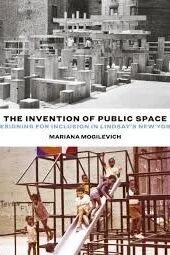
The Invention of Public Space: An Interview with Mariana Mogilevich
Interviewed by Katie Uva
Today on the blog, editor Katie Uva speaks to Mariana Mogilevich about her recent book, The Invention of Public Space: Designing for Inclusion in Lindsay’s New York. Mogilevich discusses the 1960s and 1970s as a uniquely inventive time in the city for defining and conceptualizing the use of public space. At a time when New York was dealing with deindustrialization, economic decline, and suburbanization, the Lindsay Administration made a conscious effort to develop inviting public space and support public interaction in city spaces, an attempt to lift up the city’s density and shared space as an asset rather than a liability.
Read More