Masthead_Gloucester_Kearn.jpg
Posts in Housing & Realty
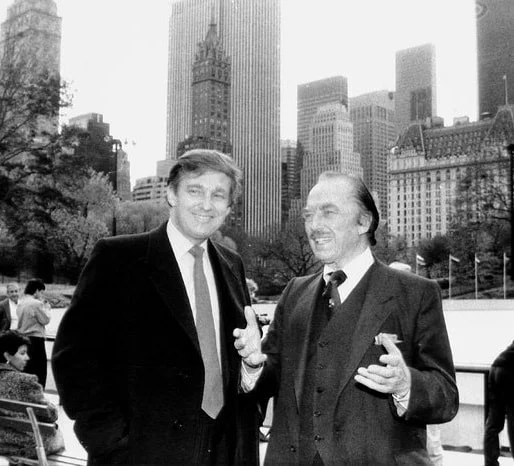
Enter Donald: The Trump Empire Goes to Manhattan

Enter Donald: The Trump Empire Goes to Manhattan

By Gwenda Blair

At the age of twenty-six Donald Trump had sealed his first multi-million-dollar deal. It was a sweet thing for a young man who had been his father’s full-time student ever since graduation from Wharton. Every morning he and his father drove from Jamaica Estates to Fred Trump’s modest office in Beach Haven, one of the large housing developments the older man had built near Coney Island in the early 1950s. Inside a nondescript, three-story brick building on Avenue Z, the headquarters of the Trump family empire still looked like the dentist’s office it had once been, with a linoleum floor, shag carpet, and chest-high partitions between cubicles.

This is the last of three profiles of the Trump patriarchs, adapted from the author's bestseller, The Trumps: Three Builders and a President, courtesy of Simon & Schuster.

Read More
Fred Trump Slays the King of Cooperative Housing

Fred Trump Slays the King of Cooperative Housing

By Gwenda Blair

Nearly two decades after Friedrich Trump came to America and a year before his first son, Fred, was born, another boy landed at New York Harbor. He was fifteen, a year younger than Friedrich had been upon his arrival. Like Friedrich, he had traveled alone and left behind his family, his homeland, and his obligation to enter into his country’s military service. And he, too, did not intend to return. His name was Abraham Eli Kazan, and the country he left was Russia. In the coming decades, he, like Fred Trump, would become a real estate developer in New York, building apartments in a city with a desperate need for housing. In the late 1950s the two men each sought to build on the same stretch of Coney Island, a long and bitter struggle that eventually entangled the highest levels of city government. But it was more than a battle between two well-connected businessmen. Trump and Kazan were leaders in two separate movements battling for effective control of the way the city would grow — and because New York City was a bellwether for the rest of the nation, the way that cities all over the country would grow. Ultimately, on this patch of Coney Island, not far from the famous amusement rides, Fred Trump helped carve America's urban future.

Read More
Friedrich Trump Establishes a Dynasty

Friedrich Trump Establishes a Dynasty

By Gwenda Blair

Back home, in Kallstadt, Germany, a young Friedrich Trump had listened to stories of those who had left for America and made it, determining to do likewise. Arriving in New York City in October 1885 at the age of sixteen, he listened to sagas of the West and picked up what he would need to head that way. In Seattle, he listened to descriptions of Monte Cristo and set himself up in the small Washington mining town. Now, at twenty-eight, he listened to the tales miners were telling one another about gold strikes in Alaska and, especially, in the Yukon.

This is the first of three posts on the Trump patriarchs, adapted from the author's bestseller, The Trumps: Three Builders and a President, courtesy of Simon & Schuster.

Read More
Myth #6: The Grid Plan Caused Too Much Density and Rampant Land Speculation

Myth #6: The Grid Plan Caused Too Much Density and Rampant Land Speculation

By Jason M. Barr with Gerard Koeppel

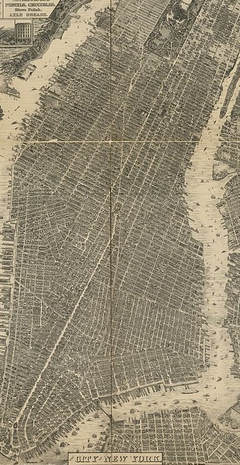
In the two centuries since its creation, the grid plan has had no shortage of critics. Many, for example, have bemoaned its relentless monotony, its disregard for Manhattan’s topography and its lack of grand boulevards. In many respects, the grid has become a kind of Rorschach blot for the failures of 19th century New York to provide a cleaner, more efficient, and greener city. Detractors often see the plan as the cause or catalyst of the larger problems that New York confronted from rapid economic growth, massive immigration and poverty, and a municipal government that was, more or less, unable and unwilling to effectively handle these issues.

Read More