Masthead_Gloucester_Kearn.jpg
Posts in Waterfront & Islands
Brooklyn’s Renaissance: Commerce, Culture, and Community in the Nineteenth-Century Atlantic World

Brooklyn’s Renaissance: Commerce, Culture, and Community in the Nineteenth-Century Atlantic World

Reviewed by Jocelyn A Wills

One never knows where a family heirloom will lead. Brooklyn’s Renaissance began with a cultural artifact that Italian Renaissance scholar Melissa Meriam Bullard’s mother inherited from a distant cousin: a portrait of Luther Boynton Wyman (1804-79), a forgotten shipping merchant for Liverpool’s Black Ball Line, long-time resident of Brooklyn Heights, and “guiding hand” in the founding of the “arts-friendly community” along Montague Street during the 1850s and 1860s (with the Academy of Music, now “BAM,” as Brooklyn’s cultural center).

Read More
Myth #5: The Grid Plan Leveled Manhattan

Myth #5: The Grid Plan Leveled Manhattan

By Jason Barr with Gerard Koeppel

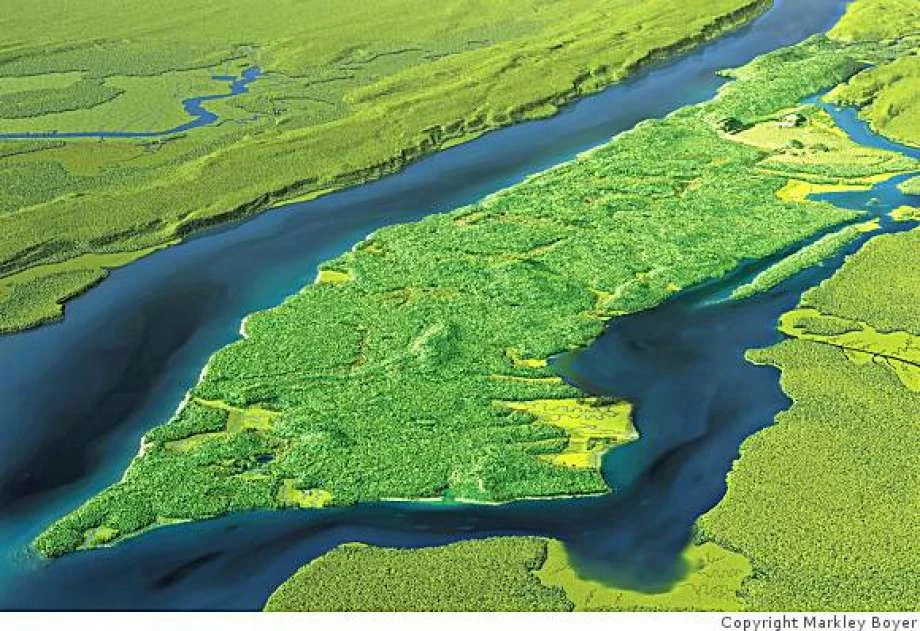
In 1609, when Henry Hudson sailed up the river that now bears his name, he saw an island forest covered in oak, pine and tulip trees. Two centuries later, in 1811, when the grid plan was enacted, most of Manhattan was still undeveloped. In fact, the footprint of the city itself encompassed only 1.3 square miles at the lower tip. The rest was quite sleepy - farms, country estates, and pockets of unspoiled nature.

Read More