
Crisis, Disease, Shortage, and Strike: Shipbuilding on Staten Island in World War I
By Faith D’Alessandro
On April 6th 1917 the United States officially joined the First World War. The casus belli was the sinking of three US ships by German U-boats on March 18th. However, the U-boat issue and its devastating consequences had been under way for far longer, and would fuel a shipping crisis throughout the remainder of the war. In February 1917 U-boats had sunk almost 540,000 gross tons of shipping, and in March another 600,000, creating an enormous need to increase merchant ship construction. The urgency of mobilization and defense affected ship manufacturing centers across the country, including the huge shipbuilding industry in New York Harbor, which was centered around three major areas: Greenpoint, Brooklyn, including the Brooklyn Navy Yard; the Camden-Bayonne area of New Jersey; and the North Shore of Staten Island.
Read More
Site and Sounds: International Caribbean Center African Diaspora Institute
By Tyesha Maddox
In today’s episode of Sites and Sounds, Tyesha Maddox talks about the International Caribbean Center African Diaspora Institute.
Read More
Site and Sounds: Bike New York
By Evan Friss
On today’s episode of Sites and Sounds, Evan Friss talks about the the history of the bicycle and cycling spaces in New York.
Read More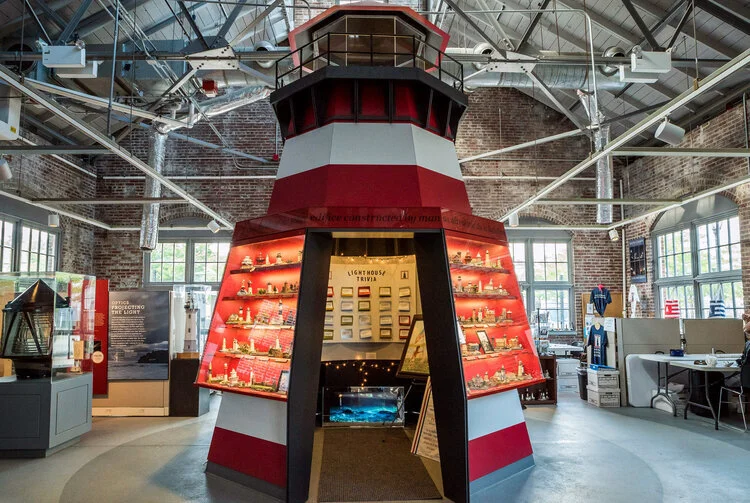
Site and Sounds: National Lighthouse Museum
By Eric Jay Dolin
In today’s episode of Sites and Sounds, Eric Jay Dolin talks about the National Lighthouse Museum.
Read More
Site and Sounds: TWA Terminal, JFK International Airport
By Nicholas D. Bloom
This year marks the fourth season of Sites and Sounds, a podcast series by the Gotham Center for Open House New York’s annual OHNY Weekend. All this week Gotham will bring you new episodes of this award-winning podcast. Check out more about OHNY Weekend, happening October 16-17. In today’s episode of Sites and Sounds, Nicholas D. Bloom talks about the TWA Terminal at JFK International Airport.
Read More
The Great Epizootic of 1872: Pandemics, Animals, and Modernity in 19th-Century New York City
By Oliver Lazarus
Monday, October 21st, 1872, began like many mid-fall days in New York — overcast and muggy with spitting rain, and a high of sixty-six degrees. Fall was supposed to mark the height of business in the city, when commerce and trade peaked. But as the week of October 21st dragged on, this seemingly unstoppable progress came to a halt. The cause of this stoppage was an attack on what is often dismissed as a vestige of that pre-modern city, but what was arguably New York’s most important energy supply: horsepower.
Read More“The Scourge of the ‘90s:” Squeegee Men and Broken Windows Policing
By Jess Bird
There is perhaps no other bogeyman of New York City’s “bad old days” that has incited greater ire than the squeegee man. Cars created a sense of safety, of separation from the unruly world of the street, but a window washer approaching a car stopped at a red light ruptured that sense of safety, incited panic, and demonstrated, to some, a breakdown in law and order. Squeegee men, “the scourge of the ‘90s,” symbolized the need to be tough on crime, regardless of the costs. Unsurprisingly then, the so-called squeegee pest featured heavily in the mayoral race of 1993, a rematch between incumbent Mayor David Dinkins and Rudy Giuliani.
Read MoreLast Subway: The Long Wait for the Next Train in New York City
Philip Mark Plotch Interviewed by Robert W. Snyder
Ever since New York City built one of the world’s great subway systems, no promise has been more tantalizing than the proposal to build a new subway line under Second Avenue in Manhattan. Yet the Second Avenue subway — although first envisioned in the 1920s, did not open until 2017 — and even then in a truncated form.
Read MoreBoss of the Grips: Interview with Eric K. Washington
Interviewed by Prithi Kanakamedala
Today on the blog, Prithi Kanakamedala talks to Eric K. Washington about his current work, Boss of the Grips: The Life of James H. Williams and the Red Caps of Grand Central Terminal. This book has garnered a great deal of praise, including citation as one of the Best Biographies of 2019 by Open Letters Review and special recognition from The Municipal Art Society of New York as a 2020 Brendan Gill Prize Finalist.
Read More