Masthead_Gloucester_Kearn.jpg
Posts in Gender & Sexuality
The Case of Mrs. Brinsmade and Civil War New York

The Case of Mrs. Brinsmade and Civil War New York

By Wyatt Evans

In October 1862, the New York City Metropolitan Police held Mrs. Isabella Brinsmade for over a month without charge in the precinct house on West 47th Street. The twenty-year old Louisiana native had arrived in New York that August, sent by her merchant father who thought she would be safer there than in Union-occupied New Orleans. Her husband was away fighting in the Confederate Army, and she does not appear to have maintained any special affection for him. By all accounts Mrs. Brinsmade was intelligent, high-spirited, very attractive, and... liked to talk.

Read More
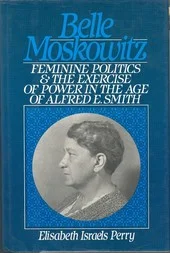
Women after Suffrage: An Interview with Elisabeth Israels Perry

Women after Suffrage: An Interview with Elisabeth Israels Perry

Today on the blog, editor Katie Uva sits down with Elisabeth Israels Perry to talk about her research process and her insights as she prepares her new book, After the Vote: Feminist Politics ​​in La Guardia's New York (Oxford University Press, forthcoming 2019).

Read More
Amy Werbel's Lust on Trial: Censorship and the Rise of American Obscenity in the Age of Anthony Comstock

Amy Werbel's Lust on Trial: Censorship and the Rise of American Obscenity in the Age of Anthony Comstock

Reviewed by Marcela Micucci

Anthony Comstock was a household name in nineteenth-century America, so much so that his last name became synonymous with a movement and set of laws that sought to censor obscenity and eradicate vice. Historian Amy Werbel explores this anti-obscenity movement — and its champion — in her provocative and cutting-edge work, Lust on Trial: Censorship and the Rise of American Obscenity in the Age of Anthony Comstock (2018).

Read More
Shopping Queens, Chic and Friendly

Shopping Queens, Chic and Friendly

By Daniela Sheinin

Much has been written on the American “New Woman,” what the historian Einav Rabinovitch-Fox calls “both an image and an appellation referring to a generation of women who came of age between 1890 and 1920 and challenged, through their attitudes and appearances, Victorian values and gender norms.” Her identity varied by race, class, ethnicity, and age. The New Woman breached gender norms, pressed for a public voice, and has been tied by some to feminism, the campaign for women’s suffrage, consumer culture, and female sexuality. New and sometimes radical fashion trends marked an expression of New Woman feminism and a break from a gendered, culturally confining past. These included versions of the Japanese kimono and the “ ‘Village smock,’ a bohemian version of the kimono and the dress item most associated with Greenwich Village feminists.” Moreover, there’s evidence that manufacturers produced low-price knockoffs of the kimono and other New Woman fashion trends, eagerly consumed by some working class women.

Read More
Black Nationalist Women's Activism in 1920s Harlem

Black Nationalist Women's Activism in 1920s Harlem

By Keisha N. Blain

Founded by Marcus Garvey, with the assistance of Amy Ashwood, in Kingston, Jamaica, in 1914, the UNIA (Universal Negro Improvement Association) was the largest and most influential Pan-Africanist movement of the twentieth century. Emphasizing racial pride, black political self-determination, racial separatism, African heritage, economic self-sufficiency, and African redemption from European colonization, Garvey envisioned the UNIA as a vehicle for improving the social, political, and economic conditions of black people everywhere. From Kingston, Jamaica, Garvey oversaw UNIA affairs before relocating to Harlem. At its peak, from 1919 to 1924, the organization attracted millions of followers in more than forty countries around the world.

This post is excerpted and adapted from Set the World on Fire: Black Nationalist Women and the Global Struggle for Freedom, courtesy of University of Pennsylvania Press.

Read More
A (Female) Walker in the City: An interview with Lauren Elkin

A (Female) Walker in the City: An interview with Lauren Elkin

Today on Gotham, editor Nick Juravich speaks with Lauren Elkin, about her recent book Flâneuse: Women Walk the City in Paris, New York, Tokyo, Venice and London, selected as a Book of the Year by the Financial Times, Guardian, New Statesman, Observer, The Millions and Emerald Street, and shortlisted for the PEN/Diamonstein-Spielvogel Award for the Art of the Essay.

Read More
Where Suffrage Took Flight: Staten Island and the Woman Suffrage Movement

Where Suffrage Took Flight: Staten Island and the Woman Suffrage Movement

By Gabriella Leone

On May 20, 1913, nationally renowned suffragist, Rosalie Gardiner Jones, made a spectacular debut in Staten Island, where she became the first suffrage activist to fly for the cause. To achieve this feat, she met her pilot Harry Bingham Brown, one of Staten Island’s resident pilots, at the Grant City train station and boarded his plane. The New York Times reported, “Gen. Rosalie did not show a sign of fear as she took her seat in the biplane, seized a steel rod, the only thing to hold to, with her left hand, had her skirts tied down with a little piece of blue string, and, with a bunch of leaflets in her right hand, nodded a smiling good-bye to the crowd below.” Decorated with 'Votes for Women' banners, the plane arrived at its destination, roughly two miles away on the island’s eastern shore, in fifteen minutes. It landed at the Flying Carnival of the Staten Island Aeronautical Society in a flurry of yellow leaflets, which Jones had been scattering along the way.

Read More