

The Jewel of Eastern Long Island:

The “Tavern on the Green”: How a Central Park Landmark Epitomizes Colonial New York City’s Urban Development
By Vaughn Scribner
The Tavern on the Green restaurant is an icon of New York City. Nestled in the seemingly-rustic, yet carefully-planned confines of Central Park, the building began life in 1870 as a shelter for the park’s grazing sheep.[1] In 1934, park officials transformed the building into a restaurant. Since then, various families bought into the business, and made renovations like a dance floor, glass-enclosed Crystal Room, and a new patio.[2] Beyond offering a diverse array of cocktails, main courses, and appetizers, however, much of the restaurant’s enduring popularity owes itself to setting: the Tavern on the Green is a carefully-crafted combination of urban and rural life; a “hybrid” space where customers feel like they’re escaping the gray, crowded confines of the city, but still have access to the entertainment and sociability for which New York City is famed.[3] But the Tavern on the Green does not just represent fantasy, or a New York that “never was.” On the contrary, the Tavern on the Green harkens back to the second half of the eighteenth-century, when New York City’s residents fostered an urban culture predicated upon a thriving network of taverns and green spaces which offered residents the hospitalities of city life within a bucolic, relaxing, and intentionally-constructed “natural” environment.
Read More
Seeing Trees: A History of Street Trees in New York City and Berlin
Reviewed by Leslie Day
Sonja Dumpelmann’s important history of street trees in two major cities, New York and Berlin, helps us understand their role in not just obvious areas like health and beauty, but also civil rights and women’s rights. It is a unique look at the connections between humanity and trees in dense urban settings.
Read More
Dutch Baymen, Blue Points, and Oyster Crazed New Yorkers
By Erin Becker
Beginning as early as 8,000 years ago, the land which would eventually become New York City was intrinsically connected to the oyster. The Lenape targeted shellfish as a food resource and left behind heaping shell middens. Upon arrival to the New World, the Dutch and English colonists found a familiar food source — the oysters of New York Harbor. For a time, it seemed oysters were an inexhaustible resource. In the eighteenth and nineteenth centuries, oysters fed the rich and poor of New York City. Like the ubiquitous hot dog carts of today, oyster carts and cellars lined the streets of New York City, peddling affordable food to the masses.
Read More
Dredging Newtown Creek: An Interview with Mitch Waxman
Interviewed by Joseph Alexiou
Writer and photographer Mitch Waxman is the leading authority on the history of Newtown Creek, a toxically polluted industrial waterway on the border between Brooklyn and Queens. In addition to his reporting and documentation, Waxman leads regular tours on land and by boat while spreading the unique stories of New York’s most centrally located contaminated coastline to the community.
Read More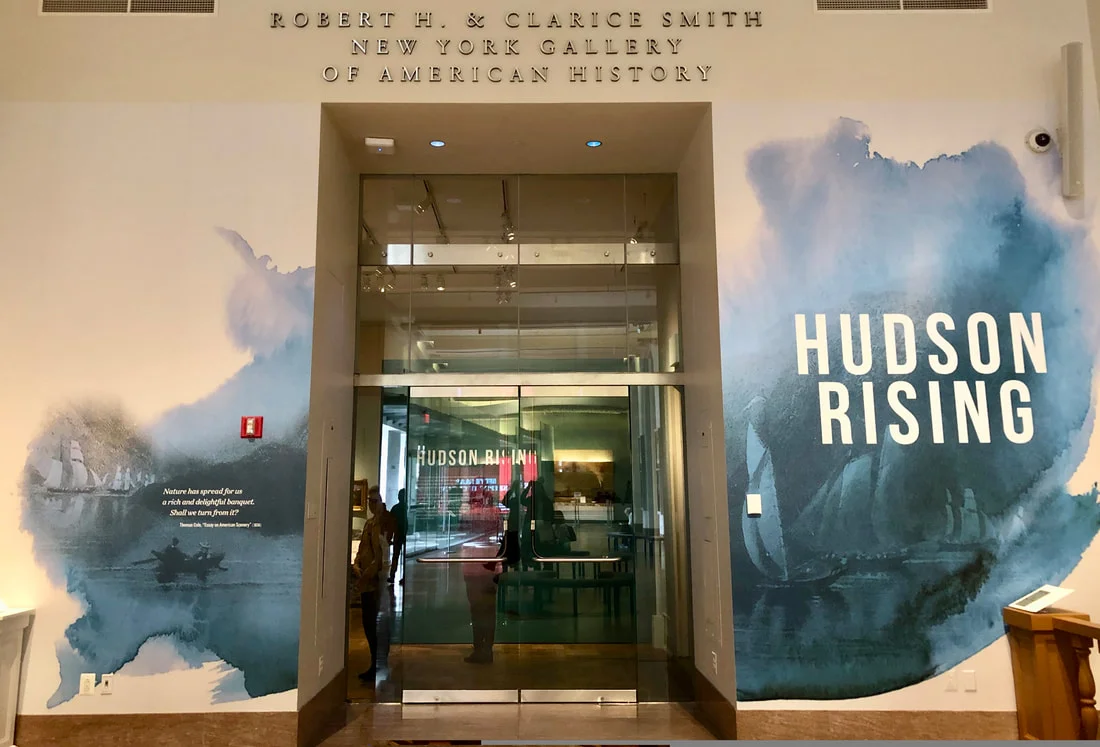
Hudson Rising
Reviewed by Kara Murphy Schlichting
What metaphor captures the relationship between the Hudson River, the cities that line its shores, and the people who plie its waters? Is the river a touchstone by which thinkers trace American ideas about nature? Is it an allegory, teaching those humbled in the face of ecological change to repent humanity's role? Is it the exemplar of the declension narrative present in American environmental storytelling? Or is the river more like a battle cry, rallying those committed to environmental activism and resiliency? Hudson Rising, the new exhibit at the New York Historical Society, contends it is all of these things. This deeply researched, thoughtfully presented, and satisfyingly interdisciplinary exhibit introduces the visitor to myriad people who have used and shaped the river, confronted ecological ruin, and turned towards preservation to mitigate degradation.
Read More
Urban Ornithology: 150 Years of Birds in New York City
Reviewed by Leslie Day
I lived on a boat on the Hudson River in Manhattan from 1975 to 2011 and it was then that I became an avid birder. Living on the Hudson I watched canvasback ducks with their beautiful red heads arrive each winter in huge numbers in the 1980’s. And I observed them as their numbers diminished greatly after the 1990’s. When I first moved to the river there were many laughing gulls that migrated to the city each April. My father’s birthday was April 12th, around the time they’d show up. The happy sound of their calls would bring me running outside to my deck to look at them and hear the joyous cries — my harbinger of the beautiful warm months to come. By the time I moved away in 2011, there were just a few arriving each spring.
Read More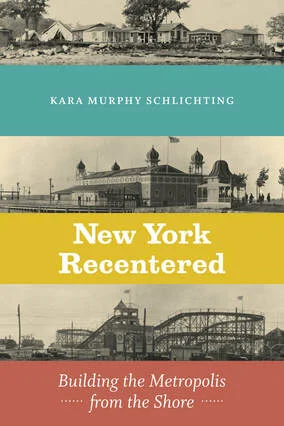
New York Recentered: Building the Metropolis from the Shore
By Kara Murphy Schlichting
In 1865 New York City park commissioner Andrew Haswell Green came to the conclusion that the city had outgrown Manhattan Island. In a report for the Board of Commissioners of Central Park, Green argued that the city’s future should include its mainland environs of Westchester County north of the Harlem River. He articulated a river-spanning future for New York. Green reasoned that lower Westchester was “so intimately connected with and dependent upon the City of New York, that unity of plan for improvements on both sides” of the Harlem was “essential.”
Reprinted with permission from New York Recentered: Building the Metropolis from the Shore, by Kara Murphy Schlichting, published by the University of Chicago Press. © 2019 by the University of Chicago Press. All rights reserved.
Read More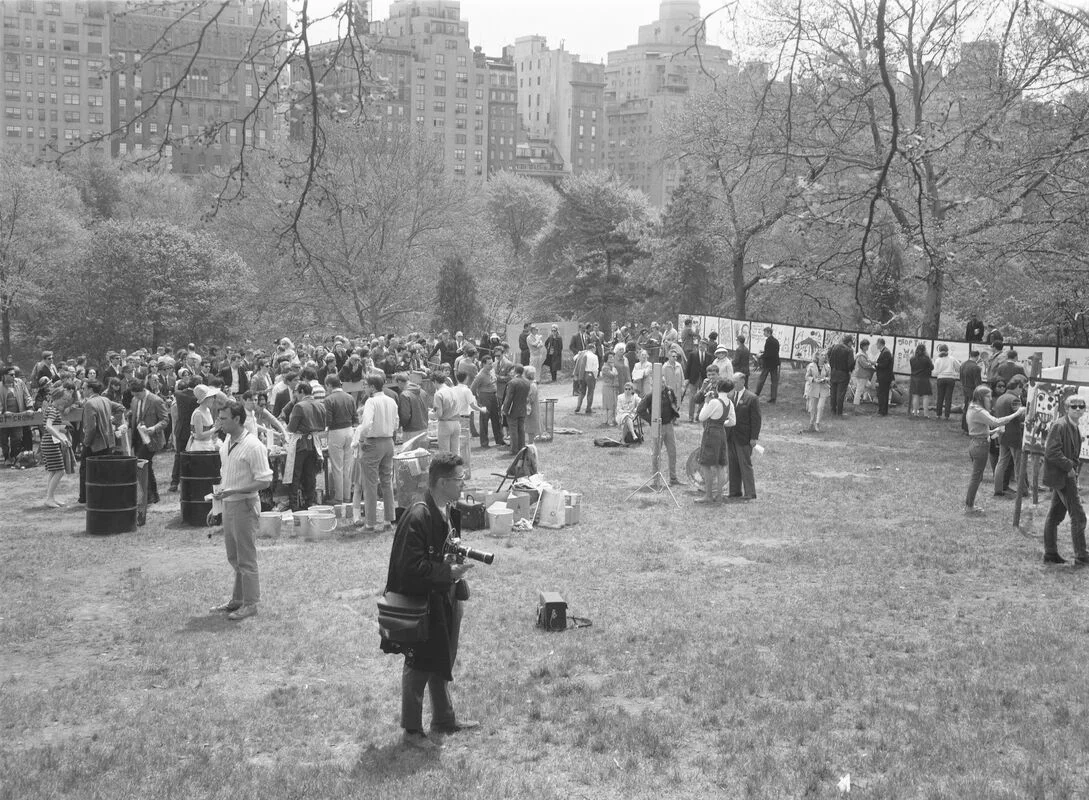
Happenings: Art, Play, and Urban Revitalization in 1960s Central Park
By Marie Warsh
On November 16, 1966, an unprecedented event took place on the Sheep Meadow in Central Park. Beginning at midnight, thousands of New Yorkers convened on the park’s largest lawn to watch the Leonid meteor showers, which were expected to be particularly brilliant. Although the crowd was let down — dense cloud cover prevented visibility — the gathering nonetheless offered a convivial atmosphere. Spectators brought chairs, blankets, and hot beverages, and the event became an after-dark picnic, with some marveling at the novel scene. One woman observed, “All these people in the park after midnight, and no one is getting mugged.”
Read More